NASA’s Kepler Space Telescope discovered 11,554 exoplanet candidates through machine learning analysis of existing data, with AI identifying patterns that human astronomers had missed for years. The deep neural network ExoMiner validated 301 new exoplanets in a single computational run, demonstrating how artificial intelligence can process astronomical data at unprecedented scales.
The Kepler Mission’s Unprecedented Scale
NASA’s Kepler Space Telescope operated with remarkable precision, simultaneously monitoring roughly 150,000 stars in a single patch of sky. Unlike ground-based telescopes that must contend with atmospheric interference and rotation, Kepler maintained a steady, unblinking gaze on its target region. The spacecraft was designed to detect incredibly subtle changes in stellar brightness—dips as small as 0.01 percent that occur when an exoplanet transits across its host star.
This level of sensitivity required detecting brightness variations equivalent to spotting a flea crossing a car headlight from miles away. The sheer volume of data generated by this continuous monitoring created an unprecedented archive of stellar observations, but also presented a significant challenge for traditional analysis methods.
The Human Bottleneck in Exoplanet Discovery
While Kepler generated massive amounts of data, human astronomers could only manually examine a fraction of the potential planetary signals. The process of validating exoplanet candidates requires careful analysis of light curves, ruling out false positives like eclipsing binary stars, and confirming that observed dimming patterns match expected planetary transits.
This manual vetting process, though thorough, meant that thousands of potential exoplanets remained unclassified in Kepler’s data archives. Each signal required individual attention from trained scientists, creating a bottleneck that left promising candidates waiting for analysis—sometimes for years.
ExoMiner: The AI Revolution in Planet Hunting
NASA’s solution came in the form of ExoMiner, a deep neural network trained on the Pleiades supercomputer. This artificial intelligence system was designed to recognize the subtle patterns that indicate genuine exoplanet transits versus false positives caused by instrumental noise or other astronomical phenomena.
The results were remarkable: ExoMiner processed years’ worth of unanalyzed Kepler data and validated 301 new exoplanets in a single computational batch. What would have taken human astronomers decades to accomplish, the AI completed in seconds. This breakthrough demonstrated that machine learning could not only match human accuracy in exoplanet detection but could also operate at speeds that make comprehensive analysis of large datasets feasible.
Transforming Astronomical Discovery
The success of ExoMiner represents a fundamental shift in how astronomical discoveries are made. Rather than replacing human astronomers, AI serves as a powerful tool that can process vast amounts of data to identify the most promising candidates for detailed study. This approach allows scientists to focus their expertise on understanding the most significant discoveries rather than spending time on routine data processing.
The 11,554 exoplanet candidates identified through this machine learning approach have expanded our catalog of known worlds and provided new insights into planetary formation and distribution throughout the galaxy. Each validated exoplanet adds to our understanding of how common Earth-like worlds might be and where we should focus future searches for potentially habitable planets.
FREQUENTLY ASKED
How accurate is AI at finding exoplanets compared to human astronomers? ▾
ExoMiner achieves accuracy comparable to human experts while processing data thousands of times faster, validating 301 exoplanets that human review confirmed as genuine discoveries.
What makes Kepler telescope data so valuable for exoplanet discovery? ▾
Kepler's continuous, precise monitoring of 150,000 stars simultaneously created an unprecedented dataset that can detect brightness changes as small as 0.01 percent when planets transit their stars.
Are the AI-discovered exoplanets actually confirmed planets? ▾
Yes, ExoMiner's 301 discoveries are validated exoplanets that have been confirmed through rigorous analysis, not just candidates awaiting verification.
How long did it take ExoMiner to analyze the Kepler data? ▾
ExoMiner processed years' worth of unanalyzed Kepler data and validated 301 new exoplanets in seconds. What would have taken human astronomers decades to accomplish, the AI completed in a single computational batch.
Why couldn't human astronomers find these exoplanets before AI? ▾
The manual vetting process created a bottleneck where thousands of potential exoplanets remained unclassified in Kepler's data archives for years. Each signal required individual attention from trained scientists, but the sheer volume of data made it impossible for humans to analyze everything.
What computer system was used to train the ExoMiner AI? ▾
ExoMiner was trained on NASA's Pleiades supercomputer. This deep neural network was designed to recognize the subtle patterns that indicate genuine exoplanet transits versus false positives.
GO DEEPER
KEEP EXPLORING
 0:49
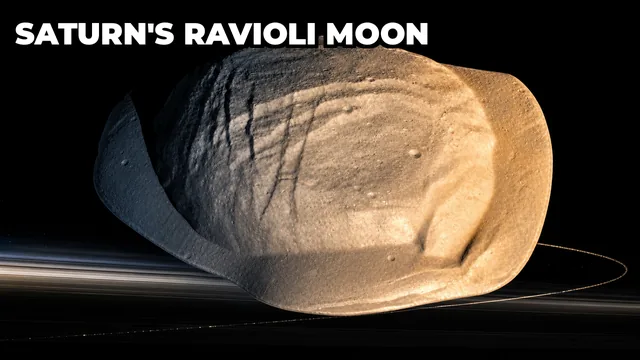
0:49Saturn Is Hiding A Moon Shaped Like Ravioli 🍝
Oct 3, 2026 0:32
0:32NASA Built It For 5 Flights. It Flew 72 On Mars 🚁
Sep 30, 2026 0:31
0:31The Cloud That Forms 52 Miles Up From Meteor Smoke ✨
Sep 30, 2026 0:16
0:16The Only Color Photos Ever Taken On Venus 📸
Sep 27, 2026 0:51
0:51Mars Grows 'Spiders' Every Spring 🕷️ Here's Why
Sep 26, 2026 0:23
0:23