Aogashima: A Village Inside an Active Volcano
Aogashima is a remote Japanese island village where fewer than two hundred people live inside the crater of an active volcano, located 358 kilometres south of Tokyo in the Philippine Sea.
Where Exactly Is Aogashima?
Despite its extreme isolation, Aogashima is officially administered as part of Tokyo, making it the most remote village under Tokyo’s governance. It sits in the Philippine Sea among the Izu Islands, a volcanic chain stretching south from the Japanese capital. Getting there is notoriously difficult — a helicopter or ferry service operates to the island, but rough seas cancel the ferry more than half the time, sometimes leaving residents cut off for weeks.
A Volcano Within a Volcano
What makes Aogashima genuinely unlike anywhere else on Earth is its double-volcanic structure. The entire inhabited area sits inside the outer caldera of a large volcanic crater. Rising from the crater floor is a second, smaller volcanic cone called Maruyama — a volcano growing inside another volcano. Residents live between these two geological forces, on land shaped entirely by eruption and reformation over thousands of years.
The 1785 Eruption That Emptied the Island
Aogashima’s history carries the weight of catastrophe. In 1785, a violent eruption killed approximately half of the island’s population — around 130 to 140 people. The survivors were forced to evacuate to the neighbouring island of Hachijojima, and Aogashima sat uninhabited for roughly fifty years. In what is one of the more remarkable acts of collective human determination, the islanders eventually returned and rebuilt. The same people, the same community, choosing the same volcano.
Geothermal Cooking and Daily Life
Life on Aogashima is deeply intertwined with the geology beneath it. Steam vents from geothermal activity rising through the volcanic rock, and residents have long used this natural heat to cook food. Small huts over steam vents function as communal cooking stations — sauna-like structures where the volcano itself becomes infrastructure. The island also uses this geothermal energy in other practical ways, making the volcano less a threat to daily life and more a reluctant utility provider.
Is Aogashima Still Dangerous?
Yes. The Japan Meteorological Agency continuously monitors Aogashima for volcanic activity. The island remains classified as an active volcano, and a significant eruption would threaten everyone living there. Evacuation plans exist, but the island’s remoteness makes rapid emergency response genuinely difficult. The residents are aware of the risk. They stay anyway — a population that has already survived one catastrophic eruption in living memory and chose to return.
Why Do People Still Live There?
The people of Aogashima are descendants of those who came back after 1785. The island has its own microclimate, its own culture, and a quiet insularity that defines life far from the mainland. Population has been declining for decades, but a core community remains. For them, Aogashima is not defined by its danger — it is simply home.
FREQUENTLY ASKED
How many people live on Aogashima island? ▾
Fewer than two hundred people currently live on Aogashima, making it one of the smallest and most remote inhabited communities in Japan.
How do you get to Aogashima island? ▾
Aogashima is accessible by helicopter or ferry from Hachijojima, but the ferry is cancelled more than half the time due to rough seas, making the island extremely difficult to reach.
What happened during the 1785 Aogashima eruption? ▾
A catastrophic eruption in 1785 killed roughly half the island's population, forcing survivors to flee to Hachijojima, where they remained for approximately fifty years before returning.
What is the Maruyama cone on Aogashima? ▾
Maruyama is a smaller secondary volcanic cone that rises from the floor of Aogashima's main outer caldera, creating the rare geological formation of a volcano within a volcano.
How do Aogashima residents use the volcano in daily life? ▾
Residents use geothermal steam venting from the volcano to cook food in communal hut-like structures, effectively using the volcanic heat as a natural energy source.
Is Aogashima part of Tokyo? ▾
Yes, Aogashima is officially governed by the Tokyo Metropolitan Government, making it the most remote village under Tokyo's administration.
GO DEEPER
KEEP EXPLORING
 0:30
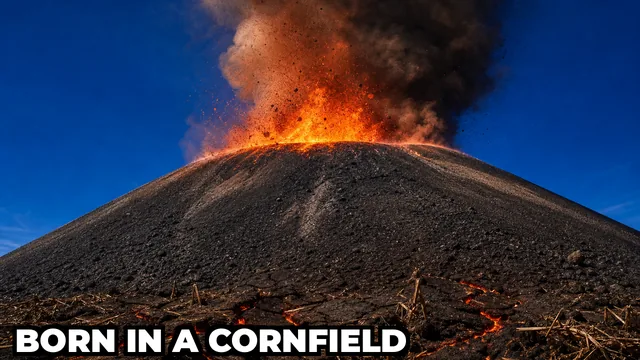
0:30A Volcano Grew 1,391ft Out Of A Cornfield 🌋
Oct 5, 2026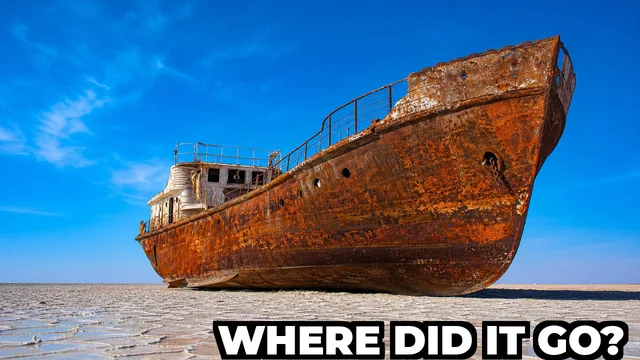 0:43
0:43Earth's 4th-Largest Lake Is Now A Salt Desert 🏜️
Oct 4, 2026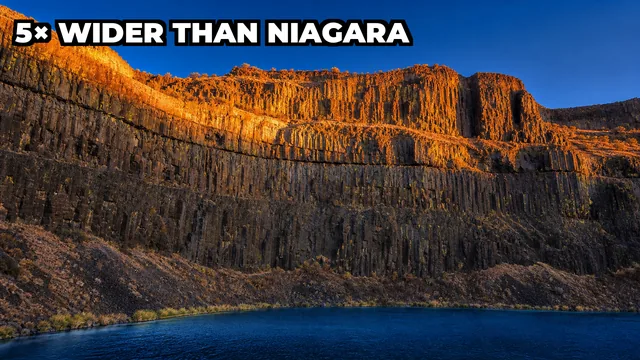 0:31
0:31A Waterfall 5x Wider Than Niagara Ran Dry 🌊
Oct 2, 2026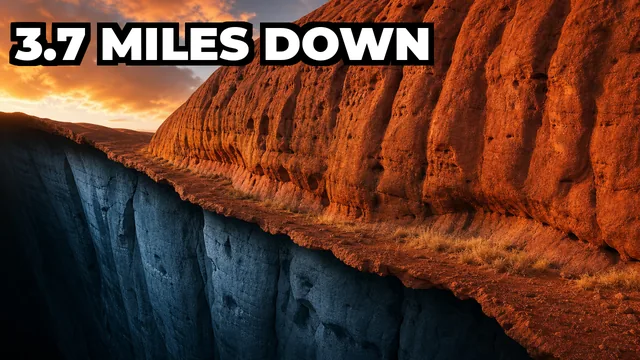 0:17
0:17Uluru Hides 3.7 Miles Beneath The Desert 🪨
Sep 29, 2026 0:06
0:06The Sand That Stays Cool At 100°F 🏜️
Sep 28, 2026 0:12
0:12