Yes, you are literally made of stardust. Every atom in your body — the calcium in your bones, the iron in your blood, the carbon in your DNA — was forged inside stars that lived and died billions of years before Earth existed.
The Universe Started With Almost Nothing
When the Big Bang occurred roughly 13.8 billion years ago, the universe produced only two elements in any meaningful quantity: hydrogen and helium. There was no carbon, no oxygen, no iron — none of the complex ingredients needed to build planets, organisms, or human beings. For hundreds of millions of years, the cosmos was a vast, dark sea of these two simple gases. The stardust story begins with the question: how did everything else get here?
Stars Are the Universe’s Element Factories
The answer is nuclear fusion inside stars. When a star ignites, gravitational pressure at its core becomes so intense that hydrogen atoms are forced to fuse into helium, releasing enormous amounts of energy in the process. Over millions of years, a sufficiently massive star climbs the periodic table — fusing helium into carbon, carbon into oxygen, oxygen into neon, and so on — manufacturing progressively heavier elements in a process called stellar nucleosynthesis.
This process has a hard limit, however. Stars can only fuse elements up to iron through normal fusion reactions. Once a stellar core becomes iron, fusion no longer produces energy — it consumes it. At that point, the core collapses catastrophically in less than a second, compressing an object the size of the Sun into a ball roughly the size of a city. The resulting explosion — a supernova — briefly outshines entire galaxies and scatters the star’s accumulated elements across light-years of space.
Where Gold, Iodine, and Heavy Elements Come From
Elements heavier than iron — gold, silver, uranium, iodine — cannot be forged in the cores of ordinary stars. They require an even more extreme environment. In the final moments of a supernova, when temperatures exceed 100 billion degrees, a rapid neutron-capture process (called the r-process) builds these heavier atoms in milliseconds.
For decades, astronomers suspected that collisions between neutron stars — the dense remnants left behind after supernova explosions — might be an even more prolific source of heavy elements. In 2017, that suspicion became confirmed fact. Scientists detected gravitational waves and light simultaneously from a single cosmic event: two neutron stars merging in a kilonova explosion. The aftermath revealed more gold than the entire mass of Earth, produced in under two seconds. The gold in any ring you’re wearing right now was forged in exactly that kind of cataclysm, billions of years ago.
The iodine your thyroid gland needs to regulate your metabolism? Also a product of stellar explosions. You are, quite literally, running on supernova fuel.
Our Solar System Is Built From Dead Stars
Our Sun is not a first-generation star. Scientists have found isotopes in ancient meteorites that could only have been produced by stellar explosions that preceded our solar system’s formation. This means the Sun — and everything orbiting it, including Earth and every living thing on it — is built from the recycled ash of at least two, possibly three, generations of dead stars. Gravity pulled the scattered remnants of those long-dead suns into a new cloud of gas and dust, which collapsed, ignited, and became our solar system roughly 4.6 billion years ago.
Carbon and the Fine-Tuned Universe
One of the most staggering chapters in the stardust story involves carbon — the backbone of all known life. Early calculations suggested carbon should barely exist, because creating it requires three helium nuclei to collide simultaneously, an extraordinarily improbable event. In the 1950s, physicist Fred Hoyle predicted that carbon must possess a specific resonance state that dramatically increases the likelihood of this reaction. Physicists then went into the lab and found it. Carbon exists in abundance because nuclear physics happens to be tuned in just the right way — a fact that caused Hoyle himself to call the universe’s properties “a put-up job.”
Similarly, cosmologists have calculated that if the strong nuclear force were just 2% stronger, all hydrogen would have converted to helium in the moments after the Big Bang, leaving no water, no organic chemistry, and no life. The margin for a life-permitting universe is razor-thin.
Your Atoms Are Tourists — Not Permanent Residents
Here is a detail that tends to scramble people’s sense of identity: roughly 98% of the atoms in your body are replaced within a year. Your skeleton replaces itself completely over about a decade. Your skin is entirely new every few weeks. The physical “you” of ten years ago shares almost no atoms with the you reading this now. Meanwhile, every breath you take contains approximately one billion atoms that once passed through the lungs of Julius Caesar — not metaphorically, but as a straightforward consequence of how atoms cycle through Earth’s atmosphere, oceans, and biosphere over centuries.
Some of the atoms in your body were inside dinosaurs. Some may have been inside Einstein. You are not separate from history at the atomic level — you are woven into it.
You Are Not One Star — You Are Thousands
Different elements in your body have different stellar origin stories. The calcium in your teeth was likely expelled slowly over thousands of years by a dying giant star known as an asymptotic giant branch star — a gentler kind of stellar death. The phosphorus powering every one of your 37 trillion cells probably came from a far more violent core-collapse supernova. The iron in your hemoglobin represents the absolute final output of a star’s entire lifetime of nuclear burning — the heaviest element ordinary fusion can produce. Your blood is, in a very real sense, the last thing a star ever made before it died.
You are not a product of one star. You are the assembled graveyard of thousands.
What This Means for How You See Yourself
The stardust story is sometimes dismissed as poetic metaphor, but it is rigorously, quantifiably true. The nitrogen encoding your DNA drifted through interstellar space for billions of years before being swept into our solar nebula, rained onto early Earth, dissolved into primordial oceans, and eventually assembled into the molecule carrying your genetic instructions. The universe spent 13.8 billion years building you — from the Big Bang to stellar nurseries to supernovae to comets to oceans to single-celled life to the person watching videos about space science.
The atoms in your eyes that are processing these words right now were present at the births and deaths of stars long before our Sun existed. The cosmos did not create life as something separate from itself. It became life. And for whatever brief, impossible, precious window those atoms are arranged into a conscious being, the universe gets to be curious about where it came from.
That is not a metaphor. That is physics.
FREQUENTLY ASKED
What does it mean that humans are made of stardust? ▾
It means that every atom in your body — carbon, oxygen, iron, calcium — was forged by nuclear fusion inside stars that exploded before Earth formed. These atoms were scattered across space and eventually assembled into you.
Which elements in the human body come from supernovae? ▾
Most of the heavier elements in your body, including the iron in your blood, the nitrogen in your DNA, and the oxygen in your cells, were produced in supernova explosions. Elements heavier than iron, like iodine and gold, required even more extreme events such as neutron star collisions.
Where does the gold in jewelry actually come from? ▾
Gold is forged during the collision of two neutron stars — an event called a kilonova. In 2017, scientists confirmed this origin by detecting gravitational waves and light from a neutron star merger that produced more gold than the mass of the entire Earth.
How many stars did it take to make the atoms in a human body? ▾
Scientists estimate the atoms in a human body originated from thousands of different stars across multiple generations of stellar life and death, each contributing different elements through different types of stellar explosions.
Is it true that atoms in your body are constantly being replaced? ▾
Yes — roughly 98% of the atoms in your body are replaced within a year, with some tissues like bone turning over completely every decade. The atoms that make up 'you' are constantly cycling through the environment.
What is stellar nucleosynthesis? ▾
Stellar nucleosynthesis is the process by which stars fuse lighter atomic nuclei into heavier elements inside their cores. It is responsible for creating most of the elements on the periodic table beyond hydrogen and helium, including all the elements essential for life.
GO DEEPER
KEEP EXPLORING
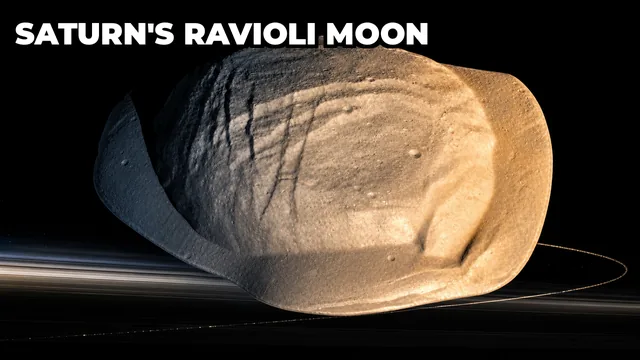 0:49
0:49Saturn Is Hiding A Moon Shaped Like Ravioli 🍝
Oct 3, 2026 0:32
0:32NASA Built It For 5 Flights. It Flew 72 On Mars 🚁
Sep 30, 2026 0:31
0:31The Cloud That Forms 52 Miles Up From Meteor Smoke ✨
Sep 30, 2026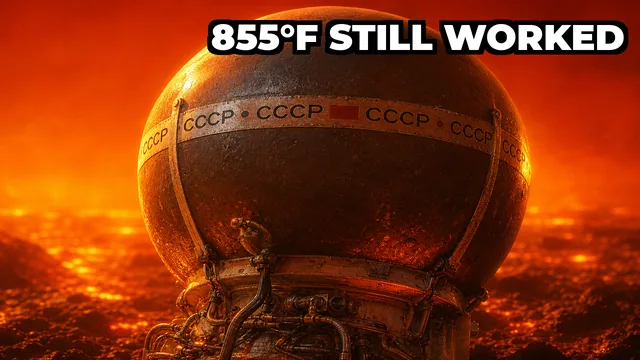 0:16
0:16The Only Color Photos Ever Taken On Venus 📸
Sep 27, 2026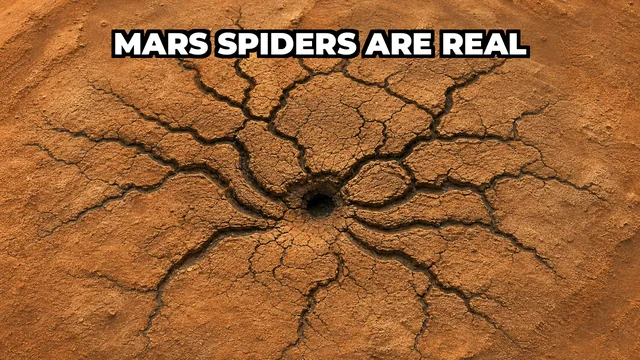 0:51
0:51Mars Grows 'Spiders' Every Spring 🕷️ Here's Why
Sep 26, 2026 0:23
0:23