What Did Archaeologists Find Buried Beneath the Ancient City of Aspendos?
August 19, 2026
The Discovery Beneath Aspendos
Archaeologists excavating the ancient Roman city of Aspendos in southern Turkey uncovered a remarkably preserved third-century CE floor mosaic depicting Eurymedon, the river god directly associated with the city’s own identity and lifeblood.
Who Was Eurymedon and Why Does He Matter Here?
Eurymedon was not a generic deity borrowed from a distant mythology. He was the divine personification of the Eurymedon River — the very waterway that flowed past the walls of Aspendos itself. For the inhabitants of this ancient city, commissioning a mosaic of Eurymedon was an act of profound civic pride. They were literally walking over a portrait of their own river, embedded in their floors, watching over them from below.
This kind of hyper-local religious identity was common in the Roman world, where cities frequently honored the natural features that sustained them — rivers, springs, and mountains — by elevating them into divine figures. What makes the Aspendos find so striking is the condition of the mosaic after roughly 1,700 years underground and the clarity with which the figure has survived.
The Eurymedon River’s Place in History
The river itself carries enormous historical weight that predates the mosaic by centuries. In 466 BCE, Athenian general Cimon led a decisive Greek naval and land assault against the Persian fleet at the mouth of the Eurymedon River — a double victory that became one of the defining moments of the Greco-Persian Wars. The battle effectively ended Persian naval dominance in the eastern Mediterranean and cemented Athenian power.
When the artisans of Aspendos laid this mosaic in the third century CE, the Eurymedon River was already carrying the memory of one of antiquity’s most consequential military engagements. The mosaic is, in a sense, layered with history upon history.
Aspendos: A City That Keeps Giving
Aspendos was already famous in archaeological circles long before this mosaic came to light. The city is home to what is widely considered the best-preserved Roman theatre on the planet, constructed in the second century CE under Emperor Marcus Aurelius. Its stage building stands almost entirely intact — an extraordinary rarity in the ancient world.
The theatre alone drew scholars and tourists for generations. But this mosaic discovery signals that Aspendos has far more to offer. Archaeologists have confirmed that the site remains only partially excavated, meaning additional mosaics, structures, and artifacts almost certainly still lie beneath the surface. Each new season of digging carries the potential for further revelations.
What the Mosaic Tells Us About Roman-Era Aspendos
A floor mosaic of this quality and subject matter speaks directly to the wealth and cultural sophistication of Aspendos in the third century CE. Commissioning intricate figurative mosaics was expensive — it required skilled artisans, quality materials, and a patron with resources and ambition. The decision to depict Eurymedon suggests the river remained a central part of the city’s identity even as Roman imperial culture dominated the broader region.
It also reflects the Roman tendency to absorb and preserve local traditions rather than erase them. Aspendos honored its river god in the Roman idiom — through mosaic art — while keeping the specifically local deity at the center of the image.
Why This Find Matters for Archaeology
Mosaic discoveries at well-documented sites like Aspendos are valuable precisely because they add texture to what is already known. This is not an anonymous ruin — it is a city with a name, a history, and now a face staring up from its own floors. The find reinforces that even extensively studied ancient sites continue to hold surprises, and that systematic, patient excavation remains one of archaeology’s most rewarding disciplines.
FREQUENTLY ASKED
What was found in the excavations at Aspendos? ▾
Archaeologists uncovered a third-century CE floor mosaic depicting Eurymedon, the river god associated with the Eurymedon River that once flowed past the ancient city.
Where is the ancient city of Aspendos located? ▾
Aspendos is located in the Antalya province of southern Turkey, in a region historically known as Pamphylia during the Roman period.
What is the Battle of the Eurymedon River? ▾
The Battle of the Eurymedon in 466 BCE was a decisive Greek victory led by Athenian general Cimon, which crushed the Persian fleet and ended Persian naval dominance in the eastern Mediterranean.
Why is the Roman theatre at Aspendos considered special? ▾
The Aspendos theatre, built in the second century CE, is widely regarded as the best-preserved Roman theatre on Earth, with its stage building still standing nearly intact after nearly two millennia.
How old is the Aspendos mosaic depicting Eurymedon? ▾
The mosaic dates to the third century CE, making it approximately 1,700 years old at the time of its discovery.
Are there more artifacts still buried at Aspendos? ▾
Yes — archaeologists have confirmed that Aspendos is only partially excavated, and additional mosaics and structures are likely still buried beneath the site.
GO DEEPER
KEEP EXPLORING
 0:19
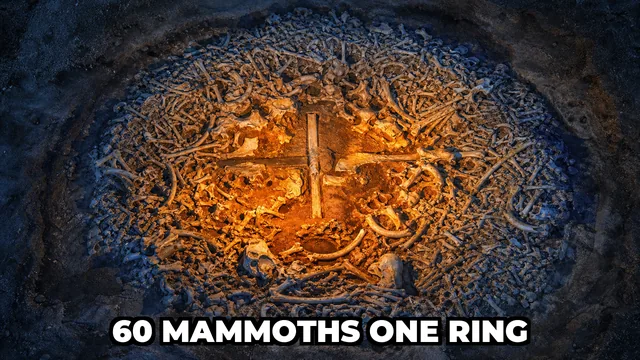
0:19They Built A 41ft Ring From 60 Mammoths 🦣
Oct 3, 2026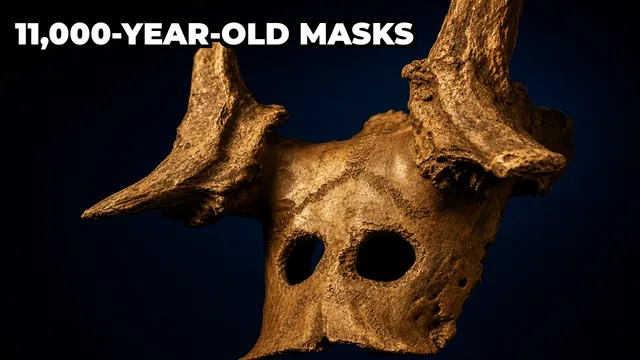 0:05
0:0533 Deer Skull Masks — 11,000 Years Old 🦌😱
Oct 2, 2026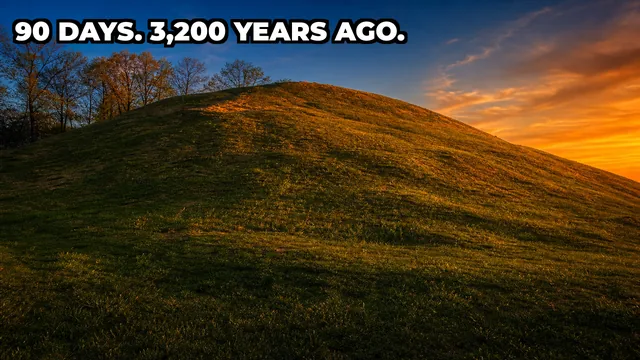 0:34
0:34A 72ft Mound Built In 90 Days, 3,200 Years Ago 🪣
Oct 1, 2026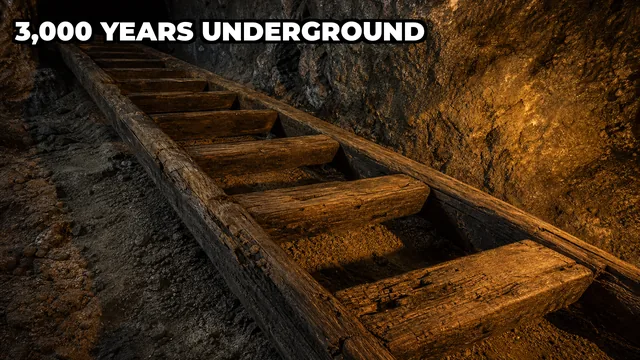 0:37
0:373,400-Year-Old Stairs Still Stand In A Salt Mine 🪜
Sep 30, 2026 0:11
0:112,498 Jade Plates Hid a Secret for 2,000 Years 👑
Sep 28, 2026 0:06
0:06