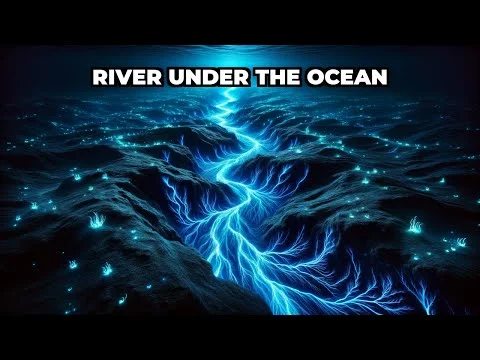
Could the Axial Seamount Underwater Volcano Trigger a Devastating Tsunami?
March 27, 2026
Yes, the Axial Seamount off the Oregon coast could potentially trigger a tsunami when it erupts, though the actual risk and magnitude remain subjects of ongoing scientific study. This underwater volcano is one of the most active seamounts in the Pacific Ocean and has erupted as recently as 2015.
What Is Axial Seamount?
Axial Seamount is an active underwater volcano located approximately 300 miles off the Oregon coast. Rising about 3,000 feet from the ocean floor, this seamount sits at the intersection of the Juan de Fuca Ridge and the Cobb-Eise Seamount Chain. Scientists consider it one of the most closely monitored underwater volcanoes in the world, making it an invaluable natural laboratory for understanding deep-sea volcanic processes.
The seamount has erupted three times in recent decades—in 1998, 2011, and 2015—with scientists successfully predicting the most recent eruption. This predictive success has made Axial Seamount a crucial site for advancing our understanding of underwater volcanic activity.
How Underwater Volcanoes Create Tsunamis
Underwater volcanic eruptions can generate tsunamis through several mechanisms. The most significant threat comes from massive landslides triggered by volcanic activity, where millions of tons of rock and sediment suddenly collapse into the ocean. These underwater landslides displace enormous volumes of water, creating shockwaves that propagate outward as tsunami waves.
Volcanic explosions themselves can also displace water, though this typically occurs with shallower underwater volcanoes. The rapid movement of the seafloor during an eruption creates pressure waves that travel through the water at speeds of up to 500 miles per hour in deep ocean waters.
The Real Tsunami Risk Assessment
While Axial Seamount could theoretically generate a tsunami, scientists emphasize that the actual risk depends on numerous factors. The seamount’s depth—its summit sits about 4,900 feet below the surface—means that smaller eruptions are unlikely to create significant surface waves. However, a major eruption involving substantial seafloor deformation or landslides could pose a more serious threat.
The Pacific Northwest, including coastal Oregon, Washington, and Northern California, would face the most immediate risk. However, the region already faces significant tsunami threats from the Cascadia Subduction Zone, which poses a much more immediate and well-documented danger.
Scientific Monitoring and Prediction
Axial Seamount hosts one of the world’s most sophisticated underwater monitoring systems. The Ocean Observatories Initiative has installed a network of sensors that continuously monitor seismic activity, water temperature, and chemical changes. This real-time data helps scientists track the volcano’s behavior and has enabled successful eruption predictions.
The monitoring system has revealed fascinating insights about deep-sea volcanic processes and the unique ecosystems that thrive around hydrothermal vents. These extreme environments, with their boiling temperatures and acidic conditions, support remarkable forms of life that exist nowhere else on Earth.
Unique Deep-Sea Life
The hydrothermal vents around Axial Seamount create oases of life in the deep ocean. Tube worms, specialized bacteria, and other organisms thrive in conditions that would be lethal to most life forms. These creatures have evolved unique biochemical processes that convert chemical energy from the volcanic vents into usable energy, providing scientists with insights into how life might exist in extreme environments elsewhere in the universe.
FREQUENTLY ASKED
How often does Axial Seamount erupt? ▾
Axial Seamount has erupted three times since 1998, with eruptions occurring in 1998, 2011, and 2015, suggesting a roughly 13-year cycle.
What warning time would we have for an Axial Seamount tsunami? ▾
Warning time would depend on the eruption's magnitude and location, but coastal areas could have anywhere from minutes to several hours to prepare, similar to other Pacific tsunami events.
Is Axial Seamount more dangerous than the Cascadia Subduction Zone? ▾
The Cascadia Subduction Zone poses a much more immediate and well-documented tsunami threat to the Pacific Northwest than Axial Seamount.