Who Built Bagan’s Temples?
The thousands of ancient Buddhist temples spread across the plains of Bagan, Myanmar were built primarily during the Pagan Empire (9th–13th centuries), with King Anawrahta and his royal successors credited with commissioning the vast majority of the structures — a building campaign so ambitious it produced an estimated 10,000 temples over roughly two centuries.
The Pagan Empire and Its Sacred Capital
Bagan served as the capital of the Pagan Empire, the first unified kingdom of Burma. At its height, the city was one of the most densely constructed religious sites in the ancient world. Today, more than 2,200 temples, pagodas, and monasteries survive across a 40-square-mile plain along the Irrawaddy River — a landscape so otherworldly it rivals Angkor Wat and Machu Picchu in sheer historical scale.
The empire’s rulers viewed temple construction as both a religious obligation and a display of royal power. Each king sought to outdo his predecessor, donating land, labor, and wealth to fund ever-grander structures dedicated to Theravada Buddhism.
King Anawrahta: The Founder Who Started It All
King Anawrahta, who unified Burma in 1044 CE, is widely regarded as the architect of Bagan’s religious transformation. After converting to Theravada Buddhism and conquering the Mon kingdom of Thaton, he returned with Buddhist monks, scriptures, and artisans who fundamentally shaped Bagan’s temple-building culture. His reign set off a construction boom that his successors would continue for generations.
Two later kings — Kyansittha and Alaungsithu — each added iconic structures. The Ananda Temple, built by Kyansittha around 1105 CE, is considered Bagan’s most perfectly preserved and architecturally refined temple, still actively used for worship today.
What Makes Bagan Architecturally Remarkable?
Bagan’s temples span a wide range of architectural styles, blending Mon, Burman, and Indian influences. Some temples were hollow, designed for worshippers to enter and meditate inside. Others were solid stupas — sealed structures housing sacred relics, never intended for entry. The largest sealed stupa in Bagan, the Dhammayazika Pagoda, exemplifies this tradition with its distinctive five-sided design.
Inside many temples, elaborate murals and thousands of Buddha images were painted and sculpted, creating immersive devotional environments. The variety across 2,200+ surviving structures means no two temples are exactly alike.
The 2016 Earthquake and Ongoing Preservation
In August 2016, a magnitude 6.8 earthquake struck the Bagan region, damaging more than 400 structures and toppling dozens of spires and finials. The disaster drew international attention to the fragility of the site and sparked debate over restoration practices, with UNESCO and Myanmar’s government disagreeing on methods.
Bagan was finally inscribed as a UNESCO World Heritage Site in 2019, a designation long delayed partly due to concerns over government-mandated relocation of local residents from the archaeological zone in the 1990s.
Why Is Bagan So Overlooked?
Despite its scale, Bagan remains far less famous in Western popular culture than comparable ancient sites. Decades of political isolation under Myanmar’s military governments limited tourism and international scholarship. As Myanmar cautiously opened to visitors in the 2010s, Bagan began attracting travelers — but political instability following the 2021 military coup has once again restricted access and overshadowed the site’s cultural legacy.
For those who have witnessed Bagan’s temples at sunrise from a hot air balloon or a temple terrace, the experience is described as one of the most profound on Earth — a silent, mist-covered plain dotted with thousands of ancient spires stretching to every horizon.
FREQUENTLY ASKED
How many temples are in Bagan, Myanmar? ▾
More than 2,200 temples, pagodas, and monasteries survive in Bagan today, though historical records suggest as many as 10,000 structures were originally built during the Pagan Empire.
When was the Pagan Empire in Myanmar? ▾
The Pagan Empire existed from approximately the 9th to the 13th century CE, with its peak of power and temple construction occurring between 1044 and 1287 CE.
Is Bagan a UNESCO World Heritage Site? ▾
Yes, Bagan was inscribed as a UNESCO World Heritage Site in 2019, after a long delay related to concerns over the forced relocation of local residents from the archaeological zone.
What religion are the Bagan temples associated with? ▾
The temples of Bagan are Buddhist, built in the tradition of Theravada Buddhism, which King Anawrahta adopted and promoted as the empire's state religion in the 11th century.
What damage did the 2016 earthquake cause in Bagan? ▾
A magnitude 6.8 earthquake in August 2016 damaged more than 400 structures in Bagan, collapsing spires and toppling finials across the ancient site.
Can tourists still visit Bagan today? ▾
Bagan is technically open to visitors, but tourism has significantly declined following Myanmar's military coup in February 2021, and many governments advise against non-essential travel to the country.
GO DEEPER
KEEP EXPLORING
 0:43
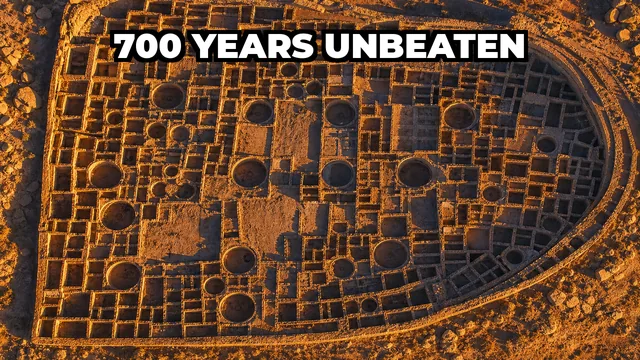
0:43Why Build 600 Rooms for 70 People? 🏛️
Oct 23, 2026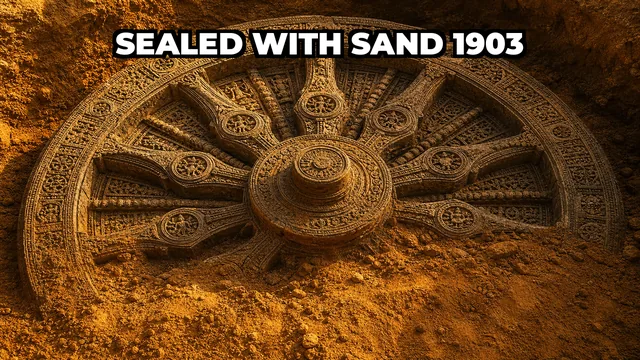 0:36
0:36The 1250 Stone Chariot With Iron Beams Inside 🏛️
Oct 22, 2026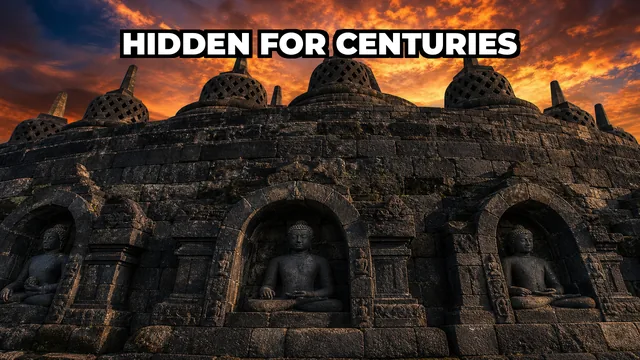 0:02
0:02504 Buddhas. Zero Mortar. Hidden for Centuries 🏛️
Oct 21, 2026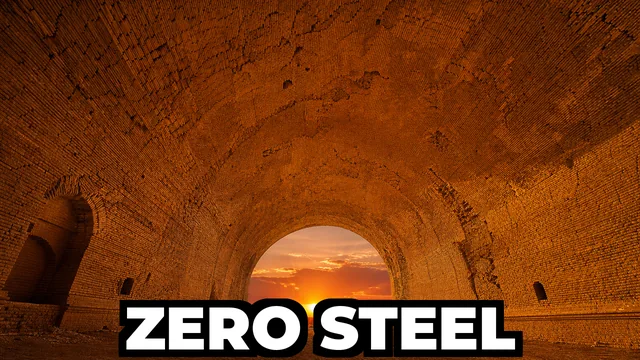 0:53
0:53121ft Tall — No Steel, No Framework 🏛️
Oct 20, 2026 0:54
0:54Two Crews Dug Blind Through a Mountain — And Met 🏔️
Oct 18, 2026 0:57
0:57