The Bermuda Triangle is not statistically more dangerous than any other heavily traveled stretch of ocean — Lloyd’s of London charges no extra insurance premium for ships crossing it, and the US Coast Guard does not recognize it as a specific hazard zone.
What the Experts Actually Say
Lloyd’s of London is the world’s most respected marine insurance market. Its entire business depends on accurately pricing risk, which means tracking precisely where ships go missing and why. Lloyd’s does not charge a higher premium for transiting the Bermuda Triangle. That single fact carries more weight than decades of bestselling books and television specials — because it reflects real money staked on real data.
The US Coast Guard reaches the same conclusion through a different lens. Its own incident records show no disproportionate rate of disappearances in the Triangle compared to any other heavily traveled ocean region of equivalent size. The agency does not formally recognize the area as a hazard zone. The US Board on Geographic Names goes even further: it maintains no file on the Bermuda Triangle at all. Officially, the place does not exist.
How the Myth Was Built
In 1974, author Charles Berlitz published The Bermuda Triangle, a book that would eventually sell nearly 20 million copies worldwide. Berlitz cherry-picked incidents, omitted storm records, and — in multiple verified cases — included ships that sank in completely different oceans. The book was a sensation precisely because it stripped away the mundane explanations and left only the inexplicable.
Reporters amplified the effect. Each new wreck or disappearance in the Atlantic was credited to the same supernatural forces, feeding a myth that grew faster than any correction could travel. The story was simply too compelling to fact-check.
The Researcher Who Did the Math
A librarian named Lawrence David Kusche spent years doing what journalists hadn’t: pulling the original records. His 1975 book, The Bermuda Triangle Mystery — Solved, methodically cross-referenced Lloyd’s of London files, Coast Guard reports, and historical shipping logs against the incidents Berlitz had cited. The findings were blunt. Many of the famous disappearances either never happened, occurred in different locations entirely, or had perfectly documented explanations — storms, mechanical failure, human error — that had simply been omitted.
Kusche noted, with dry precision, that if Berlitz reported a vessel was red, it was almost certainly some other color.
Why the Numbers Were Always Ordinary
The Triangle covers roughly 500,000 square miles and sits astride one of the busiest maritime corridors on the planet. More ships crossing a region means more raw incidents in absolute terms. But the rate per crossing — the only number that actually measures risk — is no different from comparable ocean areas anywhere else. A large raw count was hiding a completely unremarkable rate. The math was never mysterious; it just wasn’t what anyone wanted to hear.
The One Thing That Is Genuinely Unusual
The Sargasso Sea, which overlaps the Bermuda Triangle, is the only sea on Earth with no land boundaries — defined entirely by surrounding ocean currents rather than coastlines. That distinction is real and scientifically recognized. The mystery, however, stops there.
The Legend That Outlived Its Corrections
No government agency on Earth has designated the Bermuda Triangle a hazard. Ships cross it every day, insured at standard rates, crewed by sailors who treat it like any other stretch of deep water. The legend persisted not because the evidence supported it, but because a compelling story, once told at scale, is extraordinarily hard to un-tell. The corrections existed. The world just preferred the myth.
FREQUENTLY ASKED
Does Lloyd's of London charge extra insurance for ships crossing the Bermuda Triangle? ▾
No. Lloyd's of London charges standard rates for voyages through the Bermuda Triangle, reflecting their data that the area poses no greater risk than any comparable ocean region.
Does the US Coast Guard recognize the Bermuda Triangle as a danger zone? ▾
No. The US Coast Guard does not officially recognize the Bermuda Triangle as a specific hazard zone and reports no unusual rate of incidents there compared to other heavily traveled ocean areas.
Who debunked the Bermuda Triangle myth? ▾
Librarian and researcher Lawrence David Kusche published *The Bermuda Triangle Mystery — Solved* in 1975, demonstrating that most famous incidents were misreported, relocated, or entirely fabricated.
How did the Bermuda Triangle myth start? ▾
Charles Berlitz's 1974 bestseller *The Bermuda Triangle* popularized the legend by selectively presenting incidents while omitting documented explanations like storms and mechanical failure.
What is the Sargasso Sea and how does it relate to the Bermuda Triangle? ▾
The Sargasso Sea overlaps the Bermuda Triangle and is uniquely the only sea on Earth with no land boundaries, defined entirely by surrounding ocean currents — though this has nothing to do with mysterious disappearances.
Does the Bermuda Triangle officially exist as a geographic designation? ▾
No. The US Board on Geographic Names maintains no file on the Bermuda Triangle, meaning it has no official geographic status whatsoever.
KEEP EXPLORING
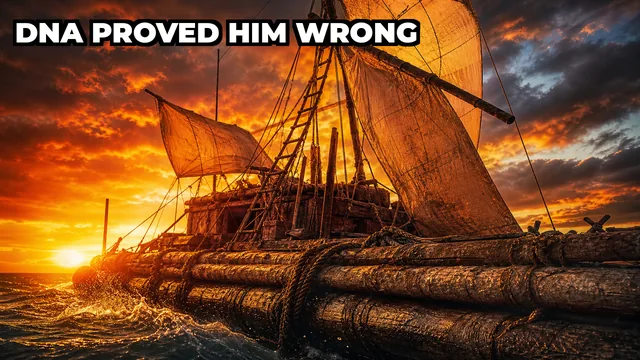 0:05
He Sailed 4,300 Miles on Logs — Then Science Said No 🪵
Oct 21, 2026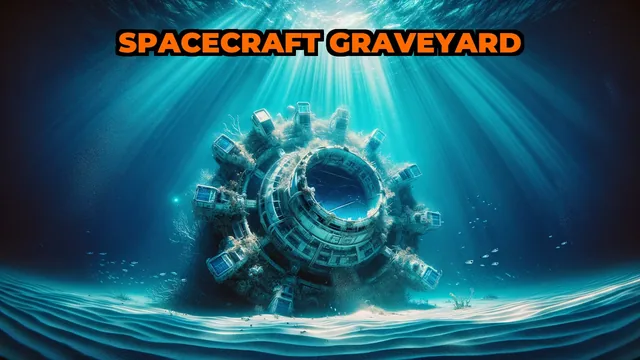 0:21
Where Space Stations Go to Rest 🌊 (1,670 Miles From Land)
Oct 20, 2026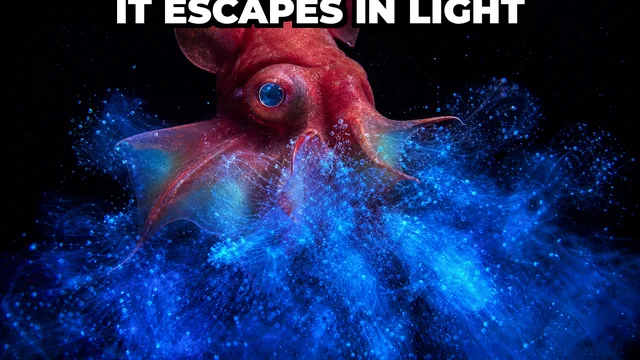 0:38
The Vampire Squid Escapes in a Cloud of Light 🦑
Oct 19, 2026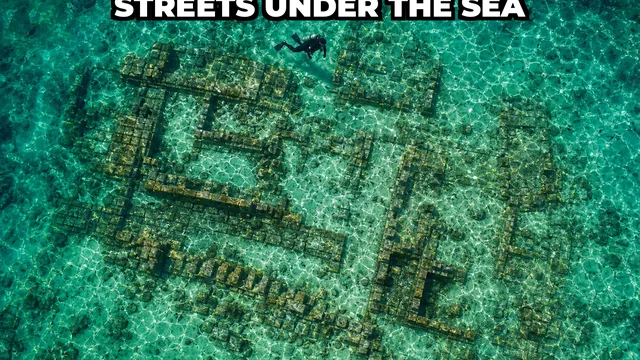 0:01
This 5,000-Year-Old Town Still Has Streets Under the Sea 🌊
Oct 17, 2026 0:45
They Dove 7 Miles Down — Then Something Cracked 🌊
Oct 15, 2026 0:51