What Is a Black Hole Star?
A black hole star is a newly confirmed class of cosmic object — a glowing shell of gas roughly the width of our solar system surrounding an actively feeding black hole at its centre, discovered by astronomers using the James Webb Space Telescope.
A Discovery That Broke Every Category
Astronomers have spent decades sorting the universe into familiar bins: stars, black holes, neutron stars, quasars. The object revealed by the James Webb Space Telescope fits none of them. Scientists are calling it a black hole star — not because the name is tidy, but because no existing label comes close.
At its centre sits a black hole with a mass one hundred thousand times that of our Sun. Surrounding it is a luminous shell of gas, stretched across a distance comparable to our entire solar system, glowing as that black hole pulls in and devours surrounding matter. One object. Two natures. Neither fully one thing nor the other.
How Old Is It — and Why Does That Shock Scientists?
This object existed just 660 million years after the Big Bang. In cosmic terms, that is infancy. The universe had barely finished its first chapter, and yet here was something monstrous — a black hole of 100,000 solar masses already assembled and feeding.
Current models of cosmic evolution struggle to explain this. Black holes are supposed to grow gradually, feeding over billions of years. Objects this massive this early should not exist. Their presence forces astronomers to reconsider how quickly — and through what mechanisms — matter can collapse and concentrate in the early universe.
The Origin of All Supermassive Black Holes?
Here is where the discovery becomes truly staggering. Scientists now suspect that objects like this black hole star may be the seed events that eventually produced every supermassive black hole sitting at the centre of every large galaxy in the observable universe — including Sagittarius A*, the four-million-solar-mass black hole at the heart of our own Milky Way.
For decades, the origin of supermassive black holes has been one of astronomy’s most stubborn unsolved problems. They are too big, too old, and too widespread to have grown from ordinary stellar black holes alone. Black hole stars — forming in the ultra-dense, radiation-rich environment of the early universe — may represent the missing first step: a shortcut to mass that conventional stellar evolution cannot provide.
What the James Webb Telescope Made Possible
This discovery would have been impossible without the James Webb Space Telescope’s extraordinary infrared sensitivity. Light from this object has been travelling for more than 13 billion years. Webb can detect the faint chemical signatures and structural features embedded in that ancient light, allowing astronomers to reconstruct what the object looked like — and how it behaved — near the beginning of cosmic time.
The identification of a structurally distinct gas shell surrounding a feeding black hole, rather than a conventional quasar or starburst galaxy, is what allowed the team to declare this a genuinely new class of object rather than an unusual example of something already known.
Why This Changes Our Picture of the Universe
Every galaxy we can observe — including our own — appears to harbour a supermassive black hole at its core. Those black holes shaped the galaxies around them, regulating star formation and driving galactic evolution across billions of years. If black hole stars are where that story begins, then this single Webb discovery touches the origin of almost every structure in the visible universe.
Astronomy rarely produces moments where one object reframes everything else. This may be one of them.
FREQUENTLY ASKED
What is a black hole star? ▾
A black hole star is a newly identified class of cosmic object consisting of a glowing gas shell the width of our solar system wrapped around an actively feeding black hole at its centre.
How massive is the black hole inside the black hole star? ▾
The black hole at the centre of this object has a mass approximately 100,000 times that of our Sun, an extraordinary amount for the early universe.
How early in the universe did this black hole star exist? ▾
This object existed just 660 million years after the Big Bang, when the universe was still in its cosmic infancy and such massive objects were not expected to have formed yet.
Could black hole stars explain where supermassive black holes come from? ▾
Scientists believe black hole stars may be the seed events that grew into the supermassive black holes now found at the centres of large galaxies, including the Milky Way.
How did the James Webb Space Telescope detect this object? ▾
Webb's infrared instruments captured light that had travelled over 13 billion years, allowing astronomers to identify the object's distinct gas shell structure and separate it from known object types like quasars.
Is a black hole star the same as a quasar? ▾
No — while both involve actively feeding black holes, a black hole star has a structurally distinct surrounding gas shell and forms a genuinely new category rather than a variant of an existing one.
GO DEEPER
KEEP EXPLORING
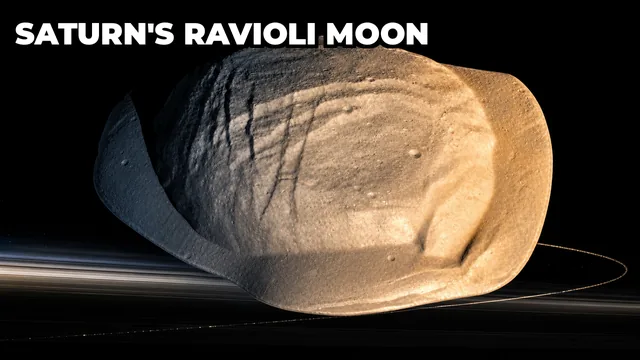 0:49
0:49Saturn Is Hiding A Moon Shaped Like Ravioli 🍝
Oct 3, 2026 0:32
0:32NASA Built It For 5 Flights. It Flew 72 On Mars 🚁
Sep 30, 2026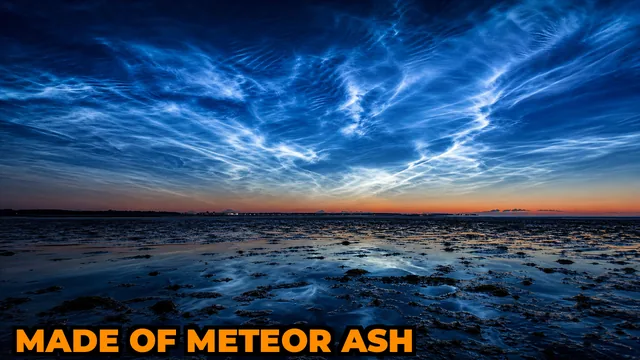 0:31
0:31The Cloud That Forms 52 Miles Up From Meteor Smoke ✨
Sep 30, 2026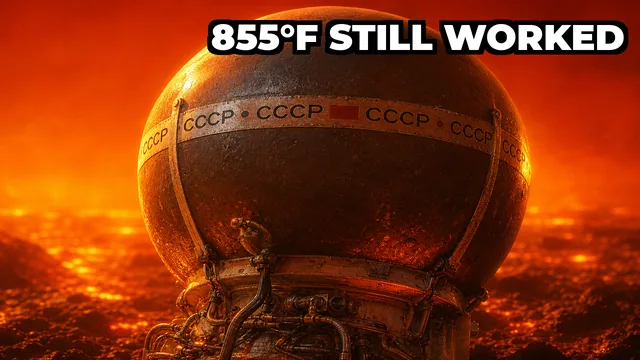 0:16
0:16The Only Color Photos Ever Taken On Venus 📸
Sep 27, 2026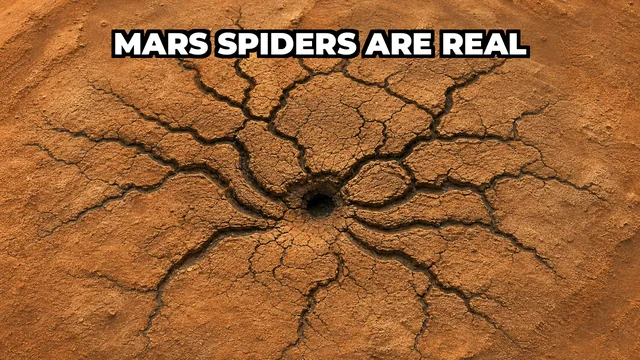 0:51
0:51Mars Grows 'Spiders' Every Spring 🕷️ Here's Why
Sep 26, 2026 0:23
0:23