What Is the Black Swallower Fish and How Does It Eat Prey Twice Its Size?
May 12, 2026
The black swallower (Chiasmodon niger) is a deep-sea fish that can consume prey up to 4.5 times its own body length and 10 times its mass despite being only 10 inches long. This remarkable ability is made possible by its highly expandable stomach that lacks rigid skeletal constraints.
Habitat and Physical Characteristics
The black swallower inhabits the deep ocean at depths reaching 9,000 feet below the surface, where crushing pressure and complete darkness define the environment. At these extreme depths, food is scarce, making the ability to consume large prey when available a crucial survival adaptation.
Measuring a maximum of 10 inches in length, the black swallower appears unremarkable compared to other deep-sea predators. However, its modified anatomy sets it apart from most fish species. The absence of rigid skeletal structures around its stomach allows for extraordinary expansion capabilities.
Feeding Mechanism and Anatomy
The black swallower’s feeding process is a marvel of biological engineering. When encountering prey larger than itself, the fish employs a methodical approach, walking its jaws over the victim’s body inch by inch. This process can take considerable time, especially when dealing with prey more than twice the predator’s length.
The stomach wall stretches to accommodate massive meals, becoming so thin that scientists can observe the outline of consumed prey through the translucent tissue. This extreme elasticity allows the fish to store substantial amounts of food in an environment where the next meal is never guaranteed.
The Fatal Flaw: When Appetite Becomes Deadly
While the black swallower’s feeding strategy is generally successful, it occasionally proves fatal. The fish sometimes attempts to consume prey too large to digest efficiently. When this occurs, the prey begins decomposing before digestion is complete.
Decomposition produces gases within the stomach cavity, dramatically altering the fish’s buoyancy. Unable to control its depth, the black swallower rises involuntarily from its deep-sea habitat toward the surface. This journey to shallow waters, far from its natural environment, results in death.
Scientific Discovery Through Failure
Ironically, most black swallower specimens studied by scientists were discovered precisely because of these feeding miscalculations. In 2007, a notable specimen washed ashore near Grand Cayman containing a snake mackerel 4.5 times its body length. Such discoveries provide researchers with rare opportunities to study these elusive deep-sea creatures.
These surface appearances represent only the failures—countless successful feeding events occur in the deep ocean’s darkness, invisible to human observation. The specimens that reach the surface serve as evidence of both the species’ remarkable capabilities and its occasional overreach.
Ecological Significance
The black swallower’s feeding strategy reflects the harsh realities of deep-sea life, where energy conservation and opportunistic feeding are essential for survival. By consuming large prey infrequently rather than small prey regularly, these fish maximize their energy intake while minimizing hunting efforts in a nutrient-poor environment.
FREQUENTLY ASKED
How deep does the black swallower fish live? ▾
The black swallower lives at depths up to 9,000 feet below the ocean surface in complete darkness and crushing pressure.
What kills black swallower fish when they eat too much? ▾
When prey decomposes before digestion, the resulting gases make the fish buoyant, forcing it to rise to the surface where it dies outside its natural habitat.
How big can black swallower fish get? ▾
Black swallower fish typically reach a maximum length of about 10 inches, roughly the length of an adult human hand.
How does the black swallower fish consume prey larger than itself? ▾
The black swallower uses a methodical approach, walking its jaws over the victim's body inch by inch. Its highly expandable stomach lacks rigid skeletal constraints, allowing it to stretch and accommodate prey up to 4.5 times its body length.
Why do scientists find black swallower fish specimens on the surface? ▾
Scientists discover black swallower specimens that have washed ashore after the fish died from consuming prey too large to digest efficiently. These feeding miscalculations cause the fish to rise involuntarily to the surface due to gases produced during decomposition.
What is the black swallower's scientific name? ▾
The black swallower's scientific name is Chiasmodon niger.
GO DEEPER
KEEP EXPLORING
 0:38
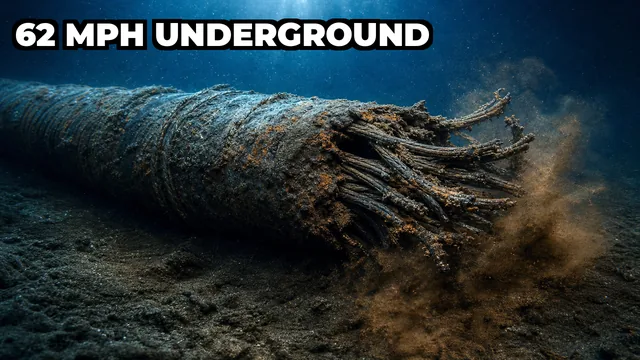
0:38In 1929 The Seafloor Snapped 12 Cables One By One 🌊
Oct 5, 2026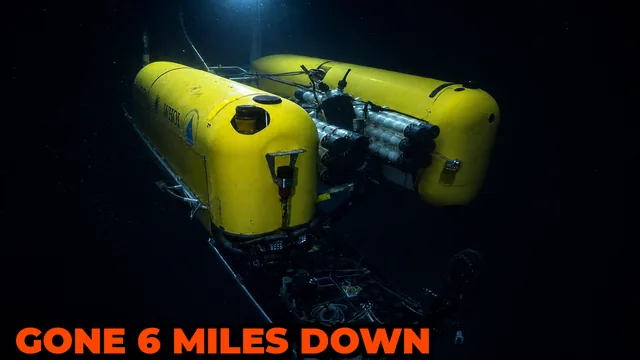 0:44
0:44$8M Robot Vanished 6 Miles Down 🌊 Here's Why
Oct 3, 2026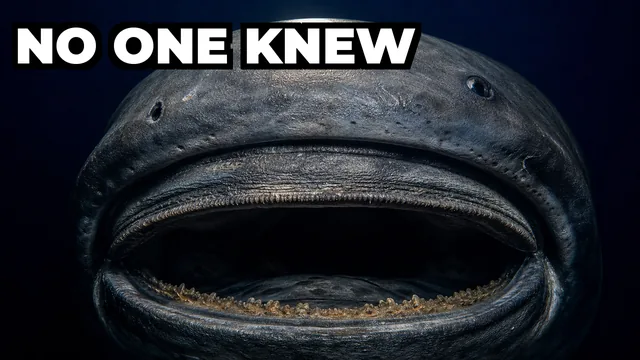 0:32
0:32A Navy Anchor Snagged A 1,500 lb Unknown Shark 🦈
Oct 1, 2026 0:44
0:44They Drove A Nuclear Sub On The Seafloor 😱
Sep 29, 2026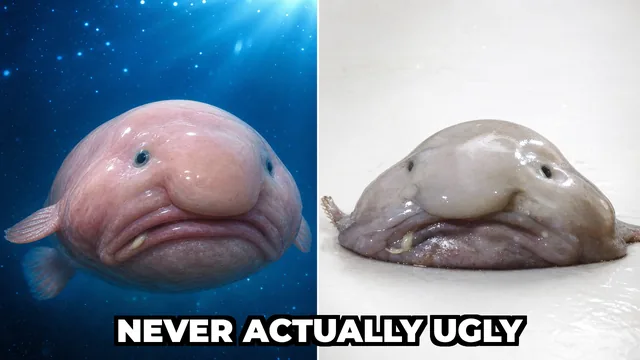 0:51
0:51The 'Ugliest' Animal Was Never Ugly 🐟
Sep 28, 2026 0:23
0:23