What Was the Forbidden Sacred Room Found Inside the Ancient Temple at Blaundos?
August 21, 2026
The Discovery at Blaundos
Archaeologists excavating the ancient city of Blaundos in western Turkey uncovered a physically walled-off sacred zone inside a nearly 1,900-year-old Roman temple — a restricted area that only priests were ever permitted to enter, with stone walls built directly into the architecture to enforce that prohibition.
What Is Blaundos?
Blaundos is an ancient city situated on a dramatic plateau above one of Anatolia’s deepest river canyons, located in what is now the Uşak province of western Turkey. The city was originally founded by Macedonian settlers — descendants of soldiers from Alexander the Great’s campaigns — which gave it a distinct cultural identity that blended Hellenistic tradition with later Roman influence. By the time the temple in question was constructed, roughly two thousand years ago during the height of the Roman imperial period, Blaundos had become a layered civilization shaped by centuries of Greek and Roman religious practice.
Serious archaeological excavations at the site only began in earnest in 2018, making Blaundos one of the more recently opened windows into the ancient world of Asia Minor. In a relatively short time, the site has already produced findings that are reshaping how historians understand sacred architecture and religious life in Roman Anatolia.
The Walled Sacred Zone
At the heart of the recent discovery is a temenos — a term from ancient Greek meaning a sacred precinct or reserved area — that was physically separated from the rest of the temple interior using permanent stone walls. This is what makes the find so significant. In most ancient temples across the Greek and Roman worlds, sacred boundaries were enforced through ritual, ceremony, and social custom. Worshippers were expected to stop at certain points out of religious obligation, not because a wall prevented them from going further.
At Blaundos, that boundary was engineered into the building itself. The restricted zone was not marked by a painted line or a ceremonial rope — it was enclosed by actual masonry. The architecture made the rule physical. Ordinary worshippers, regardless of their social status or wealth, could not pass beyond that threshold. Only priests held access.
Why This Matters for Understanding Ancient Religion
This architectural choice reflects a deliberate theological and social decision by the builders. By embedding the restriction into the structure of the temple, the religious authorities at Blaundos created a permanent, unambiguous hierarchy of sacred space. The inner zone was not just holier in practice — it was holier by design, separated from the profane world in a way that could not be ignored or negotiated around.
Finds like this challenge the assumption that Roman-era temples followed a uniform model. Blaundos demonstrates that local traditions — in this case, the Macedonian-Greek heritage of the city’s founders — could produce distinct variations in how sacred space was conceived and constructed.
Ongoing Excavations
With excavations at Blaundos still in their early stages, archaeologists expect more discoveries in the years ahead. The temple and its forbidden inner chamber represent just one chapter of a site that has barely been opened. Each season of digging adds new detail to a city that, until recently, was largely unknown outside specialist circles. The ancient world, it turns out, still has rooms we have not yet entered.
FREQUENTLY ASKED
What is a temenos in ancient Greek and Roman religion? ▾
A temenos is a sacred precinct or reserved area set apart from ordinary space, typically surrounding or contained within a temple. At Blaundos, the temenos was unusually enforced by permanent stone walls rather than just ritual custom.
Where is the ancient city of Blaundos located? ▾
Blaundos is located in the Uşak province of western Turkey, perched on a plateau above one of Anatolia's deepest river canyons.
Who founded the ancient city of Blaundos? ▾
Blaundos was founded by Macedonian settlers, believed to be descendants of soldiers who served under Alexander the Great during his military campaigns.
When did archaeological excavations begin at Blaundos? ▾
Systematic archaeological excavations at Blaundos began in earnest in 2018, making it a relatively recently explored ancient site.
How old is the temple discovered at Blaundos? ▾
The temple is approximately 1,900 years old, constructed during the height of the Roman imperial period around the first or second century CE.
Why were ordinary people forbidden from entering parts of ancient temples? ▾
In ancient Greek and Roman religion, inner sanctuaries were considered the dwelling place of the deity and could only be approached by priests who performed the required rituals. At Blaundos, this restriction was reinforced structurally through walled enclosures.
GO DEEPER
KEEP EXPLORING
 0:49
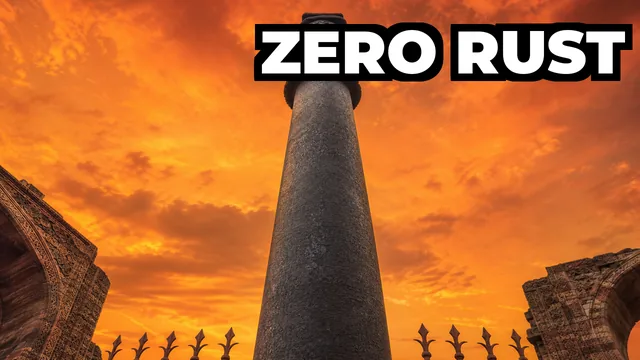
0:49This Iron Pillar Refused To Rust For 1,600 Years ⚙️
Oct 5, 2026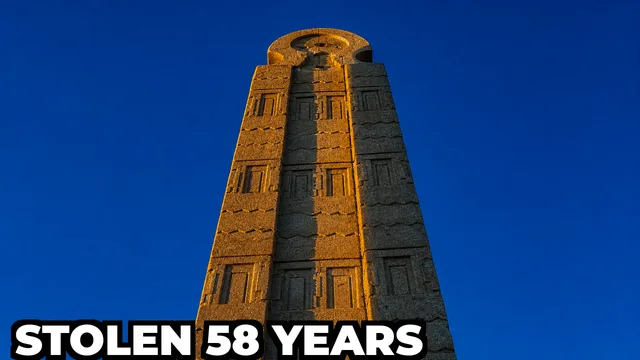 0:52
0:52A 160-Ton Obelisk Flew Home After 68 Years ✈️
Oct 4, 2026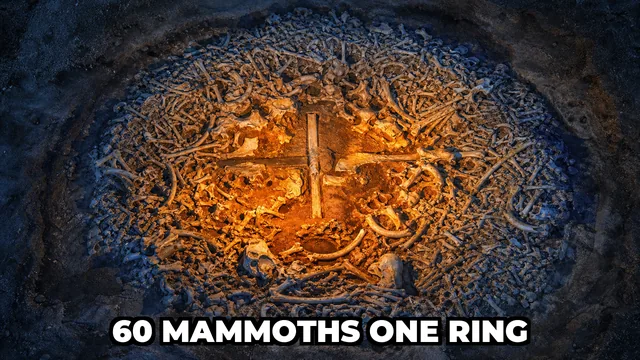 0:19
0:19They Built A 41ft Ring From 60 Mammoths 🦣
Oct 3, 2026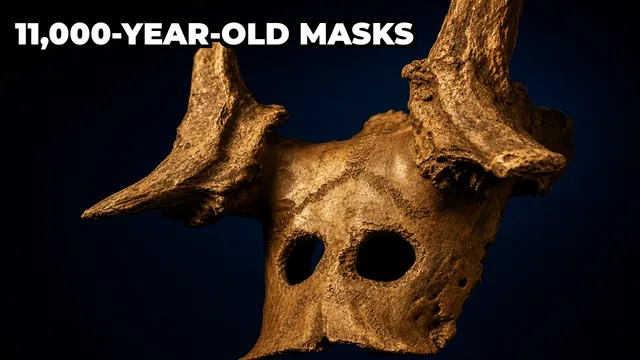 0:05
0:0533 Deer Skull Masks — 11,000 Years Old 🦌😱
Oct 2, 2026 0:34
0:34A 72ft Mound Built In 90 Days, 3,200 Years Ago 🪣
Oct 1, 2026 0:37
0:37