No — the blobfish’s famous sagging, melted appearance is not what the animal looks like in real life. The grotesque face seen in every meme and headline is the result of decompression damage and physical distortion caused by bringing the fish up from extreme ocean depths.
The Real Story Behind Mr Blobby
In 2003, a joint Australian and New Zealand research voyage known as the NORFANZ expedition was conducting deep-sea surveys in the Pacific Ocean. During the expedition, a net was dragged up from approximately 4,000 feet (around 1,200 metres) below the surface. Among the catch was a small, otherwise unremarkable fish — a fathead sculpin (Psychrolutes marcidus). Scientists on board nicknamed it Mr Blobby. The photograph taken of the specimen upon arrival on deck would go on to become one of the most recognised animal images in internet history — for entirely the wrong reasons.
What Pressure Does to a Deep-Sea Fish
At 4,000 feet beneath the surface, water pressure runs at roughly 120 atmospheres — approximately 1,760 pounds per square inch. That crushing pressure is not hostile to Mr Blobby; it is essential to him. The fathead sculpin’s body is composed largely of soft, gelatinous tissue that is slightly less dense than the surrounding seawater. This low-density flesh allows the fish to hover just above the seafloor without needing a swim bladder — the gas-filled organ most fish use for buoyancy. At depth, that soft body is held in a coherent, fish-shaped form by the immense weight of the water column above it.
What Happens During Decompression
The moment Mr Blobby’s net began rising toward the surface, everything changed. As pressure dropped rapidly during the ascent, the gelatinous flesh — no longer supported by the surrounding water — expanded, distorted, and collapsed. Without a swim bladder to rupture explosively, the fish did not burst, but the structural damage was severe and permanent. By the time the specimen reached the deck, its face had taken on the drooping, flattened appearance that the world would later vote the ugliest in the animal kingdom. What you see in the photograph is a fish that has been physically destroyed by physics.
How the Blobfish Won the Ugliest Animal Vote
In 2013, the Ugly Animal Preservation Society ran a public vote to choose a mascot — a deliberately ugly creature to represent species that conservation efforts tend to overlook. Mr Blobby’s decompression photograph was entered into the competition. The public voted overwhelmingly in its favour, and the blobfish was officially crowned the world’s ugliest animal. The entire global reputation of a species was cemented by a single image of a specimen that had just been mangled by rapid pressure change. The vote was, in effect, built on a false image.
Where Mr Blobby Is Now
The original Mr Blobby specimen is preserved in a jar at the Australian Museum in Sydney, where it remains one of the institution’s most celebrated and frequently enquired-about specimens. It sits in ethanol, still wearing the distorted face it was never born with — the most famous fish in the world, known everywhere for a look it never actually had in life.
What the Blobfish Really Looks Like
At depth, the fathead sculpin resembles a fairly ordinary, somewhat plain-looking fish. It has a large head relative to its body, small eyes, and pale pinkish-grey coloration — but nothing remotely resembling the drooping blob of internet fame. The “ugliness” is entirely an artefact of how the specimen was collected, not a feature of the living animal. In its actual habitat, hovering quietly above the dark seafloor of the deep Pacific, Mr Blobby looks nothing like a meme.
FREQUENTLY ASKED
What does a blobfish actually look like underwater? ▾
At depth, the blobfish (fathead sculpin) looks like a relatively ordinary pale, large-headed fish — nothing like the drooping, melted face seen in photographs. Its bizarre appearance only emerges after it is hauled to the surface and decompression distorts its gelatinous body.
Why does the blobfish look melted in photos? ▾
The melted appearance is caused by decompression damage during the rapid ascent from around 4,000 feet. The extreme pressure at that depth normally holds the fish's soft, gelatinous flesh in shape, and removing that pressure causes it to collapse and distort permanently.
What is the NORFANZ expedition? ▾
NORFANZ was a joint Australian and New Zealand deep-sea research voyage conducted in 2003 to survey marine life in the Pacific Ocean. It was during this expedition that the specimen nicknamed Mr Blobby — the original blobfish — was trawled up from approximately 4,000 feet.
Where is the original Mr Blobby specimen kept? ▾
The original Mr Blobby specimen is preserved in a jar at the Australian Museum in Sydney, Australia, where it is one of the institution's most famous and frequently enquired-about exhibits.
How did the blobfish win the ugliest animal competition? ▾
In 2013, the Ugly Animal Preservation Society held a public vote to choose a mascot for overlooked species, and the decompression photograph of Mr Blobby won by a wide margin. The vote was based on an image of a physically distorted specimen, not the living animal.
Does the blobfish have a swim bladder? ▾
No — the fathead sculpin does not have a swim bladder. Instead, it achieves neutral buoyancy through its gelatinous, low-density flesh, which is slightly less dense than the surrounding deep-sea water, allowing it to hover above the seafloor without expending energy.
GO DEEPER
KEEP EXPLORING
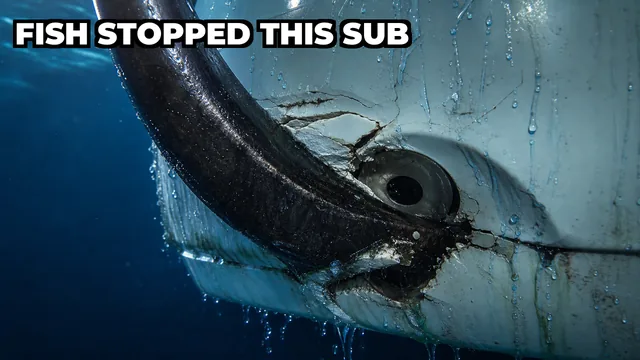 0:23
0:23A Swordfish Stopped This Sub at 2,000ft 🐟😱
Sep 26, 2026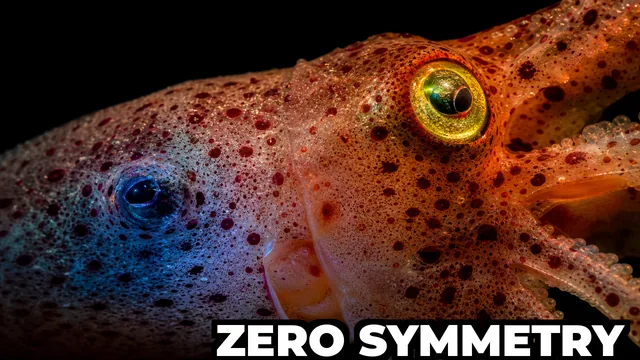 0:42
0:42This Squid Has Two Completely Different Eyes 🦑
Sep 25, 2026 0:34
0:34The 150ft Ocean Tower That Keeps Rising 🌋
Sep 22, 2026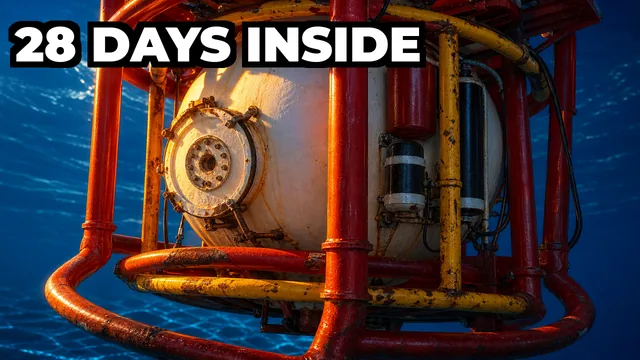 0:46
0:46These Divers Spend 28 Days At 1,000ft Deep 🌊
Sep 21, 2026 0:40
0:40Lost 2,500 Years — Then a Diver Found Them 🌊
Sep 20, 2026 0:39
0:39