What Is the Casimir Effect and How Does Empty Space Create Force?
May 31, 2026
The Casimir Effect Explained
The Casimir effect is a quantum mechanical phenomenon where two uncharged metal plates placed extremely close together experience an attractive force generated entirely by vacuum fluctuations in empty space. This counterintuitive force proves that what we consider “empty” space is actually teeming with quantum activity that can produce measurable physical effects.
Discovery and Prediction
Dutch physicist Hendrik Casimir first predicted this phenomenon in 1948 while working at Philips Research Laboratories. His groundbreaking insight was that quantum vacuum fluctuations—invisible energy ripples constantly occurring in seemingly empty space—become restricted between closely spaced plates. This restriction creates an imbalance where more quantum fluctuations exist outside the gap than inside, generating a net inward pressure that pushes the plates together.
The Incredible Strength of Vacuum Pressure
The Casimir force becomes extraordinarily powerful at microscopic scales. When two metal plates are positioned just 10 nanometers apart—thinner than a single DNA strand—the vacuum pressure between them equals one full atmosphere. This is the same amount of pressure that air exerts on your hand at sea level, yet it’s generated entirely by the quantum properties of empty space.
Real-World Consequences in Nanotechnology
This quantum force has serious implications for microscale engineering. In devices with moving parts smaller than 100 nanometers, the Casimir effect can cause permanent fusion of components—a failure mode engineers call “stiction.” The vacuum essentially welds these tiny parts shut forever, making this effect a critical consideration in nanotechnology design and manufacturing.
Experimental Confirmation and Breakthroughs
It took nearly 50 years for scientists to experimentally verify Casimir’s prediction. In 1997, Steven Lamoreaux at the University of Washington finally measured the effect with precision, confirming its reality. Even more remarkably, Harvard researchers discovered in 2009 that by placing a specially chosen fluid between the plates, they could make the Casimir force repulsive, causing empty space to push objects apart instead of together.
The Greatest Physics Puzzle
Despite confirming the Casimir effect, physicists face an enormous theoretical problem. Quantum field theory predicts that vacuum energy should be up to 120 orders of magnitude more powerful than what we actually observe—making this potentially the worst prediction in physics history. This massive discrepancy between theory and observation remains one of the deepest unsolved mysteries in modern science, highlighting how much we still don’t understand about the fundamental nature of empty space.
FREQUENTLY ASKED
How strong is the Casimir force between two metal plates? ▾
At 10 nanometers separation, the Casimir force creates pressure equal to one full atmosphere—the same pressure air exerts at sea level.
When was the Casimir effect first experimentally proven? ▾
Steven Lamoreaux first experimentally confirmed the Casimir effect in 1997, nearly 50 years after Hendrik Casimir's original 1948 prediction.
Can the Casimir effect damage microscopic machines? ▾
Yes, the Casimir force can permanently fuse moving parts in nanoscale devices smaller than 100 nanometers through a failure mode called stiction.
Is it possible to make the Casimir effect repulsive? ▾
Harvard researchers demonstrated in 2009 that using specific fluids between plates can flip the Casimir force from attractive to repulsive.
Why do quantum theory predictions about vacuum energy fail so dramatically? ▾
Quantum field theory predicts vacuum energy should be 120 orders of magnitude stronger than observed, creating the largest discrepancy between theory and experiment in physics.
What causes quantum vacuum fluctuations in empty space? ▾
Quantum vacuum fluctuations arise from the fundamental uncertainty principle, which requires that even empty space contains constantly appearing and disappearing virtual particle pairs.
GO DEEPER
KEEP EXPLORING
 0:24
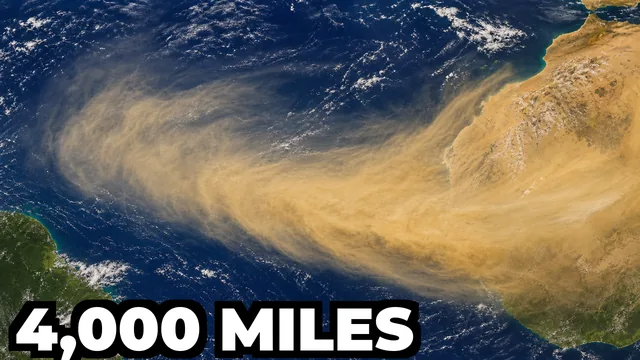
0:24The Sahara Desert Is Feeding the Amazon 🌍
Oct 23, 2026 0:10
0:10Heard 3,000 Miles Away — Krakatoa's 1883 Blast 🌋
Oct 22, 2026 0:52
0:52The Quake That Sent the Mississippi Upstream 🌊
Oct 21, 2026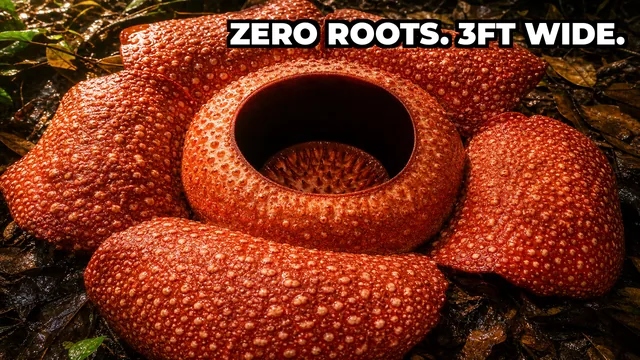 0:52
0:52A 24 lb Flower With No Roots Tricks Flies 😱
Oct 20, 2026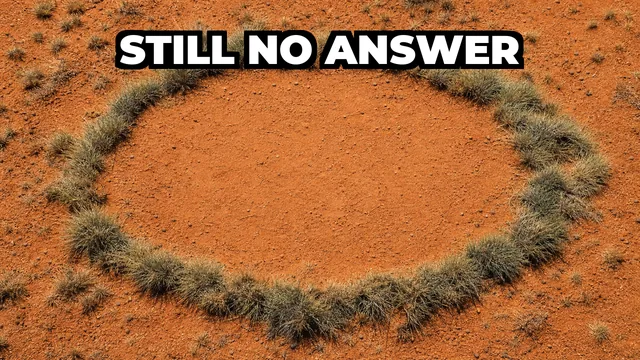 0:52
0:52Termites or Thirsty Grass? The Desert Can't Decide 🔵
Oct 19, 2026 0:48
0:48