What Is Chand Baori, and Why Is It 10°F Cooler at the Bottom?
September 22, 2026
What Is Chand Baori?
Chand Baori is an eighth-century stepwell located in Abhaneri, Rajasthan, India, featuring roughly 3,500 symmetrical steps descending nearly 100 feet through 13 stories — and its geometry creates a passive cooling effect that keeps the bottom 9 to 11 degrees Fahrenheit cooler than the surface above.
Who Built Chand Baori and When?
King Chanda of the Nikumbha dynasty commissioned the stepwell sometime in the eighth or ninth century CE, making it over 1,200 years old. The structure takes its name from the king himself — Chand for the ruler, Baori being the local Rajasthani word for stepwell. It stands in the village of Abhaneri, roughly 95 kilometers east of Jaipur, near the temple of Harshat Mata, which was built around the same period.
The Engineering That Still Puzzles Experts
Three of the stepwell’s four walls are lined with steps — not loosely arranged stones, but a precisely mirrored grid of narrow stairs that descend in perfect symmetry on every level. Not a single row is measurably out of alignment across the full 13-story descent. Modern surveyors and engineers who have studied the site note that achieving this level of geometric precision without modern instruments, laser levels, or standardized measurement tools is extraordinarily difficult to explain. The steps are uniform in width and rise, and the mirrored pattern on opposing walls matches exactly — a feat of planning that would challenge a contemporary construction crew.
Built for Survival, Not Spectacle
It’s tempting to look at Chand Baori and see a monument to royal ambition, but its purpose was far more practical. Rajasthan is among the driest regions on earth. Summer temperatures regularly exceed 100°F at the surface, and droughts could last years. A stepwell like Chand Baori solved two critical problems at once: it accessed deep groundwater that shallow wells could not reach, and it provided a cool refuge during the most punishing months of the year.
The cooling effect is not incidental — it is baked into the design. The descending geometry channels cool air downward while warm air rises and escapes. The thick stone walls insulate the lower levels from surface heat. The result is a naturally air-conditioned space that functions without any moving parts, power source, or mechanical system of any kind. It is passive thermodynamics carved from rock more than a millennium before electricity existed.
The Steps as a Water-Access System
The sheer number of steps — approximately 3,500 — served a direct functional purpose. As the water table dropped during dry seasons, people needed to descend further into the well to reach the surface of the water. The steps provided access to the water at any level, no matter how low it fell. This meant the well remained usable across the full seasonal range, from monsoon-swollen to drought-depleted. Every tier of steps was a contingency plan built in stone.
Chand Baori Today
The stepwell is now a protected archaeological site managed by the Archaeological Survey of India. Visitors are permitted to view and photograph it, though descending to the lower levels is restricted. It has appeared in several films, including The Dark Knight Rises and The Fall, which brought it to wider international attention. Despite its fame, it remains one of the most underappreciated feats of ancient engineering anywhere in the world — a structure that solved a brutal climate problem with nothing but geometry, stone, and an extraordinarily precise understanding of how air and water behave underground.
FREQUENTLY ASKED
How many steps does Chand Baori have? ▾
Chand Baori has approximately 3,500 steps arranged across three of its four walls, descending 13 stories to a depth of nearly 100 feet.
How old is the Chand Baori stepwell? ▾
Chand Baori was built around the eighth or ninth century CE, making it roughly 1,200 years old.
Why is Chand Baori cooler at the bottom? ▾
The stepwell's descending geometry channels cool air downward while warm air rises and escapes, combined with thick stone walls that insulate the lower levels — creating a passive cooling effect with no machinery required.
Where is Chand Baori located? ▾
Chand Baori is located in Abhaneri village in Rajasthan, India, approximately 95 kilometers east of Jaipur.
What was the purpose of stepwells in ancient India? ▾
Stepwells were built to access deep groundwater in arid regions, providing a reliable water supply year-round and offering a cool refuge during extreme heat.
Has Chand Baori appeared in any movies? ▾
Yes — Chand Baori has been used as a filming location in The Dark Knight Rises and The Fall, which helped bring international attention to the site.
KEEP EXPLORING
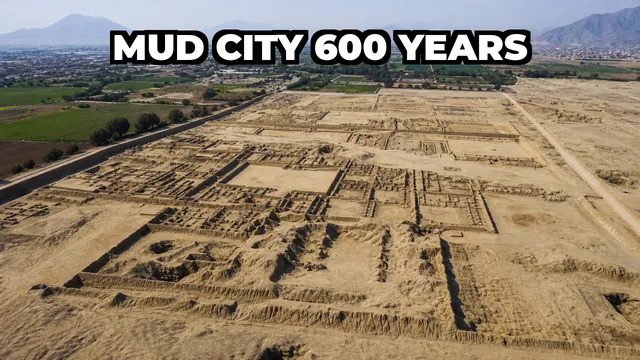 0:34
0:34A City Built From Mud That Outlasted Empires 🏜️
Sep 21, 2026 0:21
0:21A 40-Mile Lake Was Hidden In The Grand Canyon 🌊
Sep 21, 2026 0:40
0:40Lost 2,500 Years — Then a Diver Found Them 🌊
Sep 20, 2026 0:50
0:50The Treasure Map Carved In Copper 🗺️ (64 Sites, 0 Found)
Sep 19, 2026 0:43
0:43This 3,500yr-Old Gem Hides Carvings Too Small To See 🔍
Sep 17, 2026 0:26
0:26