The deepest point in the ocean is Challenger Deep, located in the Mariana Trench in the western Pacific Ocean, reaching approximately 35,800 feet (about 10,900 meters) below sea level. It takes its name from HMS Challenger, the British survey ship whose crew made the first recorded sounding of the trench on March 23, 1875.
The Day HMS Challenger First Measured the Trench
On March 23, 1875, sailors aboard HMS Challenger lowered a weighted hemp line into the Pacific Ocean between the islands of Guam and Palau. They watched the line run out — and kept watching — until it finally went slack at 4,475 fathoms, or about 26,850 feet. It was the deepest sounding recorded during the entire four-year global expedition. The crew sounded the spot a second time and got the same result, confirming they had touched something extraordinary.
The measurement was possible because of a clever mechanical trick: when the heavy sounder struck the seafloor, the tension on the line disappeared, the weights dropped away, and a hollow tube rode back up to the surface — carrying a plug of the ocean floor itself. That plug was a pale, chalky ooze composed of the tiny glassy shells of single-celled plankton, a substance scientists would later call radiolarian ooze.
How Deep Is the Mariana Trench, Exactly?
The point the Challenger crew measured in 1875 was not the absolute deepest spot — it was simply a sounding taken in the right neighborhood. Modern surveys have since mapped Challenger Deep at roughly 35,800 feet (10,900 meters), though precise measurements vary slightly depending on the instrument and method used. To put that in perspective: if you placed Mount Everest on the floor of the trench, its summit would still sit more than a mile underwater.
The pressure at the bottom is approximately 15,750 pounds per square inch (psi) — more than a thousand times the atmospheric pressure at sea level. The water temperature hovers just a few degrees above freezing.
What Lives at the Bottom of the Mariana Trench?
Despite those crushing, frigid, pitch-black conditions, the trench floor is not lifeless. Scientists have found microbes, single-celled foraminifera, amphipod crustaceans, and sea cucumbers living at the deepest known depths on Earth. None of them can use sunlight — the trench is far too deep for any light to penetrate.
Instead, the entire food web depends on what oceanographers call marine snow: a slow, continuous drift of organic material falling from the sunlit surface waters far above. This includes dead plankton, fecal matter, animal remains, and even fragments of sunken wood. What looks like a barren desert on the seafloor is actually sustained by a constant invisible rain from above.
When Did Humans First Visit Challenger Deep?
It took 85 years after the Challenger’s sounding before any human being descended to the deepest point and saw it directly. In January 1960, Jacques Piccard and U.S. Navy Lieutenant Don Walsh reached the bottom of Challenger Deep aboard the bathyscaphe Trieste. Filmmaker and explorer James Cameron made a solo dive to the bottom in 2012. Each visit has confirmed that even at the extreme limit of the ocean’s depth, life finds a way.
A Victorian Rope and a Living Floor
What makes the Challenger story so remarkable is its simplicity: a nineteenth-century crew with a weighted rope and a hollow tube pulled up the first evidence that the deepest seafloor was not bare rock, but a layer of biological remains — the compressed legacy of trillions of microscopic organisms. The floor they touched turned out to be built from life, and filled with it still.
FREQUENTLY ASKED
How deep is the Mariana Trench in miles? ▾
The Mariana Trench's deepest point, Challenger Deep, is roughly 35,800 feet deep — just under 6.8 miles below the ocean surface.
Who discovered the Mariana Trench? ▾
The crew of HMS Challenger made the first recorded sounding of the Mariana Trench on March 23, 1875, measuring a depth of 4,475 fathoms (about 26,850 feet) between Guam and Palau.
What is the water pressure at the bottom of the Mariana Trench? ▾
The pressure at Challenger Deep is approximately 15,750 pounds per square inch (psi), more than 1,000 times the atmospheric pressure at sea level.
Who was the first person to reach the bottom of the Mariana Trench? ▾
Jacques Piccard and U.S. Navy Lieutenant Don Walsh were the first humans to reach Challenger Deep, descending aboard the bathyscaphe Trieste in January 1960.
What animals live in the Mariana Trench? ▾
The Mariana Trench is home to microbes, single-celled foraminifera, amphipod crustaceans, and sea cucumbers, all sustained by organic matter drifting down from the ocean surface.
Why is the deepest point of the Mariana Trench called Challenger Deep? ▾
Challenger Deep is named after HMS Challenger, the British Royal Navy survey ship whose crew made the first scientifically recorded sounding of the trench in 1875.
GO DEEPER
KEEP EXPLORING
 0:57
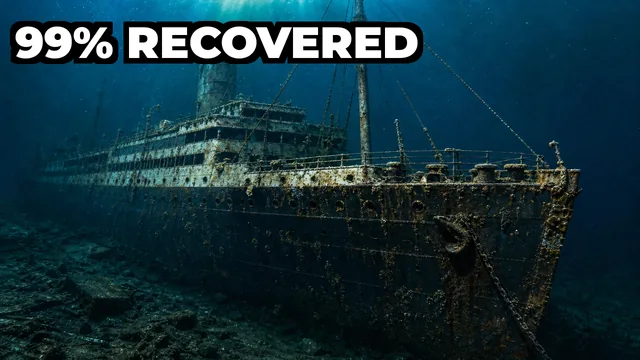
Divers Recovered 99% of 3,211 Sunken Gold Bars 🪙
Nov 13, 2026 0:44
Lost at Sea for 108 Years — Then Found 🌊
Nov 12, 2026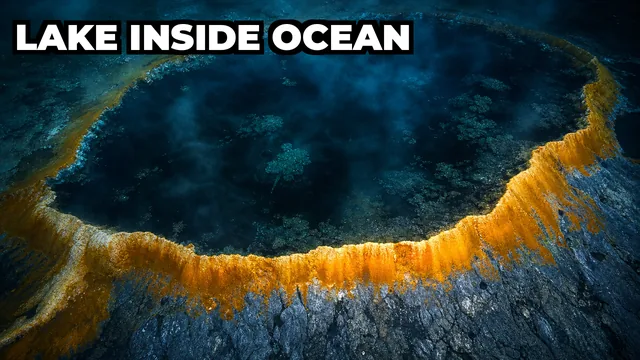 0:01
Mussels Live on the Shore of a Lake Under the Sea 🌊
Nov 11, 2026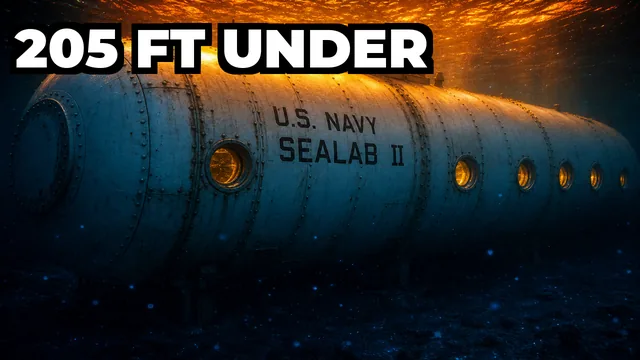 0:39
He Talked to Astronauts in Orbit From 205ft Down 🌊
Nov 10, 2026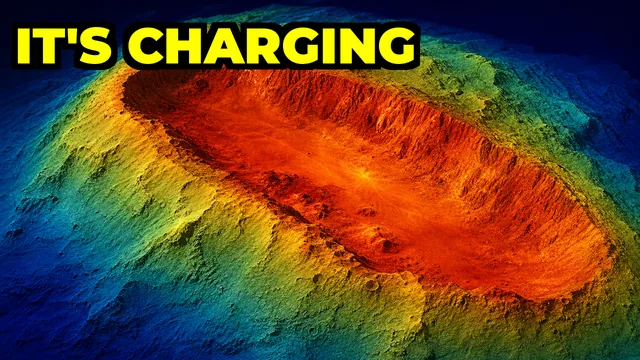 0:32
The Underwater Volcano That Missed Its Own Forecast 🌋
Nov 9, 2026 0:03