The Dragon’s Blood Tree (Dracaena cinnabari) of Socotra Island is the tree that bleeds deep red sap when cut and resembles an otherworldly umbrella. This extraordinary species exists only on the isolated Socotra archipelago in the Arabian Sea, where millions of years of isolation have created one of Earth’s most unique ecosystems.
A Living Relic from an Isolated Paradise
Socotra Island has been geographically isolated for approximately six million years, creating a natural laboratory for evolution. This isolation has resulted in an astounding level of endemism—37% of the island’s plant species exist nowhere else on Earth. The Dragon’s Blood Tree stands as perhaps the most iconic example of this evolutionary uniqueness, with its distinctive mushroom-shaped canopy and crimson resin that has fascinated humans for millennia.
Evolutionary Engineering: The Perfect Water Harvester
The tree’s bizarre umbrella shape serves a crucial survival function in Socotra’s arid climate. Its branches spread wider than the tree’s height, creating an expansive canopy specifically engineered to capture moisture from fog and rare rainfall. This natural water collection system funnels every precious drop directly down to the tree’s root system, allowing it to thrive in an environment where water is scarce.
Breaking Biological Rules
What makes the Dragon’s Blood Tree even more remarkable is its defiance of botanical conventions. As a monocot—the same plant class that includes grasses and palm trees—it should theoretically be incapable of developing a woody trunk. Monocots typically lack the secondary growth mechanisms that create thick, sturdy trunks. Yet somehow, through evolutionary adaptation, the Dragon’s Blood Tree has developed this impossible structural feature, challenging our understanding of plant biology.
Ancient Commerce and the Crimson Trade
The tree’s distinctive red resin, known as dragon’s blood, has been a valuable commodity since ancient times. Romans actively traded this crimson sap across the Mediterranean as early as the first century CE, utilizing it as a pigment for artwork, a component in traditional medicine, and a protective varnish. This trade connected a remote island ecosystem to the heart of one of history’s greatest empires, demonstrating the far-reaching impact of Socotra’s unique biodiversity.
A Species Under Threat
Despite surviving millions of years of isolation, the Dragon’s Blood Tree now faces an uncertain future. Climate change and human activities threaten its specialized habitat, with scientists projecting that suitable growing conditions could shrink by 45% before 2080. This dramatic habitat reduction puts one of Earth’s most extraordinary evolutionary achievements at serious risk of extinction, making conservation efforts increasingly critical for preserving this living piece of natural history.
FREQUENTLY ASKED
Where do Dragon's Blood Trees grow naturally? ▾
Dragon's Blood Trees grow exclusively on Socotra Island and its surrounding archipelago in the Arabian Sea, off the coast of Yemen.
Why is dragon's blood sap red? ▾
The sap contains deep red resin compounds that the tree produces, likely as protection against insects and to seal wounds when the bark is damaged.
How old can Dragon's Blood Trees live? ▾
These trees are extremely slow-growing and can live for hundreds of years, with some specimens estimated to be over 500 years old.
What threatens Dragon's Blood Trees today? ▾
Climate change, habitat loss, overgrazing by livestock, and human development are the primary threats to these trees' survival.
Can Dragon's Blood Trees grow outside Socotra? ▾
While some botanical gardens have successfully cultivated young specimens, they require very specific climate conditions and grow extremely slowly outside their native habitat.
What was dragon's blood resin used for historically? ▾
Ancient civilizations used dragon's blood resin as red pigment for art, in traditional medicine, as furniture varnish, and in various ceremonial practices.
GO DEEPER
KEEP EXPLORING
 0:52
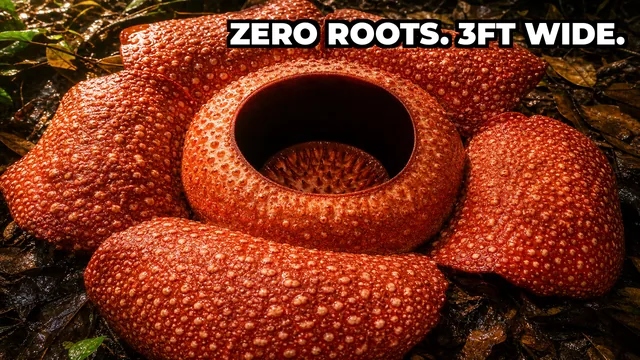
0:52A 24 lb Flower With No Roots Tricks Flies 😱
Oct 20, 2026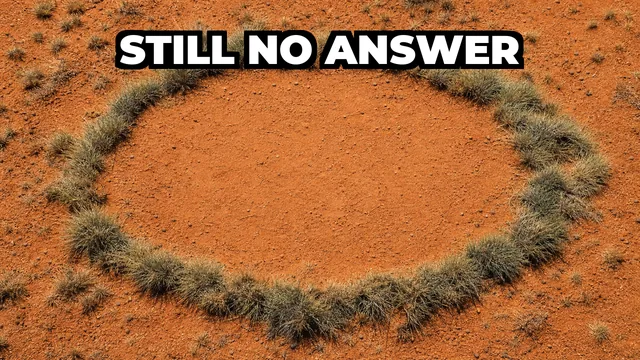 0:52
0:52Termites or Thirsty Grass? The Desert Can't Decide 🔵
Oct 19, 2026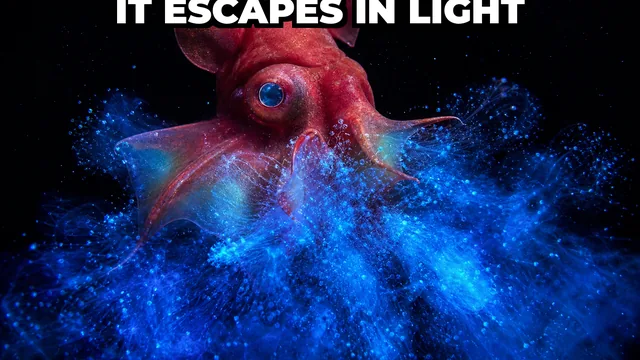 0:38
0:38The Vampire Squid Escapes in a Cloud of Light 🦑
Oct 19, 2026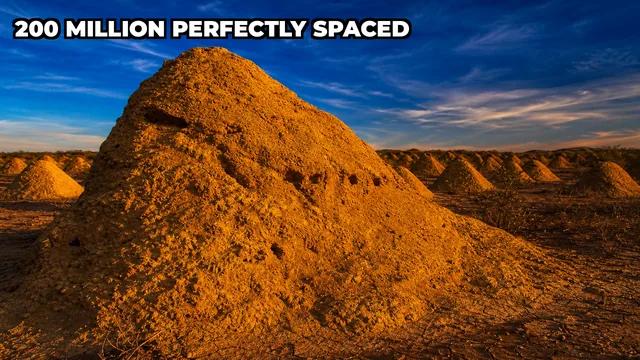 0:38
0:38200 Million Termite Mounds, Some 3,800 Years Old 🐜
Oct 17, 2026 0:36
0:36Why This Frog Packs Its Cells With Sugar 🐸🔬
Oct 16, 2026 0:58
0:58