Entropy is a fundamental law of physics stating that all energy in the universe tends to spread out evenly over time, ultimately leading to the Heat Death of the universe—a state of maximum entropy where no more work can be performed and everything becomes a cold, featureless void.
Understanding the Second Law of Thermodynamics
The concept of entropy stems from the Second Law of Thermodynamics, which dictates that the total entropy of an isolated system always increases over time. In simpler terms, this means that order naturally breaks down into disorder, and energy becomes less concentrated and less useful.
Every process in the universe—from a star burning hydrogen to your body converting food into energy—increases the overall entropy. While local pockets of order can emerge (like the formation of stars or the evolution of life), these temporary decreases in entropy always come at the cost of greater increases elsewhere.
The Inevitable March Toward Heat Death
As entropy continues to increase throughout the cosmos, the universe moves inexorably toward its final state: Heat Death. This doesn’t mean the universe will become hot—quite the opposite. Heat Death refers to a state where all energy is evenly distributed, temperatures equalize everywhere, and no temperature differences exist to drive any processes.
In this ultimate state, stars will have burned out, black holes will have evaporated through Hawking radiation, and even protons may decay into simpler particles. What remains will be a vast, cold expanse with particles spread so thin that meaningful interactions become impossible.
Why There’s No Reset Button
Unlike popular science fiction scenarios, there’s no cosmic reset mechanism waiting to restart the universe. The Heat Death represents a true endpoint—maximum entropy means no energy gradients exist to power new processes or structures. Without these gradients, no new stars can form, no chemistry can occur, and no life can emerge.
Some theories propose cyclical universes or quantum fluctuations that might eventually create new Big Bang events, but these remain highly speculative and face significant theoretical challenges.
The Paradox of Conscious Stardust
Perhaps the most profound aspect of entropy’s dominance is that you—a conscious being capable of understanding this cosmic fate—exist at all. You are literally made from elements forged in the nuclear furnaces of ancient stars, arranged in patterns so complex they achieved self-awareness.
This consciousness emerged despite entropy’s relentless drive toward disorder. Every thought you have, every decision you make, every moment of your existence represents a temporary victory of organization over chaos—yet simultaneously contributes to the universe’s overall entropy increase.
Living in a Dying Universe
While the Heat Death sounds terrifying, it’s important to remember the timescales involved. This process will take trillions upon trillions of years—far longer than the current age of the universe. Stars will continue forming and dying for countless generations, and life may persist and evolve in ways we can’t imagine.
The knowledge that entropy will eventually win doesn’t diminish the beauty and significance of the ordered structures that exist now, including human consciousness, art, love, and scientific discovery. If anything, it makes these temporary islands of order more precious.
FREQUENTLY ASKED
How long will it take for the universe to reach heat death? ▾
The Heat Death will occur over unimaginably long timescales—approximately 10^100 years or more, far exceeding the current 13.8 billion year age of the universe.
Can entropy ever decrease in the universe? ▾
While entropy can decrease locally (like when ice forms or life evolves), the total entropy of the entire universe always increases according to the Second Law of Thermodynamics.
What happens to black holes during heat death? ▾
Black holes will eventually evaporate completely through Hawking radiation, with the largest ones taking approximately 10^67 years to disappear entirely.
What is the second law of thermodynamics in simple terms? ▾
The Second Law of Thermodynamics states that the total entropy of an isolated system always increases over time, meaning order naturally breaks down into disorder and energy becomes less concentrated and useful. Every process in the universe increases overall entropy, even when local pockets of order temporarily emerge.
Why is there no way to reverse or reset the heat death of the universe? ▾
Heat death represents maximum entropy where no energy gradients exist to power new processes or structures, meaning no new stars can form, no chemistry can occur, and no life can emerge. Unlike science fiction scenarios, there's no cosmic reset mechanism because maximum entropy eliminates the temperature differences needed to drive any processes.
How does human consciousness relate to entropy and the universe's fate? ▾
Humans are conscious beings made from elements forged in ancient stars, arranged in patterns so complex they achieved self-awareness despite entropy's drive toward disorder. Every thought and decision represents a temporary victory of organization over chaos, yet simultaneously contributes to the universe's overall entropy increase.
GO DEEPER
KEEP EXPLORING
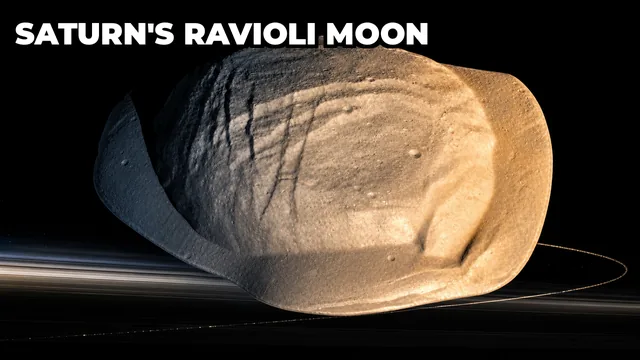 0:49
0:49Saturn Is Hiding A Moon Shaped Like Ravioli 🍝
Oct 3, 2026 0:32
0:32NASA Built It For 5 Flights. It Flew 72 On Mars 🚁
Sep 30, 2026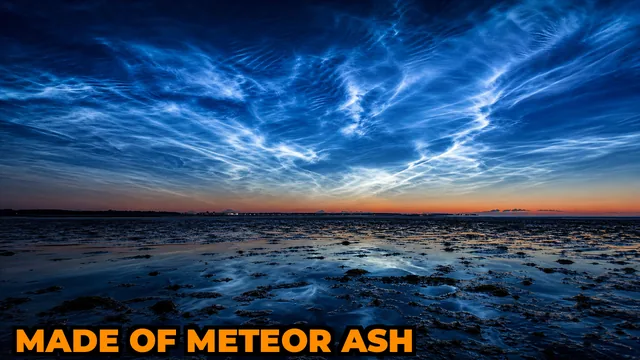 0:31
0:31The Cloud That Forms 52 Miles Up From Meteor Smoke ✨
Sep 30, 2026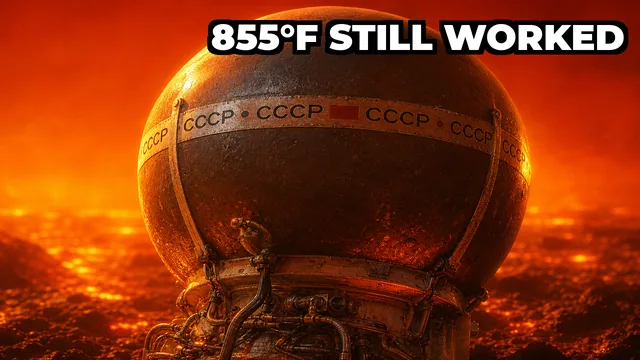 0:16
0:16The Only Color Photos Ever Taken On Venus 📸
Sep 27, 2026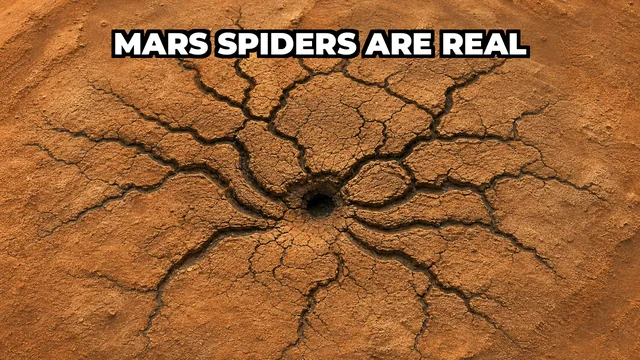 0:51
0:51Mars Grows 'Spiders' Every Spring 🕷️ Here's Why
Sep 26, 2026 0:23
0:23