What Was Found Inside a 2,600-Year-Old Etruscan Tomb Sealed Since 700 BCE?
August 15, 2026
An Untouched Etruscan Burial Chamber at Vulci
Archaeologists opened a 2,600-year-old Etruscan chamber tomb at the ancient city of Vulci in central Italy and found more than one hundred grave goods still standing exactly where mourners had placed them in the seventh century BCE — one of the most intact ancient burials ever recorded.
What Made This Discovery So Extraordinary
Most ancient tombs have been disturbed — by grave robbers, natural shifts, or previous excavations. This chamber at Vulci was different. The sealed stone door had not been touched since the burial took place, somewhere between 720 and 580 BCE during what archaeologists call the Orientalising period. When researchers finally cracked it open, they stepped into a room frozen in time. Bronze vessels sat exactly where they had been set down. Painted ceramic vessels remained upright in their original positions. Not one object had moved in over two and a half millennia.
The Grave Goods and What They Reveal
Among the more than one hundred artifacts recovered were examples of bucchero pottery — a jet-black ceramic ware so distinctive to Etruscan civilisation that finding it intact and in situ is exceptionally rare. Bucchero was produced using a reduction firing technique that gave the clay its characteristic dark, almost metallic sheen, and it serves as one of the clearest cultural markers of Etruscan identity.
Also present were imported Greek vessels. These were not decorative trinkets. Greek pottery of this quality and quantity was a marker of extraordinary wealth and political reach. Whoever was buried in this tomb had active connections to Mediterranean trade networks stretching from the Greek world into the Near East. Researchers believe this individual belonged to the very top tier of Vulci’s aristocratic society.
The Orientalising Period and Etruscan Power
The Orientalising period — roughly 720 to 580 BCE — was a transformative era for Etruscan civilisation. Etruscan elites were importing luxury goods from Greece and the Near East at scale, adopting artistic styles, religious imagery, and prestige objects that signalled their place within a wider Mediterranean world. Vulci was one of the most important Etruscan cities of this period, known for its skilled metalworkers and its role as a trading hub.
This tomb places its occupant squarely within that elite network. The combination of locally produced bucchero alongside Greek imports tells archaeologists that this person could command resources across cultural and geographic boundaries — a signal of power that transcended the city’s walls.
Why This Tomb Matters for Archaeology
Perfectly sealed, undisturbed ancient burials are vanishingly rare. When a tomb like this survives intact, it becomes a direct data point rather than a reconstruction. Archaeologists can study the precise arrangement of objects, infer ritual practices, and draw conclusions about trade, belief, and social hierarchy without the distortion that looting or decay introduces. This chamber at Vulci is, in the truest sense, a time capsule — a single moment in ancient Italy preserved for two thousand six hundred years and finally opened in ours.
FREQUENTLY ASKED
Where is the Etruscan tomb that was sealed for 2,600 years located? ▾
The tomb is located at Vulci, an ancient Etruscan city in central Italy, in the region of Lazio near the Tyrrhenian coast.
What is bucchero pottery and why is it significant? ▾
Bucchero is a jet-black ceramic ware made using a reduction firing technique and is one of the most distinctive cultural markers of Etruscan civilisation; finding it intact inside a sealed tomb is exceptionally rare.
Who was buried in the Vulci Etruscan tomb? ▾
The identity of the individual has not been confirmed, but the presence of imported Greek vessels and bronze goods indicates they were a member of Vulci's highest aristocratic class during the Orientalising period.
What is the Orientalising period in Etruscan history? ▾
The Orientalising period spans roughly 720 to 580 BCE and describes the era when Etruscan elites imported luxury goods and artistic styles from Greece and the Near East, reflecting their integration into Mediterranean trade networks.
How many artifacts were found inside the Vulci Etruscan tomb? ▾
More than one hundred grave goods were recovered, including bronze vessels, painted pottery, and bucchero ceramic ware, all still standing in their original positions.
Why were Greek vessels found inside an Etruscan tomb? ▾
Greek imported pottery was a prestige item in Etruscan aristocratic culture; its presence signals that the tomb's occupant had wealth and access to long-distance Mediterranean trade routes connecting Italy, Greece, and the Near East.
GO DEEPER
KEEP EXPLORING
 0:11
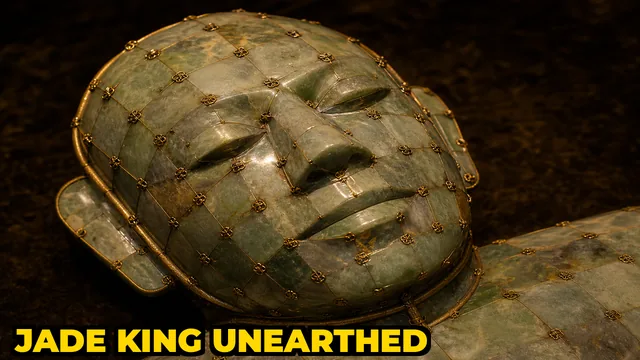
0:112,498 Jade Plates Hid a Secret for 2,000 Years 👑
Sep 28, 2026 0:06
0:06The Sand That Stays Cool At 100°F 🏜️
Sep 28, 2026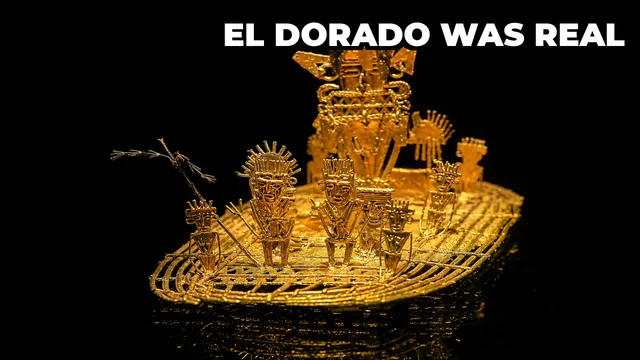 0:38
0:38The 7-Inch Raft That Unlocked El Dorado 🪙
Sep 27, 2026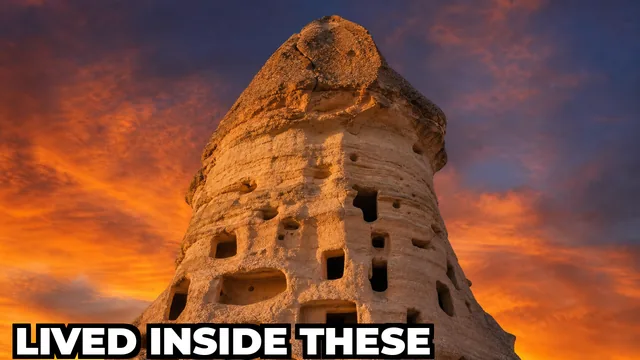 0:39
0:39They Lived Inside These 130ft Stone Towers 🗿
Sep 24, 2026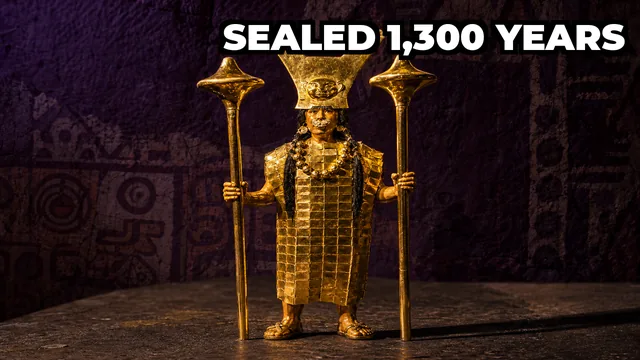 0:32
0:32They Found a Crowned Woman On A Moche Throne 👑
Sep 24, 2026 0:44
0:44