Britain’s Jodrell Bank Observatory published the first photographs ever taken from the surface of the Moon — before the Soviet Union could release them itself — by intercepting the Luna 9 probe’s unencrypted signal and printing the images on a borrowed newspaper fax machine in February 1966.
The First Soft Landing on the Moon
On 3 February 1966, the Soviet probe Luna 9 made history by achieving the first successful soft landing on the Moon. No spacecraft had ever survived touchdown on another world before. The achievement alone was extraordinary, but it also put to rest a lingering scientific fear: some researchers had genuinely worried that the lunar surface was a vast, loose ocean of dust — deep enough to swallow any lander whole. The moment Luna 9 sat down and kept transmitting, that theory was finished.
Jodrell Bank Was Already Listening
Thousands of miles away in Cheshire, England, the 250-foot dish at Jodrell Bank Observatory — now known as the Lovell Telescope — had been locked onto Luna 9’s signal for hours before the landing. The probe was broadcasting on an open, unencrypted frequency, meaning anyone with a large enough dish could receive it. When Luna 9 touched down and began sending back images, Jodrell Bank was already listening.
The Signal Was a Newspaper Fax Format
What happened next depended on a stroke of recognition. One of the Jodrell Bank staff noticed something remarkable: the signal Luna 9 was transmitting was not a secret Soviet code. It was a standard international wire-photo format — the same system used by news agencies around the world to transmit press photographs over telephone lines. The observatory quickly borrowed a Muirhead wire-photo decoder from the Daily Express newspaper and used it to print the images directly.
The resulting photographs — grainy but unmistakable — showed rocks and soil on the surface of another world. They were the first pictures humanity had ever seen taken from the Moon’s own ground.
Published Before Moscow
The Daily Express ran the images the following day, beating the Soviet Union’s own official release. The Soviet Academy of Sciences formally complained, describing the publication as hasty and premature. There was even a technical flaw to point to: Jodrell Bank had made a slight error in the assumed aspect ratio of the images, which caused the rocks in the pictures to appear taller and more jagged than they actually were. The Soviets were quick to highlight the distortion.
Why Did the Soviets Use a Public Format?
No one has ever confirmed why Soviet engineers chose a format that any well-equipped Earth station could decode. At the time, the BBC speculated that it may have been intentional — a deliberate choice to allow observatories worldwide to receive the pictures, maximising the scientific and propaganda value of the achievement. Whether by accident or design, the decision meant a British newspaper published humanity’s first view of the Moon’s surface before Moscow did.
The Soviets Changed Their Frequencies
The embarrassment had practical consequences. On subsequent Luna missions, Soviet controllers switched frequencies whenever their probes came within range of Jodrell Bank, closing the door that had let British astronomers eavesdrop so effectively. It was a reasonable precaution — just a little late, given that a borrowed fax machine had already shown the world the Moon’s own face.
FREQUENTLY ASKED
What was Luna 9 and why was it significant? ▾
Luna 9 was a Soviet robotic probe that made the first successful soft landing on the Moon on 3 February 1966. It was the first spacecraft in history to survive touchdown on another world and transmit data back from the surface.
How did Jodrell Bank intercept the Luna 9 images? ▾
Jodrell Bank's 250-foot radio dish picked up Luna 9's unencrypted broadcast signal and a staff member recognised it as a standard international wire-photo format, allowing the team to decode and print the images using a borrowed newspaper fax machine.
Why did the Soviet Union broadcast Luna 9's images in an unencrypted format? ▾
The exact reason is unknown, but the BBC speculated at the time that Soviet engineers may have chosen the standard wire-photo format deliberately so that observatories worldwide could receive the pictures, amplifying the mission's global impact.
Which newspaper first published photos from the surface of the Moon? ▾
The British newspaper the Daily Express published the first photographs taken from the Moon's surface, using images decoded by Jodrell Bank Observatory the day after Luna 9 landed in February 1966.
What was wrong with the Jodrell Bank Luna 9 images? ▾
Jodrell Bank incorrectly estimated the image's aspect ratio, which caused the lunar rocks to appear taller and more jagged than they actually were — a distortion the Soviet Academy of Sciences pointed out in its official complaint.
What is the Lovell Telescope at Jodrell Bank? ▾
The Lovell Telescope is a 250-foot (76-metre) steerable radio dish at Jodrell Bank Observatory in Cheshire, England, one of the largest in the world and famous for tracking early space missions including Luna 9.
GO DEEPER
KEEP EXPLORING
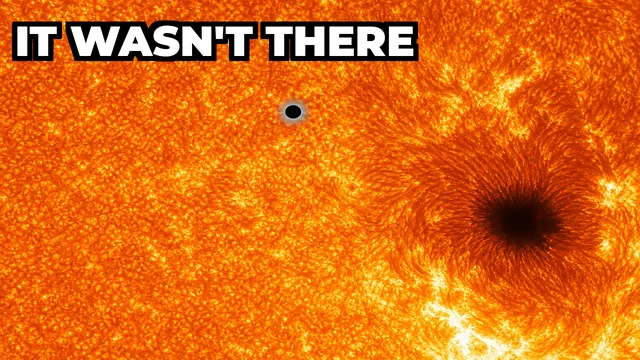 0:27
Why Did Astronomers Hunt a Planet That Wasn't There? 🪐
Nov 26, 2026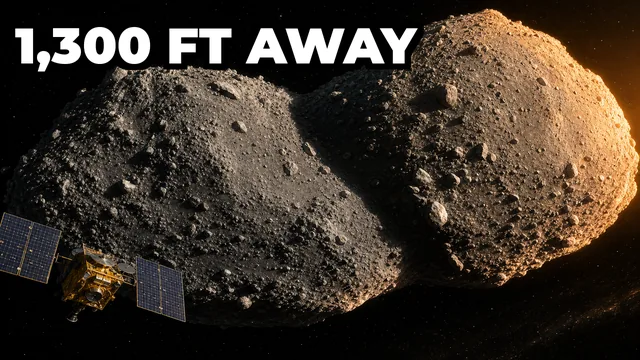 0:04
Japan's Probe Flew 1,300 ft From an Asteroid. Why? 🚀
Nov 23, 2026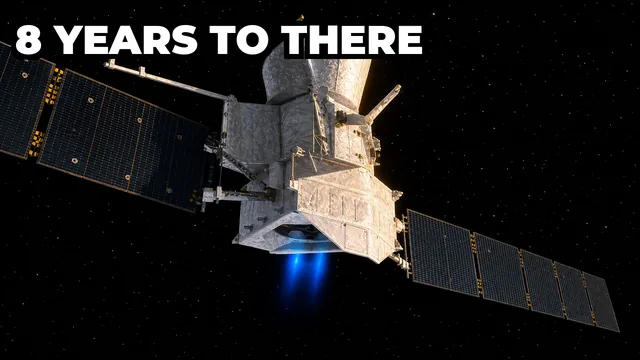 0:27
Why Does It Take 8 Years to Reach Mercury? 🚀
Nov 20, 2026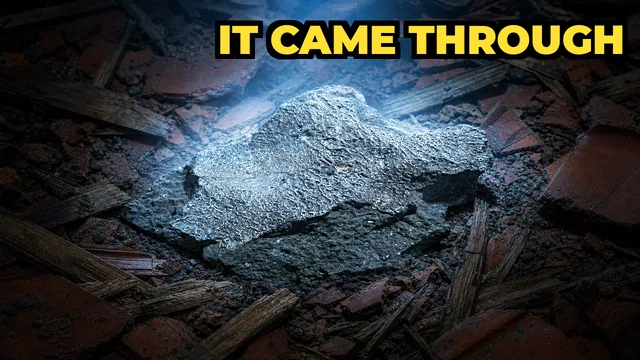 0:08
A 4.5B-Year-Old Rock Crashed Through This Roof 🌠
Nov 18, 2026 0:17
NASA Astronauts Repossessed Two Satellites 🛸
Nov 15, 2026 0:08