The Giant’s Causeway Formation Process
The Giant’s Causeway formed 50-60 million years ago when massive volcanic eruptions flooded Northern Ireland’s coastline with molten basalt lava that cooled extremely slowly and uniformly, causing it to contract and crack into approximately 40,000 near-perfect hexagonal stone columns.
Ancient Volcanic Activity in Northern Ireland
During the Paleogene period, intense volcanic activity shaped much of what is now Northern Ireland and western Scotland. The North Atlantic Igneous Province produced some of the largest volcanic eruptions in Earth’s history, flooding vast areas with basaltic lava flows. The Giant’s Causeway represents one of the most spectacular remnants of this ancient volcanic landscape, where lava flows were thick enough and cooled slowly enough to create the distinctive columnar jointing we see today.
The Physics Behind Hexagonal Rock Formations
As the thick lava flow cooled from the top down, it contracted uniformly in all directions. This contraction created stress fractures that naturally formed hexagonal patterns—the most efficient geometric shape for dividing a plane with equal-sized cells. Scientists have replicated this exact process in laboratories using cornstarch and water, which produces identical hexagonal crack patterns as it dries. The hexagon represents nature’s solution to minimizing energy while maximizing space efficiency.
Geological Structure and Variations
While most columns display six sides, the Giant’s Causeway also features columns with four, five, seven, and even eight sides. These variations occur due to slight differences in cooling rates and local stress conditions within the lava flow. The columns can reach heights of up to 12 meters (39 feet) and are composed of basalt, a dark volcanic rock rich in iron and magnesium. The formation consists of three distinct lava flows, with the middle flow producing the famous hexagonal columns that define the site’s appearance.
Cultural Significance and Irish Mythology
Irish legend attributes the causeway’s creation to the giant warrior Fionn mac Cumhaill (Finn McCool), who supposedly built the stone bridge to reach Scotland and challenge his rival, the giant Benandonner. This mythological explanation dominated local understanding for centuries before geological science revealed the true volcanic origins. The legend reflects the structure’s seemingly impossible perfection—so geometrically precise that ancient peoples could only explain it through supernatural intervention.
UNESCO World Heritage Status
UNESCO designated the Giant’s Causeway as a World Heritage Site in 1986, recognizing both its outstanding geological significance and its cultural importance. The site attracts over one million visitors annually, making it Northern Ireland’s most popular tourist destination. The formation represents one of the finest examples of columnar basalt anywhere on Earth, with few comparable sites worldwide displaying such extensive and well-preserved hexagonal jointing.
FREQUENTLY ASKED
How many columns are in the Giant's Causeway? ▾
The Giant's Causeway contains approximately 40,000 individual basalt columns of varying heights and sizes.
Why are most Giant's Causeway columns hexagonal? ▾
Hexagons form because they represent the most energy-efficient way for cooling lava to crack under uniform stress, minimizing surface area while maximizing space efficiency.
How tall are the Giant's Causeway columns? ▾
The columns range in height from a few centimeters to 12 meters (39 feet), with most standing between 1-6 meters tall.
When did the Giant's Causeway form? ▾
The Giant's Causeway formed 50-60 million years ago during the Paleogene period when massive volcanic eruptions flooded the region with basalt lava.
Are there other places like the Giant's Causeway? ▾
While columnar basalt exists elsewhere, few locations display such extensive and well-preserved hexagonal formations, making the Giant's Causeway nearly unique worldwide.
What type of rock is the Giant's Causeway made of? ▾
The Giant's Causeway consists entirely of basalt, a dark volcanic rock formed from cooled and solidified lava rich in iron and magnesium.
GO DEEPER
KEEP EXPLORING
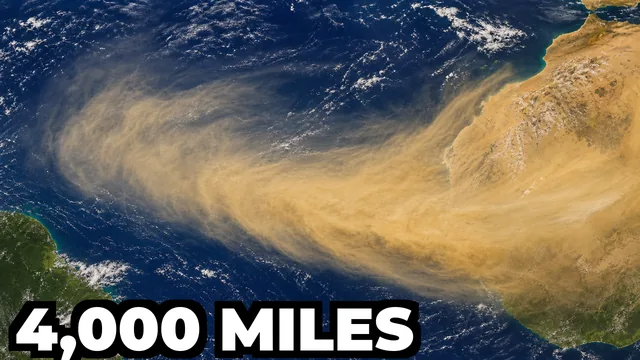 0:24
0:24The Sahara Desert Is Feeding the Amazon 🌍
Oct 23, 2026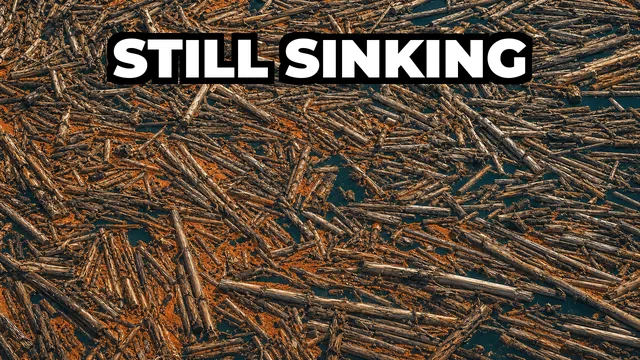 0:48
0:48These Logs Have Floated Here Since 1980 🌋
Oct 19, 2026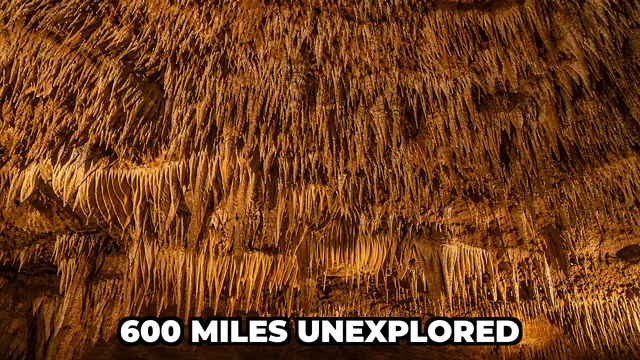 0:40
0:40The Cave With 426 Miles of Secrets 🕳️
Oct 15, 2026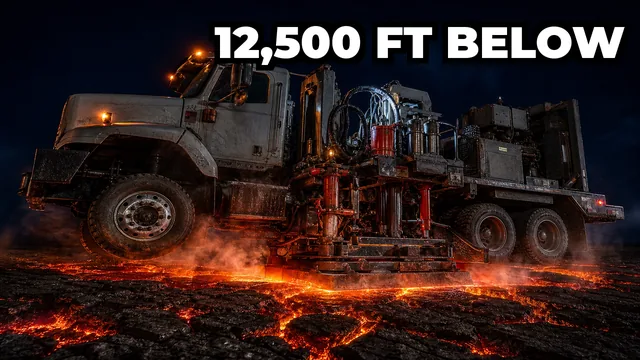 0:54
0:54A 53,000 lb Truck Mapped Yellowstone's Magma 🌋
Oct 12, 2026 0:19
0:19This Glacier Dams A Lake — Then Lets It All Go 🧊
Oct 9, 2026 0:04
0:04