The Short Answer
Yes — goats can and do change their accent. Research led by bioacoustician Dr. Elodie Briefer at Queen Mary University of London confirmed that a goat moved to a new herd will reshape the pitch and rhythm of its contact call within approximately four weeks to match its new companions.
What Is a Contact Call?
Goats use a short, distinct vocalization known as a contact call to stay connected with members of their group. Think of it as a social check-in — a quick sound that says “I’m here, where are you?” These calls are not random noise. They carry individual identity, emotional state, and, as it turns out, something remarkably close to a regional accent. Scientists studying these calls noticed that goats within the same herd tended to sound more like each other than like goats from different groups — which raised an obvious and fascinating question: is that similarity learned, or is it simply genetic?
What the Research Found
To answer that question, Dr. Briefer and her colleagues tracked individual goats before and after they were moved into new herds, recording their contact calls at intervals and analyzing the acoustic properties — specifically pitch and temporal rhythm. The results, published in the journal Animal Behaviour in 2012, were unambiguous. Within roughly four weeks, the relocated goats had shifted their calls toward the acoustic profile of their new neighbours. The change was not subtle. The pitch moved. The rhythm adjusted. The whole vocal signature bent toward the group.
This made goats the first hoofed mammal — the first ungulate — ever scientifically confirmed to modify their vocalizations through social influence. Vocal learning of this kind had previously been documented mainly in humans, songbirds, cetaceans like dolphins and whales, and a handful of other mammals. Finding it in a barnyard goat was, by scientific standards, a genuine surprise.
Why This Had Gone Unnoticed for Ten Thousand Years
Humans domesticated goats approximately ten thousand years ago in the Zagros Mountains of what is now Iran. Goats have lived alongside people longer than almost any other livestock animal. And yet this vocal flexibility — this capacity to socially reshape their own voice — went completely undocumented until 2012. The capability was always there. The curiosity to look for it simply wasn’t.
That gap says something important, not just about goats, but about the assumptions researchers carry into the field. For most of livestock history, farm animals were studied for productivity, not cognition. Their inner social lives were treated as irrelevant. Bioacoustics changed that by giving scientists a rigorous way to listen.
What This Means for Other Hoofed Animals
The discovery immediately opened a much larger question: if goats do this, what about sheep? What about cattle, pigs, or horses? All of these animals live in complex social groups. All of them vocalize. None of them have been studied with the same depth of acoustic scrutiny that revealed the goat’s accent-shifting ability. Researchers following this line of inquiry suspect that social vocal learning may be far more widespread among ungulates than anyone previously imagined. The barn, it turns out, may be considerably more acoustically sophisticated than the science assumed.
The Bigger Picture
The goat accent study is a reminder that animal cognition research is still in relatively early days. Abilities once considered uniquely human — language, culture, social learning — keep appearing in species we thought we understood. Goats did not develop a new skill in 2012. They were simply, finally, listened to.
FREQUENTLY ASKED
How long does it take a goat to change its accent? ▾
Research shows that a goat will reshape its contact call to match a new herd's pitch and rhythm within approximately four weeks of joining the group.
Who discovered that goats can change their vocalizations socially? ▾
Dr. Elodie Briefer, a bioacoustician at Queen Mary University of London, led the study published in the journal Animal Behaviour in 2012.
Are goats the only hoofed animals known to use vocal learning? ▾
Goats are currently the first and only hoofed mammal (ungulate) confirmed to modify their vocalizations through social influence, though researchers suspect other livestock species may show similar abilities.
What is a goat contact call? ▾
A contact call is a short vocalization goats use to stay socially connected with members of their herd, functioning like an acoustic check-in signal.
Do other farm animals like sheep or cows change their calls socially? ▾
This has not yet been confirmed in sheep or cattle, but the goat discovery has prompted researchers to investigate whether social vocal learning exists in other livestock species.
What does vocal learning in goats suggest about animal intelligence? ▾
It suggests that social cognitive abilities — including the capacity to adjust communication to fit a group — are more widespread in mammals than previously thought, challenging long-held assumptions about which animals are capable of learned vocal behavior.
GO DEEPER
KEEP EXPLORING
 0:26
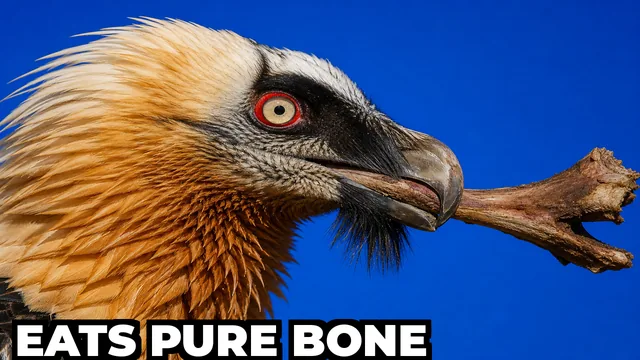
0:26The Bird That Eats Bones And Dyes Itself Red 🦴
Oct 4, 2026 0:37
0:37This Fly Scuba Dives In A Lake 3x Saltier Than The Sea 🫧
Oct 2, 2026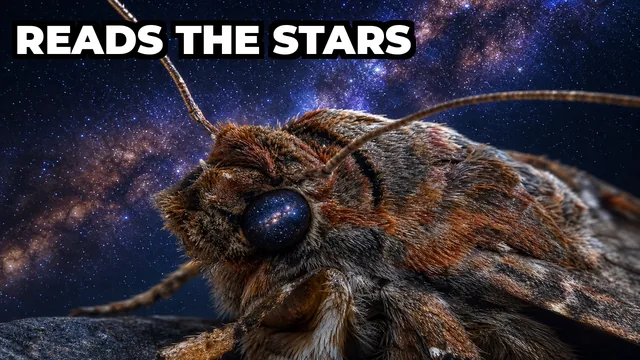 0:47
0:47Billions Of Moths Navigate 600 Miles By Starlight 🌌
Oct 1, 2026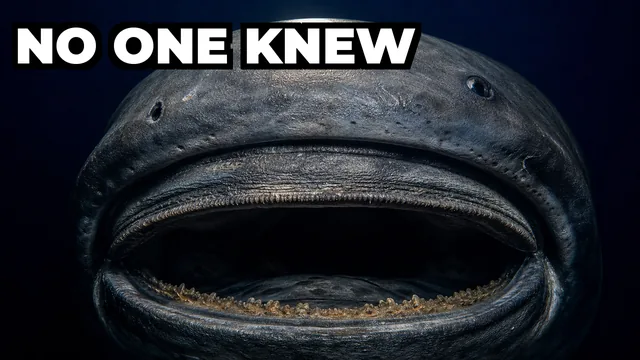 0:32
0:32A Navy Anchor Snagged A 1,500 lb Unknown Shark 🦈
Oct 1, 2026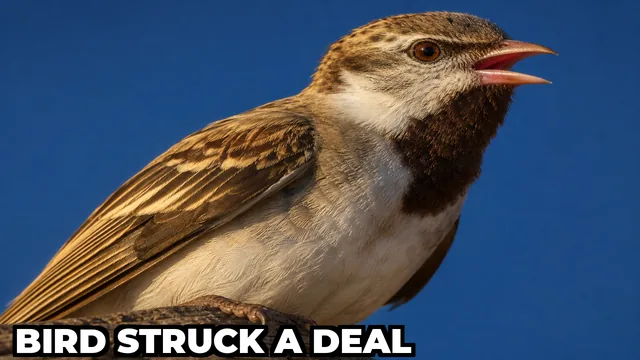 0:55
0:55A Wild Bird Guides Humans To Honey 🍯 Here's How
Sep 29, 2026 0:51
0:51