Why Was a 7-Foot Greek Statue Found Face-Down Under a Roman Street in Turkey?
October 6, 2026
The Short Answer
A colossal marble statue carved around 470–450 BCE was discovered face-down beneath a Roman-era colonnaded street in ancient Sardis, Turkey, where it had been reused as paving material — accidentally preserving it for nearly two millennia.
Who Made the Statue, and When?
The statue dates to the early Classical period of ancient Greece, carved somewhere between 470 and 450 BCE. At the time, Sardis was one of the most important cities in the ancient world — first as the capital of the Lydian kingdom under rulers like Croesus, then as a major stronghold of the Persian Empire. Standing more than seven feet tall, the marble figure would have towered over the average person of the ancient world by more than a foot and a half. Statues of this scale were not made casually. Whoever commissioned it had significant wealth and influence.
Who Does the Statue Represent?
No one knows for certain. The leading hypothesis among excavators from Harvard and Cornell — who have been working at Sardis for decades — is that the statue once stood near the sanctuary of Cybele, the native Lydian mother goddess. A key clue is the quince the figure holds in his right hand. Quinces were associated with offerings to deities in the ancient world, which suggests this was a votive statue: a monument dedicated to a god or goddess, likely paid for by a member of Sardis’s Lydian elite during the early Persian period. Whether the man depicted is a mortal donor, a hero, or a divine figure remains an open question.
What Makes the Statue’s Clothing So Unusual?
The drapery is one of the most remarkable things about the statue. The figure wears a layered chiton — a type of ancient Greek tunic — beneath a diagonal mantle draped across the body. According to the excavators, this specific combination has almost no parallels anywhere in ancient sculpture. That makes the Sardis statue not just a remarkable find in terms of its size and preservation, but a genuinely unusual object in the history of Greek and Lydian art. Its clothing may reflect local Lydian or Persian stylistic influences blending with Greek sculptural traditions, though scholars are still working through what exactly the drapery tells us about the statue’s origins and meaning.
How Did Roman Road Builders End Up Burying It?
The Romans were not being reverent. By the time the road was built, the statue had already been broken. Its smooth, flat back made it an ideal ready-made paving slab — and recycling large marble pieces as road material was standard Roman practice. They saw useful stone, not a cultural treasure. The statue was flipped face-down and pressed into the earth beneath a colonnaded avenue, where it stayed hidden for centuries.
How Did Being Buried Actually Preserve the Statue?
This is one of archaeology’s more satisfying ironies. By pressing the carved face of the statue into the ground, the Roman road builders shielded it from two of the biggest threats to ancient marble: weathering from wind and rain, and human looters. The stone road above acted as a protective cap. When excavators eventually uncovered it, the front of the statue — its face, its drapery, the quince in its hand — was in remarkable condition compared to what it might have looked like had it remained exposed above ground for two thousand years.
Where Is the Statue Now?
The statue is still at Sardis undergoing conservation work. Once that process is complete, it will go on permanent display at the Manisa Museum in western Turkey. After centuries spent face-down in the dark beneath a Roman street, the figure will finally be displayed upright — visible to the public for the first time in roughly two thousand years.
FREQUENTLY ASKED
Where was the 7-foot Greek statue found in Turkey? ▾
The statue was found at Sardis, an ancient city in western Turkey that served as the capital of the Lydian kingdom and later a major Persian stronghold. It was buried face-down beneath a Roman-era colonnaded street.
How old is the marble statue found at Sardis? ▾
The statue was carved around 470 to 450 BCE, placing it in the early Classical period of ancient Greek art — making it roughly 2,500 years old.
Why did Romans use ancient Greek statues as road paving? ▾
Roman builders commonly recycled large marble pieces as construction material because it was practical and efficient. The broken statue's smooth flat back made it a convenient paving slab for a colonnaded avenue.
What is the significance of the quince held by the Sardis statue? ▾
The quince in the figure's right hand is associated with votive offerings to deities in the ancient world, suggesting the statue may have been a religious dedication near the sanctuary of the goddess Cybele.
Where will the Sardis marble statue be displayed? ▾
After conservation work is completed at the Sardis excavation site, the statue will go on permanent display at the Manisa Museum in western Turkey.
What makes the drapery on the Sardis statue unique in ancient sculpture? ▾
The statue wears a layered chiton beneath a diagonal mantle — a combination that excavators from Harvard and Cornell say has almost no parallels anywhere else in ancient sculpture, possibly reflecting a blend of Lydian, Persian, and Greek stylistic traditions.
KEEP EXPLORING
 0:49
0:49This Iron Pillar Refused To Rust For 1,600 Years ⚙️
Oct 5, 2026 0:52
0:52A 160-Ton Obelisk Flew Home After 68 Years ✈️
Oct 4, 2026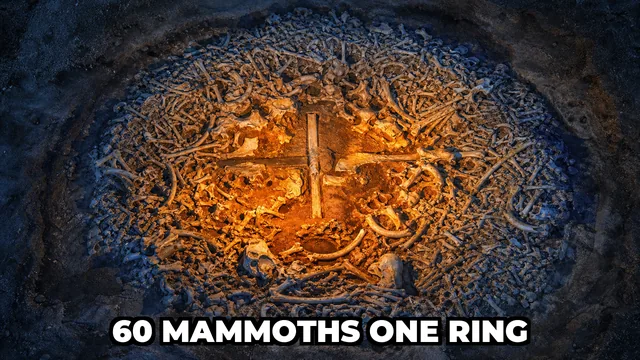 0:19
0:19They Built A 41ft Ring From 60 Mammoths 🦣
Oct 3, 2026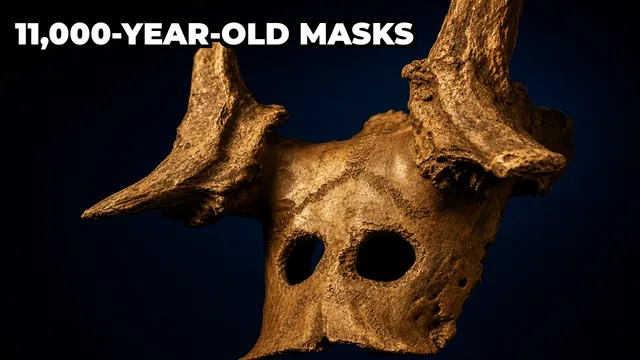 0:05
0:0533 Deer Skull Masks — 11,000 Years Old 🦌😱
Oct 2, 2026 0:34
0:34A 72ft Mound Built In 90 Days, 3,200 Years Ago 🪣
Oct 1, 2026 0:37
0:37