The jade burial suit of Han prince Liu Sheng is the most complete Han dynasty burial suit ever discovered — 2,498 individually cut and polished jade plates, stitched together with approximately two and a half pounds of pure gold wire, sealed inside a tomb in Hebei, China, for more than two thousand years.
How Was the Tomb Discovered?
In 1968, Chinese soldiers were blasting through a hillside in Mancheng County, Hebei Province, as part of a military construction project. The explosion accidentally punched straight through the sealed stone entrance of a royal tomb that had been hidden since roughly 113 BCE. Archaeologists were called in immediately, and what they found inside became one of the most extraordinary archaeological discoveries of the twentieth century.
Who Was Prince Liu Sheng?
Liu Sheng was a Han dynasty prince — the elder brother of the famous Emperor Wu — who ruled the kingdom of Zhongshan. He died around 113 BCE and was buried with extraordinary wealth: bronze vessels, lacquerware, silk garments, wine jars, and personal servants’ quarters carved directly into the rock. But the centerpiece of his burial was the jade suit encasing his entire body, from head to toe.
How Was the Jade Suit Made?
Each of the 2,498 jade plates was individually quarried, shaped, smoothed, and drilled by hand. The plates were then threaded together with gold wire — a material reserved exclusively for members of the imperial family. Silk thread was used for lower-ranking nobles; silver for mid-ranking royals. Archaeologists estimate that a single suit of this complexity would have taken one skilled artisan more than ten years to complete. The craftsmanship represents an almost unimaginable investment of time, resources, and labor.
Why Did the Han Royals Use Jade?
The Han Chinese believed jade was a spiritually powerful material — incorruptible, pure, and aligned with the forces of heaven. Royal burial in jade was thought to prevent the body from decaying after death and to grant the wearer immortality in the afterlife. The more gold wire used to bind the suit, the greater the protection believed to be conferred. For the imperial family, only gold wire would do.
Did the Jade Suit Actually Preserve the Body?
No. When archaeologists carefully opened Liu Sheng’s suit after more than two thousand years, they found only scattered bone fragments inside. The jade had preserved nothing. Despite the extraordinary effort poured into its construction and the sincere belief in its power, the suit failed entirely at its intended purpose. The gap between ancient belief and physical reality is one of the most quietly devastating details of the entire discovery.
What About His Wife, Dou Wan?
Liu Sheng’s wife, Princess Dou Wan, was buried in the same hillside in a separate chamber — and she, too, was encased in a gold-wire jade suit. Her suit contained 2,156 jade plates. Together, Liu Sheng and Dou Wan are the only couple in recorded history found buried side by side in matching gold-wire jade suits. Both suits, along with the tomb’s other artifacts, are now housed at the Hebei Museum in Baoding, China.
A Window Into Han Dynasty Beliefs
The tomb of Liu Sheng and Dou Wan offers an unparalleled look at how Han dynasty royalty understood death, the body, and the afterlife. The sheer scale of investment — years of artisan labor, tons of carved rock, thousands of jade plates, pounds of gold — reflects a civilization that took the journey after death as seriously as life itself. That the suits ultimately preserved nothing does not diminish their power as objects. They remain among the most breathtaking artifacts ever recovered from the ancient world.
FREQUENTLY ASKED
How many jade plates are in Liu Sheng's burial suit? ▾
Liu Sheng's jade burial suit contains exactly 2,498 individually cut and polished jade plates, all stitched together with approximately two and a half pounds of pure gold wire.
Where is Liu Sheng's jade suit kept today? ▾
The jade suits of both Liu Sheng and his wife Dou Wan are currently displayed at the Hebei Museum in Baoding, China, where they have been housed since their restoration after the 1968 discovery.
How long did it take to make a Han dynasty jade burial suit? ▾
Archaeologists estimate that a single gold-wire jade suit like Liu Sheng's would have taken one skilled artisan more than ten years to complete from start to finish.
Why did Han dynasty royals use jade for burial? ▾
Han royals believed jade was an incorruptible, spiritually powerful material that could prevent bodily decay and grant immortality in the afterlife — the more gold wire used, the stronger the protection.
What is the difference between gold, silver, and silk thread jade suits? ▾
In the Han dynasty, gold wire was reserved for members of the imperial family, silver wire for mid-ranking nobles, and silk thread for lower-ranking aristocrats — the material reflected the wearer's status at court.
Who was Dou Wan and what was found in her tomb? ▾
Dou Wan was the wife of Prince Liu Sheng; her tomb was found in the same Hebei hillside and contained her own gold-wire jade suit made of 2,156 jade plates, making the couple unique in archaeological history.
GO DEEPER
KEEP EXPLORING
 0:06
0:06The Sand That Stays Cool At 100°F 🏜️
Sep 28, 2026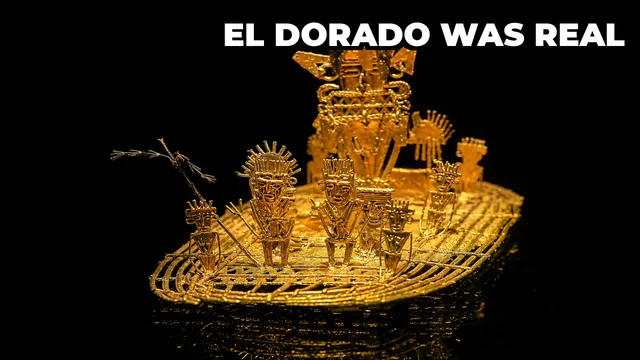 0:38
0:38The 7-Inch Raft That Unlocked El Dorado 🪙
Sep 27, 2026 0:39
0:39They Lived Inside These 130ft Stone Towers 🗿
Sep 24, 2026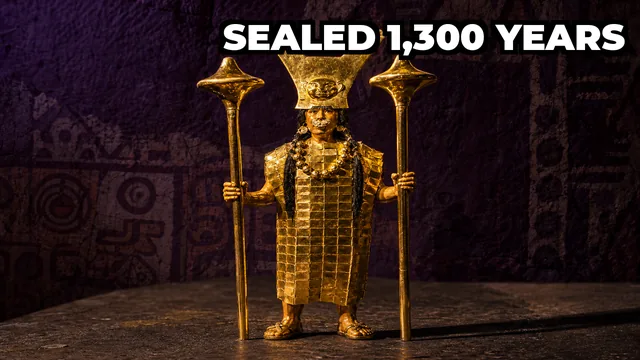 0:32
0:32They Found a Crowned Woman On A Moche Throne 👑
Sep 24, 2026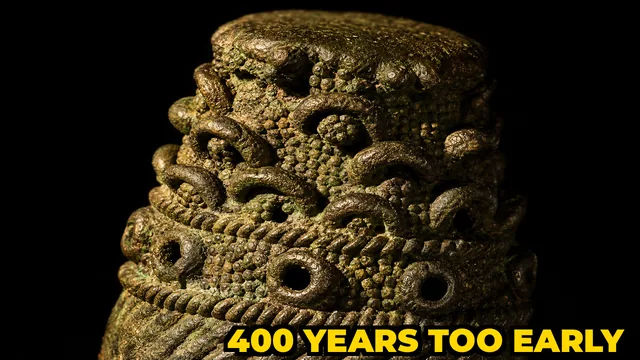 0:44
0:44A Well Digger Unearthed A Lost African Kingdom ✨
Sep 23, 2026 0:27
0:27