The Short Answer
The Incas built Sacsayhuaman using an advanced system of human labor, stone-shaping techniques, and precise engineering — yet exactly how they achieved such extraordinary precision remains one of archaeology’s greatest unsolved puzzles.
What Is Sacsayhuaman?
Sacsayhuaman (sometimes spelled Saksaywaman) is a massive walled complex sitting on a hill overlooking Cusco, Peru. Constructed by the Inca Empire beginning around the mid-15th century, the site features enormous limestone and andesite blocks — some weighing over 100 tons — stacked in zigzagging tiers without a drop of mortar. The joints between stones fit so tightly that not even a razor blade can slip between them. It is widely regarded as one of the greatest feats of ancient construction in the world.
Who Built It and How Long Did It Take?
Spanish chronicles from the 16th century describe a workforce of roughly 20,000 laborers working on the complex over a period of more than 70 years. These workers were not slaves in the traditional sense — they were fulfilling a system of labor taxation called mit’a, an obligation all Inca subjects owed to the state. Laborers quarried stones from sites several kilometers away, including from Waqoto and Rumiqolqa, and transported them across rugged Andean terrain.
No Wheels, No Iron — So How Were the Stones Moved?
The Incas had neither the wheel for practical transport nor iron tools for cutting. What they did have was an extraordinary understanding of physics, leverage, and human coordination. Researchers believe large wooden sledges, earthen ramps, and thousands of workers pulling ropes were used to move and position the massive blocks. Llamas may have helped haul smaller materials. Experimental archaeology has shown that with enough people and the right ramp systems, moving multi-ton stones is achievable — yet replicating the millimeter-level precision of the joints has never been successfully demonstrated at the same scale.
The Precision That Defies Explanation
What truly baffles engineers and archaeologists is not just the size of the stones, but the accuracy of their fitting. Each block is irregular in shape — no two are alike — yet every surface interlocks with its neighbors in three dimensions. This “jigsaw” style of construction, known as ashlar masonry in its finer forms, required each stone to be individually shaped and test-fitted repeatedly. Some scholars believe the Incas used a technique of marking stones with pigment, pressing them together, and grinding down the contact points iteratively until a perfect fit was achieved. It would have been extraordinarily time-consuming, but the results speak for themselves.
Why Did Inca Walls Survive When Spanish Ones Did Not?
The 1950 Cusco earthquake provided a dramatic real-world test. Modern Spanish colonial buildings collapsed across the city, while the ancient Inca stone walls held firm. The secret lies in the Incas’ use of slightly curved, interlocking surfaces and intentional gaps that allowed stones to shift during seismic events and then settle back into place — a passive earthquake-resistance system that engineers today would call remarkably sophisticated.
Why the Mystery Endures
Despite centuries of study, no single agreed-upon explanation covers every aspect of Sacsayhuaman’s construction. The site continues to challenge assumptions about what pre-industrial civilizations were capable of achieving, and serves as a powerful reminder that human ingenuity — ancient or modern — should never be underestimated.
FREQUENTLY ASKED
What does Sacsayhuaman mean in Quechua? ▾
The name is often translated as 'satisfied falcon' or 'royal eagle' in Quechua, though the exact meaning remains debated among linguists and historians.
How much do the largest stones at Sacsayhuaman weigh? ▾
The largest stones at Sacsayhuaman are estimated to weigh between 100 and 125 metric tons, making them among the heaviest building blocks used in any ancient structure in the Americas.
Was Sacsayhuaman used as a fortress or a temple? ▾
Archaeologists believe Sacsayhuaman served multiple purposes — it functioned as a ceremonial center, a military stronghold, and possibly a storage facility for the Inca state.
Where did the Incas quarry the stones for Sacsayhuaman? ▾
The limestone blocks were sourced from quarries just a few kilometers away near Cusco, while harder andesite stones were transported from quarries as far as 35 kilometers from the site.
Have modern engineers tried to replicate Inca stone construction? ▾
Yes, experimental archaeologists and engineers have attempted to reproduce Inca construction methods using period-appropriate tools, but none have matched the precision and scale seen at Sacsayhuaman.
Is Sacsayhuaman open to visitors today? ▾
Yes, Sacsayhuaman is a UNESCO World Heritage Site and one of Peru's most visited archaeological attractions, located just outside the city of Cusco at an altitude of about 3,700 meters.
GO DEEPER
KEEP EXPLORING
 0:21
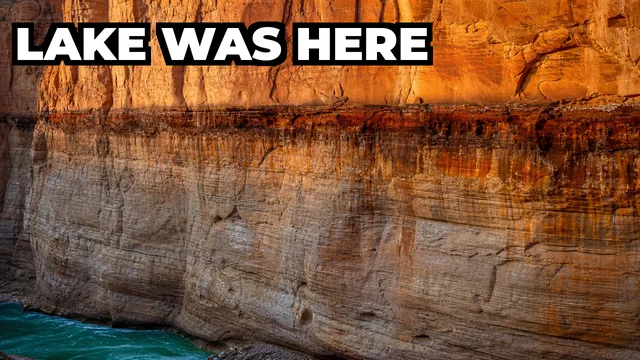
0:21A 40-Mile Lake Was Hidden In The Grand Canyon 🌊
Sep 21, 2026 0:40
0:40Lost 2,500 Years — Then a Diver Found Them 🌊
Sep 20, 2026 0:50
0:50The Treasure Map Carved In Copper 🗺️ (64 Sites, 0 Found)
Sep 19, 2026 0:43
0:43This 3,500yr-Old Gem Hides Carvings Too Small To See 🔍
Sep 17, 2026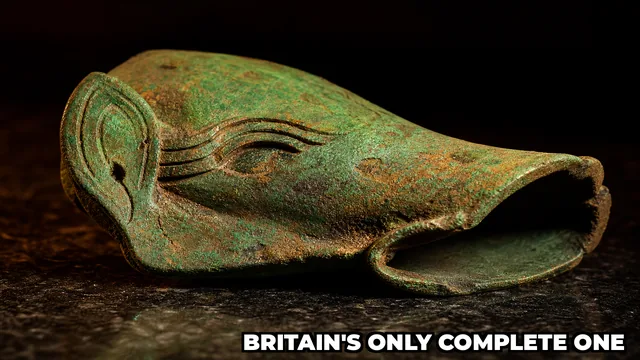 0:26
0:26Britain's Only Complete Celtic Battle Horn 🎺
Sep 17, 2026 0:42
0:42