How Will the Universe End According to Physics?
March 30, 2026 · 4 min read
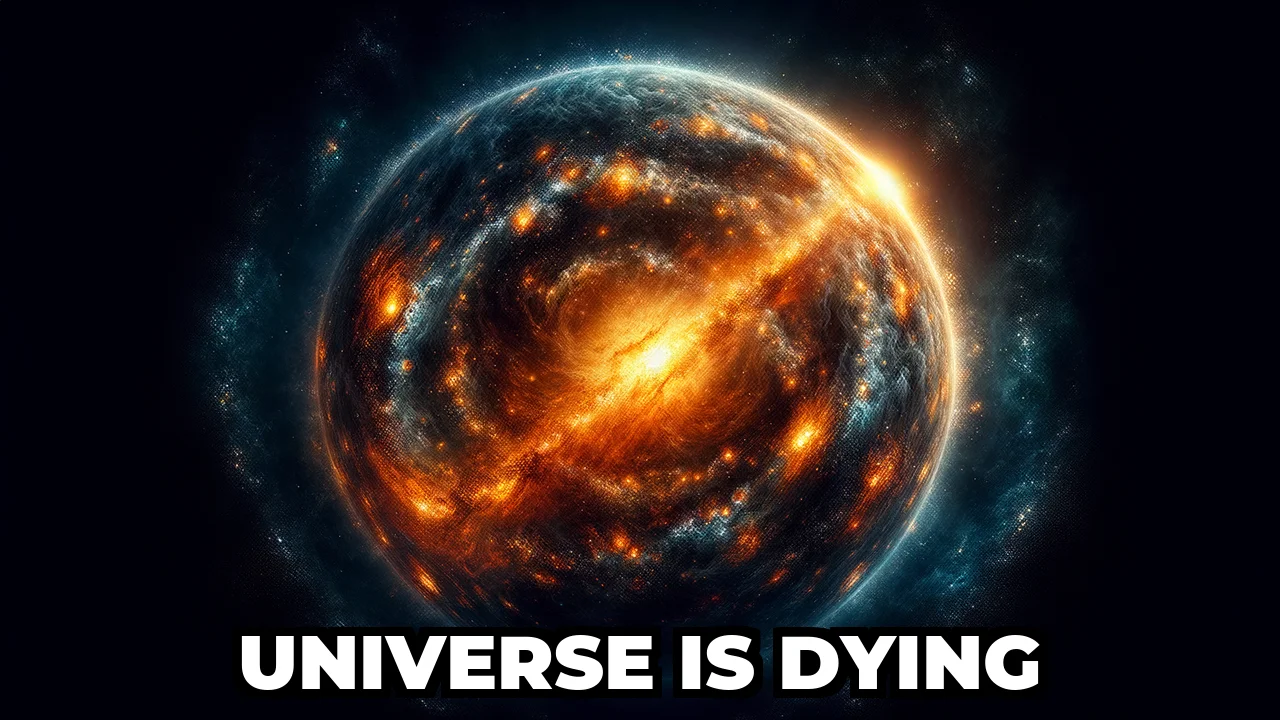
According to physics, the universe will end in a state called heat death, occurring approximately 10^(10^120) years from now when entropy reaches its maximum and all energy is evenly distributed, leaving an eternally cold, motionless void. This represents the universe’s inevitable march toward maximum disorder, governed by the inescapable Second Law of Thermodynamics.
What Is Entropy and Why Does It Control Everything?
Entropy is the universe’s measure of disorder, and it follows one unbreakable rule: it always increases. The Second Law of Thermodynamics states that in any closed system, entropy can only stay the same or increase—never decrease. This makes entropy unique among physical laws because it’s the only one that defines a direction for time itself.
Every process in the universe, from a star burning to a cup of coffee cooling, increases the total entropy of the cosmos. When you burn fuel, when cells metabolize energy, when computers process information—all of these activities convert organized energy into waste heat, pushing the universe incrementally closer to its final state.
The Arrow of Time and Entropy’s Strange Power
Most physics equations work identically whether time runs forward or backward, but entropy creates an exception. The reason you remember the past but not the future, and why cause precedes effect, may be directly linked to entropy’s relentless increase in one direction.
Some physicists theorize that entropy doesn’t just follow time—it may actually create our experience of time. The “arrow of time” that defines your daily experience could be nothing more than entropy doing its job, spreading disorder throughout the cosmos in an irreversible process that began with the Big Bang.
The Universe’s Impossible Beginning
The early universe started in a state of extraordinarily low entropy—almost perfect order. This creates one of cosmology’s greatest mysteries: why did the Big Bang produce such organization rather than chaos? Nobel laureate Roger Penrose calculated the probability of our universe’s initial low-entropy state at roughly 1 in 10^(10^123)—a number so small it’s essentially impossible.
This “Past Hypothesis” suggests the universe was simply born organized, but this raises more questions than it answers. Since the Big Bang, every cosmic event—star formation, galaxy collisions, stellar explosions—has been part of an ongoing process of universal disorder increase that continues today.
The Stellar Countdown: How Stars Participate in Entropy
Stars aren’t just burning—they’re actively participating in the universe’s entropic countdown. While our 13.8-billion-year-old universe seems ancient, the era of star formation will continue for roughly 100 trillion years. This stellar epoch, though it sounds enormous, represents just a tiny fraction of the universe’s total lifespan.
Even the most massive stars will eventually burn out, and no new stars will form once the universe expands and cools sufficiently. The night sky’s brilliant display represents a temporary phase in cosmic evolution, destined to fade into permanent darkness.
Heat Death: The Universe’s Final State
Heat death represents the universe’s ultimate destination—maximum entropy where energy is distributed so evenly that no work can be performed. In this state, no stars shine, no planets orbit, and no chemical reactions occur. Only isolated particles drift through an infinite, uniformly cold void in perfect equilibrium.
After the last stars die, the universe still faces an almost incomprehensible timeline. Black holes will dominate for 10^40 years before they begin evaporating through Hawking radiation—a quantum process where black holes slowly lose mass by emitting particles until they completely disappear in a final flash of energy.
Life as Entropy’s Engine
Paradoxically, complex structures like life don’t violate entropy—they accelerate it. Living organisms exist because they excel at converting organized energy into waste heat, actually increasing universal entropy faster than lifeless matter would.
Physicist Jeremy England’s research suggests that life may be thermodynamically inevitable. Given appropriate conditions and energy sources, matter tends to organize into structures that dissipate energy more efficiently. Rather than fighting entropy, life serves as one of its most powerful tools for increasing cosmic disorder.
The Absolute End: Beyond Black Holes
Even after black holes evaporate, the universe continues its journey toward maximum entropy. Around 10^(10^120) years from now, the final traces of organized matter and energy will disappear. The cosmos will achieve perfect entropy—a state of absolute equilibrium where nothing can ever change again.
In this ultimate future, space will be filled with isolated photons and elementary particles separated by unimaginable distances, all at the same temperature, with no energy gradients remaining to power any processes. Time itself becomes meaningless when nothing can ever happen again.
This represents physics’ best current understanding of cosmic destiny: a universe that began with impossible organization will end in perfect, eternal stillness—the inevitable result of entropy’s unstoppable march toward maximum disorder.
FREQUENTLY ASKED
How long until the universe reaches heat death? ▾
The universe will reach heat death in approximately 10^(10^120) years, after all black holes have evaporated and entropy reaches its maximum possible value.
Can anything stop or reverse entropy in the universe? ▾
No, the Second Law of Thermodynamics states that entropy can only increase or stay constant in closed systems, making the universe's march toward heat death inevitable.
Why did the universe start with low entropy if entropy always increases? ▾
The universe's initial low-entropy state remains one of cosmology's greatest unsolved mysteries, with some physicists calling it the "Past Hypothesis" without a complete explanation.