NASA’s InSight lander detected more than 1,300 marsquakes during its mission, far exceeding scientists’ pre-mission predictions and revealing Mars to be much more seismically active than previously thought.
The Incredible Sensitivity of InSight’s Seismometer
InSight’s seismometer achieved unprecedented precision, capable of detecting ground movements smaller than the width of a hydrogen atom. This extraordinary sensitivity allowed the lander to capture seismic events that would have been completely invisible to less sophisticated instruments. The technology represents a major leap forward in planetary seismology, enabling scientists to peer deep into Mars’ interior structure.
Mars Shakes Itself Apart: A Planet in Contraction
Unlike Earth’s earthquakes, which primarily result from tectonic plate movement, marsquakes occur through an entirely different mechanism. Mars is literally cracking itself apart as the planet cools and contracts over geological time. This process creates internal stresses that fracture the Martian crust from within, generating seismic waves that ripple across the planet’s surface.
The cooling and contraction process is a natural consequence of Mars’ smaller size compared to Earth. Without the same level of internal heat generation and lacking plate tectonics to release stress gradually, Mars experiences this dramatic self-fracturing as its interior slowly cools.
Record-Breaking Seismic Events
The largest marsquake detected by InSight occurred on May 4, 2022—coincidentally Star Wars Day—reaching a magnitude of nearly 5.0. This powerful event caused the Martian ground to tremble for hours, providing scientists with invaluable data about the planet’s internal structure. The timing and intensity of this quake marked it as one of the most significant seismic events ever recorded on another planet.
Two of the largest detected quakes traced back to Cerberus Fossae, a relatively young fault system estimated to be less than 10 million years old in geological terms. This fault system has become a focal point for understanding Mars’ ongoing geological activity.
Implications for Martian Volcanic Activity
The seismic data collected by InSight has led scientists to reconsider Mars’ geological status. Rather than being a completely “dead” planet as previously thought, evidence now suggests Mars may still harbor volcanic activity today. The pattern and intensity of detected marsquakes indicate ongoing geological processes that could support contemporary volcanism.
This discovery fundamentally changes our understanding of Mars’ evolution and current state. A planet once considered geologically inactive has proven to be very much alive, with internal processes continuing to shape its surface and structure. The implications extend beyond pure scientific interest, potentially affecting future human exploration and colonization plans.
Revolutionizing Planetary Science
InSight’s marsquake discoveries represent more than just impressive numbers—they’ve revolutionized our understanding of planetary geology. The mission demonstrated that smaller, seemingly inactive planets can maintain significant internal activity over billions of years. These findings will influence how scientists study other rocky planets and moons throughout the solar system, providing new frameworks for understanding planetary evolution and geological processes beyond Earth.
FREQUENTLY ASKED
How sensitive was InSight's seismometer compared to Earth-based instruments? ▾
InSight's seismometer could detect ground movements smaller than the width of a hydrogen atom, making it extraordinarily sensitive and capable of detecting minute marsquakes that would be impossible to measure with less precise instruments.
Why don't marsquakes happen for the same reasons as earthquakes? ▾
Marsquakes occur because Mars is cooling and contracting, causing the planet to crack itself apart from within, while earthquakes primarily result from tectonic plate movements that don't exist on Mars.
What was the largest marsquake InSight detected? ▾
The largest marsquake reached nearly magnitude 5.0 and occurred on May 4, 2022, causing the Martian ground to tremble for hours.
How many marsquakes did InSight detect in total? ▾
NASA's InSight lander detected more than 1,300 marsquakes during its mission, far exceeding scientists' pre-mission predictions and revealing Mars to be much more seismically active than previously thought.
Is Mars still volcanically active today? ▾
Evidence from InSight's seismic data suggests Mars may still harbor volcanic activity today, fundamentally changing our understanding from viewing it as a completely 'dead' planet to one that remains geologically alive.
Where did the largest marsquakes originate from? ▾
Two of the largest detected marsquakes traced back to Cerberus Fossae, a relatively young fault system estimated to be less than 10 million years old in geological terms.
GO DEEPER
KEEP EXPLORING
 0:49
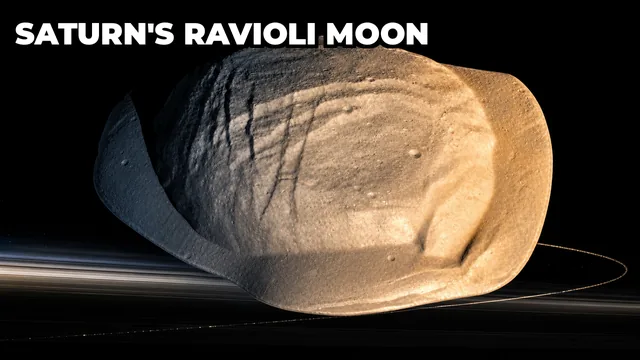
0:49Saturn Is Hiding A Moon Shaped Like Ravioli 🍝
Oct 3, 2026 0:32
0:32NASA Built It For 5 Flights. It Flew 72 On Mars 🚁
Sep 30, 2026 0:31
0:31The Cloud That Forms 52 Miles Up From Meteor Smoke ✨
Sep 30, 2026 0:16
0:16The Only Color Photos Ever Taken On Venus 📸
Sep 27, 2026 0:51
0:51Mars Grows 'Spiders' Every Spring 🕷️ Here's Why
Sep 26, 2026 0:23
0:23