Jupiter’s Great Red Spot is a massive hurricane-like storm that has been continuously raging for over 350 years, making it the longest-lasting known storm in our solar system. This colossal anticyclonic storm is wider than Earth itself and has never stopped spinning since astronomers first documented it in 1665.
The Scale of Jupiter’s Ancient Storm
The Great Red Spot dwarfs any weather phenomenon on Earth. With a diameter that could easily swallow our entire planet, this storm generates winds reaching speeds of up to 400 miles per hour—nearly twice as fast as the strongest hurricanes ever recorded on Earth. To put its longevity in perspective, this storm was already centuries old when the United States was founded, and it was spinning through space when Mozart composed his first symphony.
The storm’s distinctive reddish color comes from complex chemical reactions in Jupiter’s atmosphere, likely involving phosphorus and sulfur compounds that are lifted from deeper layers of the planet’s atmosphere and altered by solar radiation.
A Shrinking Mystery
One of the most puzzling aspects of the Great Red Spot is its gradual decline. Historical observations show that the storm was approximately three times larger in the 1800s than it is today. Astronomers have been documenting this steady shrinkage for decades, yet they still cannot definitively explain what’s causing it.
Some scientists theorize that changes in Jupiter’s atmospheric dynamics or interactions with smaller storms may be “feeding” on the Great Red Spot’s energy. Others suggest that the storm might be stretching vertically as it contracts horizontally, potentially extending deeper into Jupiter’s atmosphere than previously thought.
The Potential End of an Era
The prospect of the Great Red Spot’s eventual demise raises fascinating questions about what might happen next. Some researchers speculate that when this massive storm finally dissipates, the enormous amount of energy released could trigger unprecedented atmospheric disturbances across Jupiter’s entire surface.
This potential scenario would represent one of the most dramatic planetary weather events observable from Earth, fundamentally altering Jupiter’s atmospheric patterns that have remained relatively stable for centuries.
Jupiter’s Extreme Weather Laboratory
The Great Red Spot serves as a natural laboratory for understanding atmospheric dynamics on a scale impossible to study on Earth. Its persistence demonstrates the complex interplay between planetary rotation, atmospheric composition, and energy dynamics that govern weather systems on gas giants.
Studying this storm helps scientists better understand not only Jupiter’s atmospheric behavior but also the fundamental physics of rotating fluid systems—knowledge that applies to weather patterns on other planets and even helps improve climate models for Earth.
A Reminder of Cosmic Timescales
The Great Red Spot’s 350-year lifespan illustrates the vast difference between human and astronomical timescales. While entire human civilizations have risen and fallen, this single storm has continued its relentless rotation, serving as a constant reminder that the universe operates on scales that make human history appear momentary.
As we continue to monitor this ancient storm through increasingly sophisticated telescopes and spacecraft, the Great Red Spot remains one of the most compelling examples of nature’s power and persistence in our solar system.
FREQUENTLY ASKED
How big is Jupiter's Great Red Spot compared to Earth? ▾
The Great Red Spot is wider than Earth's entire diameter and could easily swallow our planet whole if they were to collide.
Why is Jupiter's Great Red Spot shrinking? ▾
Scientists don't know for certain, but theories include interactions with smaller storms, changes in atmospheric dynamics, or the storm stretching vertically as it contracts horizontally.
What happens if Jupiter's Great Red Spot disappears? ▾
Some scientists believe the massive energy release could trigger unprecedented storms across Jupiter's entire surface, dramatically altering the planet's atmospheric patterns.
How long has Jupiter's Great Red Spot been active? ▾
Jupiter's Great Red Spot has been continuously raging for over 350 years, with astronomers first documenting it in 1665. This makes it the longest-lasting known storm in our solar system.
What causes the red color of Jupiter's Great Red Spot? ▾
The storm's distinctive reddish color comes from complex chemical reactions involving phosphorus and sulfur compounds that are lifted from deeper layers of Jupiter's atmosphere and altered by solar radiation.
How fast are the winds in Jupiter's Great Red Spot? ▾
The Great Red Spot generates winds reaching speeds of up to 400 miles per hour, which is nearly twice as fast as the strongest hurricanes ever recorded on Earth.
GO DEEPER
KEEP EXPLORING
 0:54
0:54NASA Lost Track of Its Moon Trees for 20 Years 🌳🌕
Oct 23, 2026 0:21
0:21Where Space Stations Go to Rest 🌊 (1,670 Miles From Land)
Oct 20, 2026 0:42
0:42It Bounced Off a Comet & Vanished for 2 Years 🚀
Oct 17, 2026 0:49
0:49NASA Lost an 84-Ton Station… & Got a $400 Fine 🛸
Oct 14, 2026 0:24
0:24We Finally Saw the Sun's Hidden Pole 🌞😱
Oct 11, 2026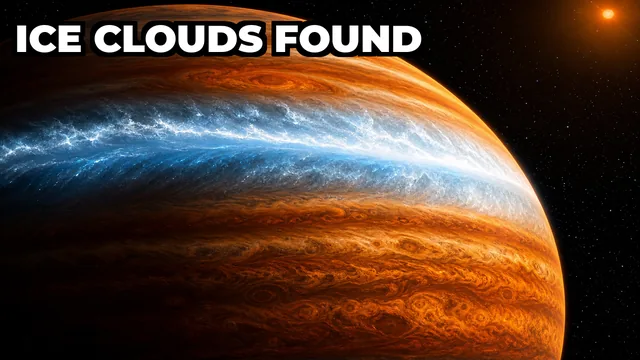 0:50
0:50