The Short Answer
The Kailasa Temple at Ellora, India, is the largest monolithic rock-cut structure on Earth — a 107-foot tower carved entirely from a single basalt cliff in the 8th century, not by assembling stones but by removing an estimated 200,000 tons of rock from the top down.
What Makes Kailasa Temple Unique
Most great buildings in history were assembled: stone placed on stone, timber raised on timber. The Kailasa Temple works in reverse. Builders began at the rim of a basalt cliff and cut downward, hollowing out everything around what would become the temple while leaving the structure itself intact within the mountain. The result is not a building inserted into rock — it is the rock, shaped from outside in.
Nothing else on Earth was built quite this way at this scale. The temple complex spans roughly 276 feet in length and 154 feet in width, and its central tower rises 107 feet from a single unbroken cliff face. It was commissioned during the reign of the Rashtrakuta king Krishna I, and construction is generally dated to around 756–773 CE.
Why Build from the Top Down?
The top-down approach was not just ambitious — it was surprisingly logical. By starting at the cliff’s rim and carving downward, the workers always stood on solid, uncut rock. There was no need for scaffolding at height. The tower was effectively completed before the floor level was ever reached. Debris fell away naturally rather than being lifted out of a pit.
This method also meant that mistakes could not be undone. Every cut was permanent. The builders had to be certain of their geometry before each chisel strike — and they were working on a scale that dwarfs most construction projects of any era.
How Did They Keep the Proportions Exact?
No architectural blueprints survive. The leading theory among researchers is that master craftsmen used string grids, plumb lines, and sacred geometric ratios — transferring measurements level by level as the temple descended deeper into the rock. These techniques were well established in Indian temple-building traditions of the period and would have allowed precise proportional control without paper plans.
But “leading theory” is not the same as proven fact. The full system the builders used to maintain accuracy across such a massive three-dimensional carving remains one of the great open questions in architectural history.
What the Historical Record Says
The primary written record of Kailasa Temple’s construction is a copper plate inscription dated to around 812 CE — roughly a generation after the temple was completed. The text praises a temple at Ellora so extraordinary that even the gods were said to be astonished by it. According to the inscription, the temple’s own architect marveled at his creation and asked himself how he had ever managed to build it. That is essentially the entirety of the contemporary written account.
The Elephants, the Complex, and the Legacy
Around the base of the temple, rows of life-sized carved elephants appear to support the entire structure on their backs — a detail that required carving beneath the platform after it had already been freed from the surrounding rock. The temple is dedicated to the Hindu god Shiva and represents Mount Kailash, his mythological home in the Himalayas.
Kailasa is one of 34 rock-cut temples and monasteries at the Ellora Caves site, representing Hindu, Buddhist, and Jain traditions carved into the same escarpment across several centuries. The entire site was designated a UNESCO World Heritage Site in 1983.
The cliff is still there. The temple is still inside it. After more than 1,200 years, not one stone has shifted — because there are no stones. It was never assembled. It can never fall apart.
FREQUENTLY ASKED
How long did it take to build the Kailasa Temple? ▾
Most historians estimate construction took approximately 18 years, completed around 773 CE, though some scholars believe multiple generations of workers contributed to the full decorative program.
How much rock was removed to carve Kailasa Temple? ▾
Estimates put the total rock removed at around 200,000 tons, excavated entirely by hand using chisels and hammers with no explosives or machinery.
Who built the Kailasa Temple at Ellora? ▾
The temple was commissioned by the Rashtrakuta king Krishna I in the 8th century CE; the names of the master architects and the thousands of workers who built it are not recorded.
Is the Kailasa Temple the largest monolithic structure in the world? ▾
Yes — the Kailasa Temple is widely recognized as the largest monolithic rock-cut structure on Earth, carved from a single basalt cliff rather than assembled from separate stones.
What religion is the Kailasa Temple associated with? ▾
Kailasa Temple is a Hindu temple dedicated to Shiva, designed to represent his mythological mountain home, Mount Kailash in the Himalayas.
Where exactly is the Kailasa Temple located? ▾
The Kailasa Temple is located at the Ellora Caves complex near Aurangabad in Maharashtra, India, a UNESCO World Heritage Site since 1983.
KEEP EXPLORING
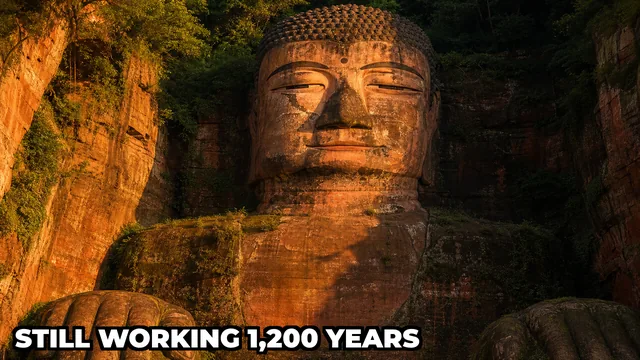 0:56
The 233ft Buddha Built To Tame 3 Rivers 🏔️
Oct 24, 2026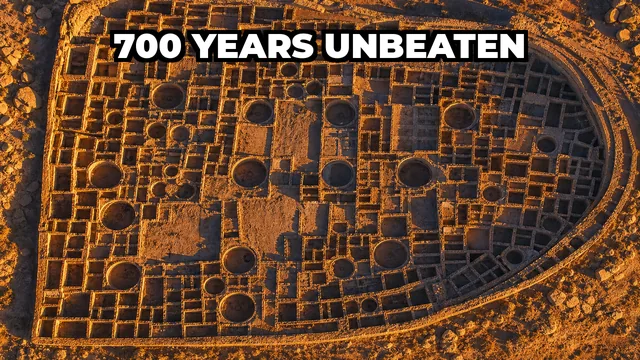 0:43
Why Build 600 Rooms for 70 People? 🏛️
Oct 23, 2026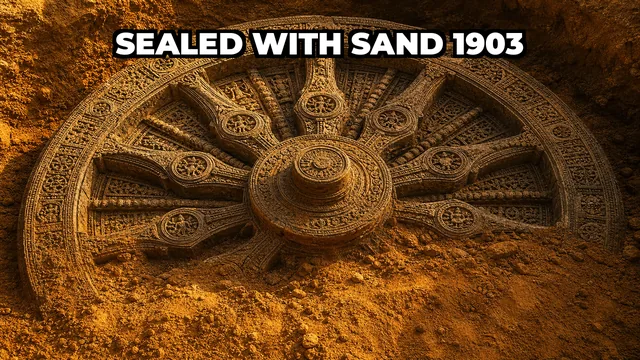 0:36
The 1250 Stone Chariot With Iron Beams Inside 🏛️
Oct 22, 2026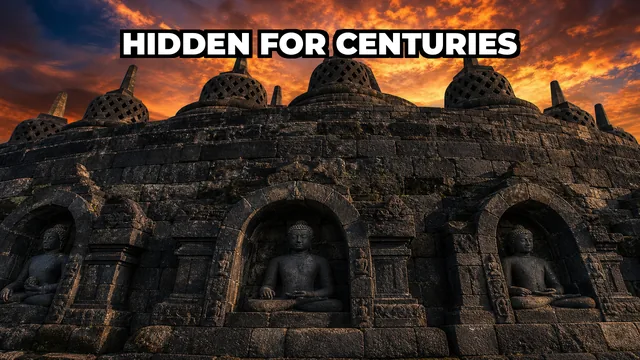 0:02
504 Buddhas. Zero Mortar. Hidden for Centuries 🏛️
Oct 21, 2026 0:53
121ft Tall — No Steel, No Framework 🏛️
Oct 20, 2026 0:54