Rafflesia arnoldii, native to the rainforests of Sumatra and Borneo, holds the record for the largest single flower on Earth — measuring up to three feet across and weighing as much as 24 pounds. It has no roots, no stems, and no leaves of any kind.
A Plant With No Body
Most plants are defined by their structure: roots anchor them, stems carry water, leaves capture sunlight. Rafflesia arnoldii has none of these. It is, in the strictest botanical sense, almost not a plant at all — at least not one you can see. For the vast majority of its life, it exists only as a network of microscopic filaments threaded invisibly through the tissue of a host vine, Tetrastigma (a relative of the grape family). It takes everything it needs — water, sugars, minerals — and gives nothing back. It is a parasite in the most complete sense.
Nine Months to a Bloom That Lasts One Week
The only visible stage of Rafflesia’s life cycle begins when a small bud breaks through the bark of the host vine’s root. That bud — at first no larger than a marble — swells slowly over roughly nine months until it reaches the size of a cabbage. Then it opens.
The bloom lasts approximately five to seven days. After that, it collapses into a black, rotting mass on the forest floor. For a structure that took the better part of a year to develop, it is a remarkably brief window.
The Rotting Meat Strategy
The moment Rafflesia opens, its strategy becomes obvious to anyone within range: it smells like a decomposing animal carcass. This is not accidental. The flower produces heat as well as odor, further mimicking a rotting body, and its deep burgundy-red color reinforces the illusion.
The target audience is carrion flies — insects that seek out dead flesh to feed on and lay their eggs. When a fly lands inside Rafflesia, it finds no food and no suitable egg-laying site. But in probing around the interior, it picks up a sticky mass of pollen on its body. If it repeats this mistake at another Rafflesia flower of the opposite sex, pollination occurs. The plant gets everything; the fly gets nothing. This is called deceptive pollination, and Rafflesia is one of the most extreme examples on Earth.
Seeds, Shrews, and an Unsolved Mystery
A successfully pollinated Rafflesia flower produces a berry packed with thousands of tiny seeds. Tree shrews and squirrels have been observed eating the fruit, likely dispersing seeds through their movement and droppings. Ants have also been documented carrying individual seeds away from the parent site, possibly attracted to a fatty coating on the seed coat.
But here is where the science runs out. No researcher has ever directly observed what happens next — how a Rafflesia seed actually penetrates the root of a Tetrastigma vine and begins to grow. The germination process, the very beginning of the plant’s life, has never been witnessed or successfully replicated under controlled conditions. It remains one of the most conspicuous unsolved problems in plant biology.
Why It Matters Beyond the Spectacle
Rafflesia arnoldii is more than an oddity. Its genome has revealed that the plant has undergone extreme gene loss — having shed genes associated with photosynthesis, cell walls, and other functions it no longer needs, while apparently acquiring some genes from its host through a process called horizontal gene transfer. It is a window into how far evolution can push a living organism away from the standard template.
It is also critically threatened. Habitat destruction in Sumatra and Borneo has reduced Rafflesia populations significantly. Because the plant cannot be cultivated and its germination cannot be controlled, conservation is almost entirely dependent on protecting the old-growth rainforest it calls home.
A plant with no body, a bloom that vanishes in a week, a pollination system built entirely on deception, and a birth that no one has ever seen. Rafflesia arnoldii is, by almost any measure, the strangest flower on Earth.
FREQUENTLY ASKED
How big does Rafflesia arnoldii get? ▾
Rafflesia arnoldii can reach up to three feet (about one meter) in diameter and weigh as much as 24 pounds (around 11 kilograms), making it the largest individual flower of any plant on Earth.
Why does Rafflesia smell like rotting meat? ▾
Rafflesia produces a carrion-like odor to attract carrion flies, which it deceives into visiting by mimicking a decomposing carcass; the flies inadvertently pick up pollen and carry it to other flowers.
Is Rafflesia arnoldii a parasite? ▾
Yes — Rafflesia arnoldii is a holoparasite, meaning it lives entirely inside the tissue of its host vine (Tetrastigma) and has no photosynthetic tissue of its own, obtaining all nutrients and water from the host.
How long does a Rafflesia flower stay open? ▾
A Rafflesia arnoldii flower remains open for only about five to seven days before it collapses and decomposes, despite taking roughly nine months to develop from a small bud.
Where does Rafflesia arnoldii grow? ▾
Rafflesia arnoldii is found only in the tropical rainforests of Sumatra and Borneo in Southeast Asia, where its host vine Tetrastigma grows in undisturbed old-growth forest.
Has anyone ever seen Rafflesia seeds germinate? ▾
No — the germination process of Rafflesia arnoldii has never been directly observed or successfully reproduced in a controlled setting, making it one of the most significant unsolved mysteries in plant biology.
KEEP EXPLORING
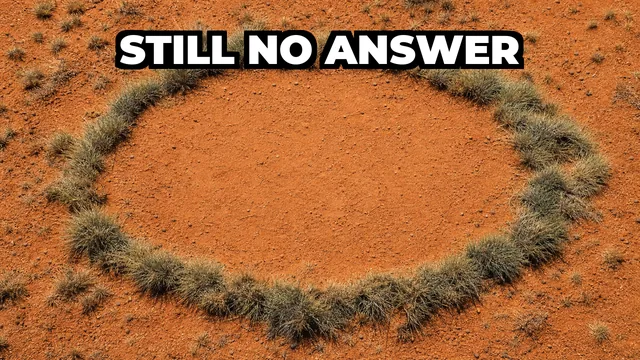 0:52
Termites or Thirsty Grass? The Desert Can't Decide 🔵
Oct 19, 2026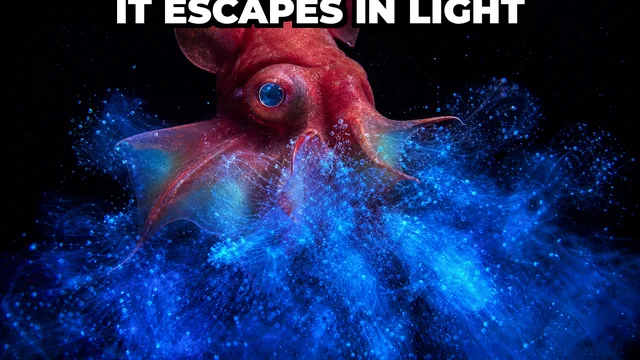 0:38
The Vampire Squid Escapes in a Cloud of Light 🦑
Oct 19, 2026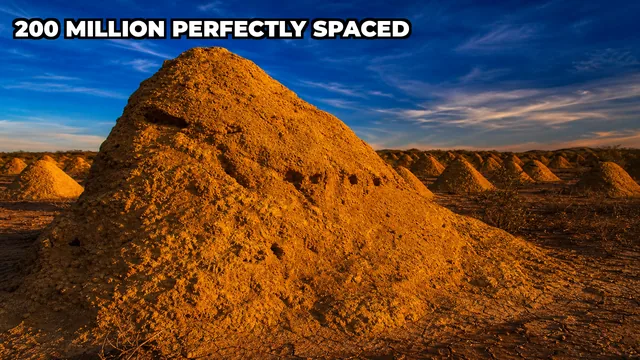 0:38
200 Million Termite Mounds, Some 3,800 Years Old 🐜
Oct 17, 2026 0:36
Why This Frog Packs Its Cells With Sugar 🐸🔬
Oct 16, 2026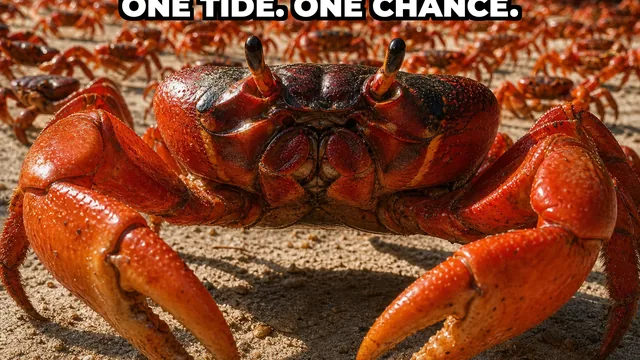 0:58
Millions of Crabs Wait for One Exact Tide 🦀
Oct 13, 2026 0:03