The largest underwater seagrass meadow on Earth is Saya de Malha Bank, a massive marine ecosystem spanning over 40,000 square kilometers in the Indian Ocean. This underwater garden, roughly the size of Switzerland, remains one of the most important yet least explored carbon-capturing ecosystems on our planet.
Location and Geographic Significance
Saya de Malha Bank sits approximately 1,000 kilometers east of Madagascar on the Mascarene Plateau. This remote location in the Indian Ocean makes it incredibly difficult to access, contributing to its status as one of Earth’s most understudied ecosystems. The bank’s position on the shallow areas of the Mascarene Plateau creates ideal conditions for dense seagrass growth, allowing this underwater meadow to flourish in relative isolation.
The Mapping Problem: Less Known Than Mars
One of the most striking facts about Saya de Malha Bank is how little we know about it despite its massive size and environmental importance. Scientists have better detailed maps of Mars than they do of this crucial marine ecosystem. The remote location and technical challenges of underwater mapping have left vast portions of this seagrass meadow completely unexplored and unmapped.
This knowledge gap represents a significant challenge for marine conservation efforts. Without comprehensive mapping and understanding of the ecosystem’s full extent and biodiversity, scientists cannot fully assess its ecological value or develop effective protection strategies.
Carbon Capture and Climate Impact
Saya de Malha Bank functions as a powerful natural weapon against climate change, quietly sequestering millions of tons of carbon dioxide from the atmosphere. The seagrass meadow captures and stores carbon at rates that rival tropical rainforests, making it one of the ocean’s most effective carbon sinks.
Seagrass ecosystems are particularly efficient at carbon storage because they trap carbon in both their living biomass and in the sediment beneath them. This “blue carbon” can remain locked away for centuries, making seagrass meadows like Saya de Malha Bank crucial allies in the fight against global warming.
Oxygen Production and Marine Life Support
The massive seagrass meadow produces oxygen on a scale comparable to entire rainforests, contributing significantly to the ocean’s oxygen levels. This oxygen production supports not only marine life within the ecosystem but also contributes to the broader oceanic oxygen cycle that supports life throughout the Indian Ocean.
The dense seagrass provides critical habitat for countless marine species, from small fish and invertebrates to larger predators. These underwater meadows serve as nursery areas, feeding grounds, and shelter for a diverse array of marine life, supporting biodiversity on a scale that scientists are only beginning to understand.
The Urgent Need for Exploration
The fact that such a massive and environmentally crucial ecosystem remains largely unexplored highlights the broader challenge of ocean exploration. While space exploration captures public imagination and funding, our own planet’s underwater ecosystems remain mysterious and understudied.
As climate change accelerates and marine ecosystems face increasing threats, understanding and protecting places like Saya de Malha Bank becomes increasingly urgent. This hidden world beneath the Indian Ocean may hold keys to natural climate solutions that could help save our planet.
FREQUENTLY ASKED
Where is Saya de Malha Bank located? ▾
Saya de Malha Bank is located in the Indian Ocean, approximately 1,000 kilometers east of Madagascar on the Mascarene Plateau.
How big is the world's largest seagrass meadow? ▾
Saya de Malha Bank spans over 40,000 square kilometers, making it roughly the size of Switzerland.
Why haven't scientists fully mapped Saya de Malha Bank? ▾
Its remote location in the Indian Ocean and the technical challenges of underwater mapping have made comprehensive exploration extremely difficult and expensive.
How much carbon does Saya de Malha Bank store? ▾
Saya de Malha Bank sequesters millions of tons of carbon dioxide from the atmosphere at rates that rival tropical rainforests. The seagrass captures carbon in both its living biomass and the sediment beneath it, where it can remain stored for centuries.
What marine life lives in the world's largest seagrass meadow? ▾
The dense seagrass provides critical habitat for countless marine species ranging from small fish and invertebrates to larger predators. These underwater meadows serve as nursery areas, feeding grounds, and shelter for a diverse array of marine life.
How does Saya de Malha Bank help fight climate change? ▾
The seagrass meadow functions as a powerful carbon sink by capturing and storing carbon dioxide at rates comparable to rainforests, while also producing oxygen on a massive scale. This makes it one of the ocean's most effective natural weapons against climate change.
GO DEEPER
KEEP EXPLORING
 0:29
0:29The Only Current That Circles The Entire Planet 🌊
Sep 12, 2026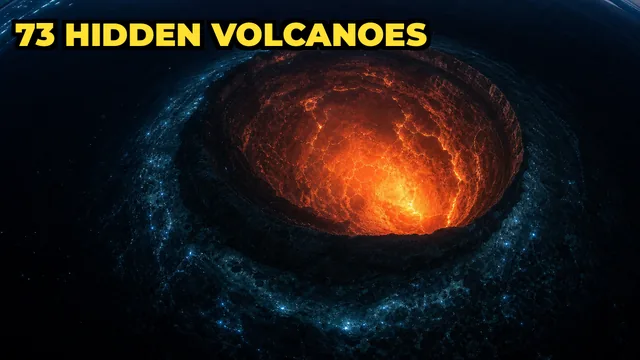 0:26
0:26An AI Trained On Mars Found 73 Volcanoes On Earth 🌋
Sep 7, 2026 0:26
0:26The Deep Ocean Has A Secret Food Supply 🌊😱
Sep 6, 2026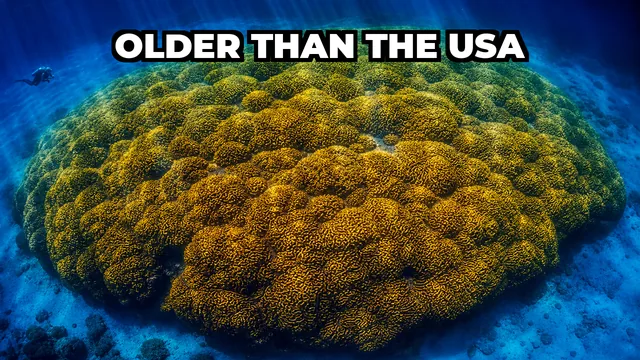 0:19
0:19This Coral Is Older Than The USA 🪸😱
Sep 5, 2026 0:44
0:44A 2,300-Year-Old Tomb Held $4,500/lb Whale Treasure 🐋
Sep 4, 2026 0:32
0:32