The Largest Volcano on Earth Is Hidden Beneath the Pacific Ocean
The largest volcanic construct ever discovered on Earth is the Ontong Java Plateau, a massive underwater formation north of the Solomon Islands that covers an area comparable to the state of Alaska.
What Is the Ontong Java Plateau?
Unlike the dramatic cone-shaped volcanoes most people picture, the Ontong Java Plateau is a Large Igneous Province — a vast, flat expanse of solidified basalt sitting on the floor of the western Pacific Ocean. It stretches across roughly 1.86 million square kilometres, making it far larger than any volcanic structure found on land. Despite its staggering scale, it remains almost completely unknown outside of geological circles, largely because it sits hidden beneath thousands of metres of ocean water.
How Did It Form?
Around 122 million years ago, during the Early Cretaceous period, the plateau was built in a geologically brief and catastrophic eruption event. Scientists believe a mantle plume — a column of superheated rock rising from near the core-mantle boundary, almost 2,900 kilometres below Earth’s surface — punched upward with extraordinary force. The result was a flood of basalt so immense it is almost impossible to visualise. The eruption released enough volcanic rock to bury the entire contiguous United States under approximately six kilometres of solid basalt.
Normal oceanic crust averages around seven kilometres in thickness. Beneath the Ontong Java Plateau, the crust measures up to thirty-five kilometres thick — roughly five times what it should be. That anomaly alone tells geologists something truly extraordinary happened here.
What Effect Did It Have on the Planet?
An eruption of this magnitude did not go unnoticed by Earth’s systems. The colossal outpouring of volcanic gases and material is linked to a global oceanic anoxic event — a period during which vast stretches of the world’s oceans became severely depleted of dissolved oxygen. This would have caused widespread marine die-offs, fundamentally altering ocean chemistry and ecosystems across the planet. Evidence of this event is preserved in sediment layers worldwide, giving geologists a timeline to work with even though the eruption itself is buried beneath the sea.
Why Don’t More People Know About It?
Part of the reason the Ontong Java Plateau remains obscure is simply that it is underwater and visually inaccessible. There is no dramatic peak to photograph, no lava flow to document. Its existence is reconstructed almost entirely through seafloor drilling, seismic imaging, and the chemical analysis of rock samples hauled up from the ocean floor. The very features that make it scientifically remarkable — its depth, its age, its flatness — also make it invisible to casual observation.
Why Does It Matter Today?
Studying the Ontong Java Plateau gives scientists a window into some of Earth’s most extreme volcanic episodes and how they shaped the planet’s climate and biology. Understanding events like this one helps researchers model what large-scale volcanism can do to ocean chemistry, atmospheric composition, and global temperatures — questions that carry real relevance for understanding Earth’s long-term systems. It also raises a compelling question: if an eruption this large can happen once and go almost unnoticed by human civilisation, what other geological giants are still waiting to be fully understood?
FREQUENTLY ASKED
Is the Ontong Java Plateau bigger than any volcano on land? ▾
Yes. The Ontong Java Plateau covers an area comparable to Alaska, making it far larger than any volcanic structure found on land, including shield volcanoes like Mauna Loa in Hawaii.
How deep underwater is the Ontong Java Plateau? ▾
Much of the plateau sits at depths between 1,500 and 3,000 metres below the ocean surface, though some sections rise closer to sea level as shallow submarine ridges.
What is a mantle plume and how does it create a plateau like this? ▾
A mantle plume is a column of abnormally hot rock that rises from deep within the Earth's mantle; when it reaches the crust, it can generate massive volumes of lava over a geologically short period, building up enormous igneous provinces like the Ontong Java Plateau.
What caused the oceanic anoxic event linked to the Ontong Java eruption? ▾
The massive release of volcanic gases and heat is thought to have warmed ocean waters and disrupted circulation patterns, reducing dissolved oxygen levels and triggering widespread marine oxygen depletion across global ocean basins.
Could something like the Ontong Java eruption happen again? ▾
Geologists consider another eruption of that scale to be possible in principle but extremely rare, as such events appear to occur only a handful of times over hundreds of millions of years in Earth's history.
How do scientists study the Ontong Java Plateau if it is underwater? ▾
Researchers use seafloor drilling programs, seismic imaging, and laboratory analysis of rock cores extracted from the ocean floor to determine the plateau's age, composition, and formation history.
GO DEEPER
KEEP EXPLORING
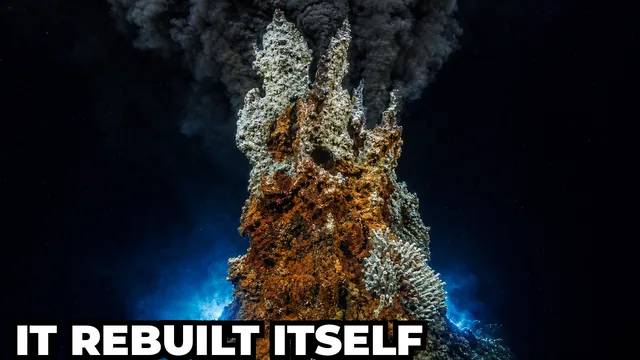 0:34
0:34The 150ft Ocean Tower That Keeps Rising 🌋
Sep 22, 2026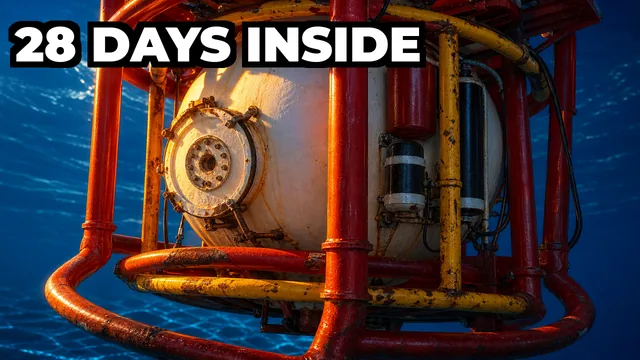 0:46
0:46These Divers Spend 28 Days At 1,000ft Deep 🌊
Sep 21, 2026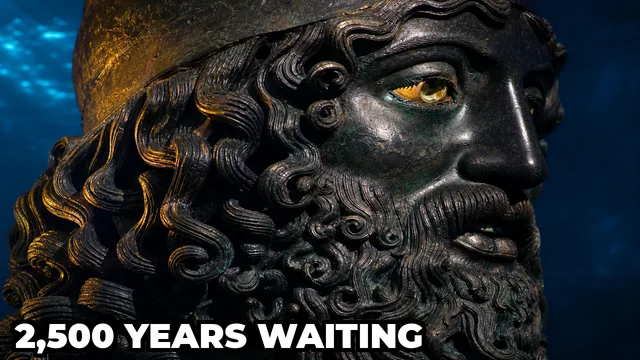 0:40
0:40Lost 2,500 Years — Then a Diver Found Them 🌊
Sep 20, 2026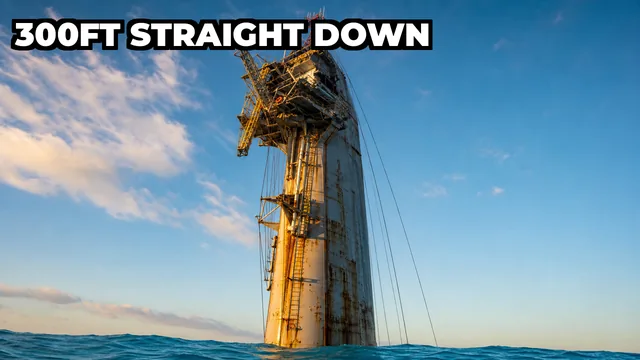 0:39
0:39The Ship That Flips 90° In Under 30 Minutes 🌊
Sep 20, 2026 0:31
0:311,250ft Solo: The Woman Who Owned the Deep 🌊
Sep 17, 2026 0:18
0:18