Lascaux Cave was sealed shut in 1963 because human breath was destroying the 17,000-year-old prehistoric paintings inside. The carbon dioxide from up to 1,200 daily visitors caused green algae to spread across the priceless artwork, forcing French authorities to permanently close the cave to protect humanity’s oldest masterpieces.
The Discovery That Changed Everything
In September 1940, four teenagers following their dog Robot through the woods near Montignac, France, stumbled upon one of archaeology’s greatest treasures. What began as a rescue mission for their fallen dog led to the discovery of the Lascaux Cave system, containing over 600 painted animal figures and nearly 1,500 engravings created by Ice Age artists.
The cave’s most famous section, the Hall of Bulls, features a spectacular ceiling where ancient horses, bulls, and deer appear to stampede across the stone canvas. These paintings predate written civilization by thousands of years, representing some of humanity’s earliest artistic expressions.
From Wonder to Crisis
After World War II ended, French authorities opened Lascaux to the public, and visitors flocked to witness these prehistoric masterpieces. By the mid-1950s, tourism had exploded, with roughly 1,200 people per day walking through the narrow cave passages.
However, this human traffic created an environmental disaster. Every visitor’s breath released carbon dioxide and moisture into the sealed cave atmosphere. The delicate ecosystem that had preserved the paintings for millennia suddenly became unstable. Green algae, nicknamed “green sickness” by scientists, began spreading across the ancient artwork like a slow-moving plague.
The Impossible Decision
Faced with watching 17,000 years of human heritage slowly disappear, French officials made the only choice they could: permanent closure. In 1963, Lascaux was sealed to all public access, ending just 15 years of tourism that had nearly destroyed what 170 centuries had preserved.
The decision wasn’t taken lightly. These paintings represent humanity’s earliest known sophisticated art, created when mammoths still roamed Europe and ice sheets covered much of the continent. The artists who painted these animals lived in a world completely alien to our own, yet their artistic vision speaks across millennia.
Lascaux II: The Extraordinary Replica
Recognizing that people still deserved to experience these incredible paintings, France embarked on an ambitious project. In 1983, Lascaux II opened just 200 meters from the original cave. This painstaking replica recreates the Hall of Bulls and other key sections using the same pigments and techniques as the original artists.
While Lascaux II allows visitors to experience the wonder of prehistoric art, the original cave remains in sealed darkness. Only a handful of scientists are permitted inside for essential research and conservation work, making the real Lascaux one of the world’s most exclusive and forbidden places.
The Legacy Continues
Today, more than 60 years after closure, the original Lascaux Cave paintings remain off-limits to everyone except a small team of researchers. This sacrifice ensures that future generations might someday safely view these irreplaceable windows into humanity’s artistic origins. The cave stands as both a triumph of prehistoric creativity and a sobering reminder that some treasures are too precious to share freely.
FREQUENTLY ASKED
Can anyone visit the original Lascaux Cave today? ▾
No, the original Lascaux Cave has been sealed to all public access since 1963, with only a few scientists allowed inside for essential research.
How old are the Lascaux cave paintings? ▾
The Lascaux cave paintings are approximately 17,000 years old, created during the Ice Age by prehistoric artists.
What animals are painted in Lascaux Cave? ▾
Lascaux Cave contains over 600 paintings of Ice Age animals including bulls, horses, deer, and other prehistoric creatures, with the Hall of Bulls being the most famous section.
Who discovered Lascaux Cave and when? ▾
Four teenagers discovered Lascaux Cave in September 1940 while following their dog Robot through the woods near Montignac, France. What started as a rescue mission for their fallen dog led to one of archaeology's greatest discoveries.
Why did green algae start growing on the Lascaux paintings? ▾
Green algae, nicknamed 'green sickness,' began spreading across the paintings because carbon dioxide and moisture from up to 1,200 daily visitors destabilized the cave's delicate ecosystem. This human breath disrupted the environmental conditions that had preserved the artwork for 17,000 years.
What is Lascaux II? ▾
Lascaux II is a painstaking replica of the original cave that opened in 1983, located just 200 meters from the sealed original. It recreates the Hall of Bulls and other key sections using the same pigments and techniques as the prehistoric artists, allowing visitors to experience the cave paintings without damaging the originals.
GO DEEPER
KEEP EXPLORING
 0:42
0:42They Paved a Roman Road With a 7ft Ancient Statue 🏛️
Oct 6, 2026 0:49
0:49This Iron Pillar Refused To Rust For 1,600 Years ⚙️
Oct 5, 2026 0:52
0:52A 160-Ton Obelisk Flew Home After 68 Years ✈️
Oct 4, 2026 0:19
0:19They Built A 41ft Ring From 60 Mammoths 🦣
Oct 3, 2026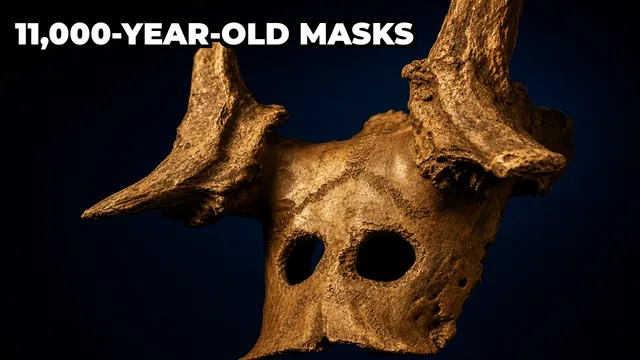 0:05
0:0533 Deer Skull Masks — 11,000 Years Old 🦌😱
Oct 2, 2026 0:34
0:34