What Is Maeshowe and Why Does the Winter Solstice Sun Shine Into It?
July 3, 2026
What Is Maeshowe?
Maeshowe is a Neolithic chambered cairn on Orkney, Scotland, built around 2800 BCE, designed so that the setting sun on the winter solstice shines directly down its entrance passage and illuminates the inner chamber — a feat of prehistoric astronomical precision that predates the Egyptian pyramids.
Older Than You Think
When people talk about the ancient world, the pyramids of Giza usually steal the spotlight. But Maeshowe was already standing for roughly two centuries before construction began at Giza. Built during the Neolithic period by communities who left no written records, this grass-covered mound rising from the flat Orkney landscape is one of the finest megalithic structures in northern Europe. The builders fitted enormous flat sandstone slabs together without mortar, creating walls and a corbelled roof so stable that the chamber has survived nearly five thousand years of Atlantic weather almost intact.
The Solar Alignment
For roughly three weeks around the winter solstice — the shortest days of the year in the Northern Hemisphere — the setting sun drops to exactly the right angle to send a beam of light straight down Maeshowe’s entrance passage. The passage runs approximately 11 metres into the mound, and the alignment is precise enough that the light strikes the back wall of the inner chamber. This is not a coincidence. The Neolithic builders oriented the structure deliberately, tracking the movement of the sun across the horizon with enough accuracy to encode it permanently in stone. Why they did so remains debated. The midwinter sun may have represented rebirth, the return of light, or a ritual connection between the living and the dead interred inside.
What Archaeology Has Found — and Not Found
Maeshowe was almost certainly used as a tomb. Its design — a central chamber with three smaller cells opening off it — mirrors other Neolithic burial cairns across Orkney and the wider British Isles. But when antiquarians entered the mound in the nineteenth century, no human remains were found. Whatever was originally placed inside had long since been removed, disturbed, or destroyed. The mystery of what — or who — was once buried within has never been solved.
The Vikings Who Couldn’t Resist
Here is where Maeshowe’s story takes an almost absurd turn. Around the twelfth century CE, Norse settlers broke into the mound — possibly sheltering there during a storm, possibly hunting for treasure. They left behind the largest collection of runic inscriptions found outside Scandinavia: approximately thirty separate carvings scratched into the stone walls. Some are mundane boasts — the Viking equivalent of “Björn was here.” Others are more tantalising. Several inscriptions refer to a great treasure that was supposedly taken from the mound. No archaeological evidence of grave goods or treasure has ever been recovered. The carvings also include images of a serpent, a walrus, and a knotted dragon — small artistic flourishes from visitors who seem to have been both awed and unbothered by their surroundings.
Why Maeshowe Still Matters
Maeshowe is a UNESCO World Heritage Site, part of the Heart of Neolithic Orkney designation alongside the Ring of Brodgar and the village of Skara Brae. It represents something remarkable: a prehistoric society sophisticated enough to observe and record astronomical cycles in permanent architecture, working with tools of stone and bone. Every winter, thousands of years after its builders died without leaving their names, the sun still does exactly what they arranged for it to do.
FREQUENTLY ASKED
When does the sun shine into Maeshowe? ▾
The setting sun aligns with Maeshowe's entrance passage for approximately three weeks around the winter solstice, which falls on or near December 21 each year.
How old is Maeshowe? ▾
Maeshowe was built around 2800 BCE, making it approximately 5,000 years old and older than the Great Pyramid of Giza.
What do the Viking runes at Maeshowe say? ▾
The roughly thirty runic inscriptions include personal names, boasts, and references to a great treasure allegedly taken from the mound, though no treasure has ever been found archaeologically.
Where exactly is Maeshowe located? ▾
Maeshowe is located on the Mainland of Orkney, Scotland, about 9 miles west of Kirkwall, near the shores of the Loch of Harray.
Can you visit Maeshowe? ▾
Yes — Maeshowe is managed by Historic Environment Scotland and is open to visitors year-round, with special guided tours offered during the winter solstice period.
Why did Neolithic people align Maeshowe with the winter solstice? ▾
The exact reason is unknown, but archaeologists believe the alignment may have held ritual or symbolic meaning, possibly connecting the burial chamber to themes of rebirth and the return of light after the darkest days of the year.
GO DEEPER
KEEP EXPLORING
 0:42
0:42They Paved a Roman Road With a 7ft Ancient Statue 🏛️
Oct 6, 2026 0:49
0:49This Iron Pillar Refused To Rust For 1,600 Years ⚙️
Oct 5, 2026 0:52
0:52A 160-Ton Obelisk Flew Home After 68 Years ✈️
Oct 4, 2026 0:19
0:19They Built A 41ft Ring From 60 Mammoths 🦣
Oct 3, 2026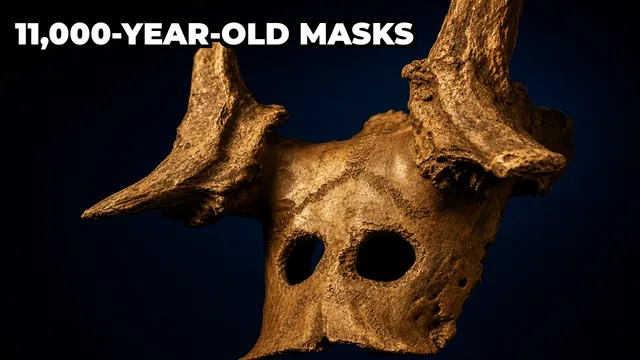 0:05
0:0533 Deer Skull Masks — 11,000 Years Old 🦌😱
Oct 2, 2026 0:34
0:34