The mudskipper is a remarkable fish that spends up to 90% of its life on land, walking across mud flats on its modified fins while breathing air directly through its skin. These extraordinary amphibious fish represent one of nature’s most successful transitions from aquatic to terrestrial life.
The Mudskipper’s Unique Adaptations
Mudskippers possess several fascinating adaptations that allow them to thrive both in water and on land. Their pectoral fins function like primitive legs, enabling them to skip and walk across muddy surfaces with surprising agility. Unlike most fish that rely solely on gills, mudskippers can absorb oxygen directly through their moist skin and the lining of their mouth and throat.
Perhaps most bizarrely, mudskippers lack tear ducts entirely. To prevent their eyes from drying out during extended periods on land, they roll their eyeballs back into moist sockets within their skull – essentially blinking with their entire eyeball rather than using eyelids.
Territorial Behavior and Combat
Contrary to the passive nature typically associated with fish, mudskippers are fierce territorial warriors. Males establish and defend small territories, often no larger than a doormat, with remarkable aggression. When confronting rivals, they raise their razor-edged dorsal fins like battle flags and charge at intruders, engaging in furious combat over prime real estate.
These territorial disputes are crucial for mating success, as females prefer males who control the best territories with optimal burrow sites and feeding areas.
Evolutionary Significance
Scientists consider mudskippers to be living fossils that mirror what our ancient ancestors might have looked like approximately 375 million years ago. During the Devonian period, the first vertebrates began making the monumental transition from ocean to land, and mudskippers provide valuable insights into how this evolutionary leap might have occurred.
Their dual respiratory system, modified fins, and behavioral adaptations represent an intermediate stage between fully aquatic and terrestrial life, making them invaluable for understanding vertebrate evolution.
Habitat and Distribution
Mudskippers inhabit mangrove swamps, tidal flats, and estuaries throughout the Indo-Pacific region, from Africa to Australia. They’ve mastered the challenging intertidal zone, where they must cope with dramatic changes in water level, salinity, and oxygen availability.
These fish construct elaborate burrow systems in the mud, which serve as refuges during high tide and extreme weather. They’re also skilled climbers, using their fins to scale mangrove roots and rocks in search of food and better vantage points for spotting predators or rivals.
FREQUENTLY ASKED
How long can mudskippers survive out of water? ▾
Mudskippers can survive out of water for several hours to days, as they spend up to 90% of their lives on land and breathe through their skin.
Where do mudskippers live in the wild? ▾
Mudskippers inhabit mangrove swamps, tidal flats, and estuaries throughout the Indo-Pacific region, from Africa to Australia.
What do mudskippers eat? ▾
Mudskippers are omnivores that feed on small crabs, insects, worms, algae, and organic matter found in mud and on mangrove surfaces.
How do mudskippers move on land? ▾
Mudskippers use their modified pectoral fins like primitive legs to skip, walk, and even climb across muddy surfaces and mangrove roots.
Can mudskippers be kept as pets? ▾
While possible, mudskippers require specialized brackish water aquariums with land areas and are challenging to maintain, making them unsuitable for most aquarium enthusiasts.
Why are mudskippers important to science? ▾
Mudskippers are considered living fossils that help scientists understand how the first vertebrates transitioned from ocean to land 375 million years ago.
GO DEEPER
KEEP EXPLORING
 0:36
0:36The 3,488-Mile Fence That Changed Australia 🐕
Oct 26, 2026 0:46
0:46The 380ft Tree You Can Go To Jail For Visiting 🌲
Oct 26, 2026 0:56
0:56Life Found 1.7 Miles Down — Powered by Radiation ⛏️
Oct 24, 2026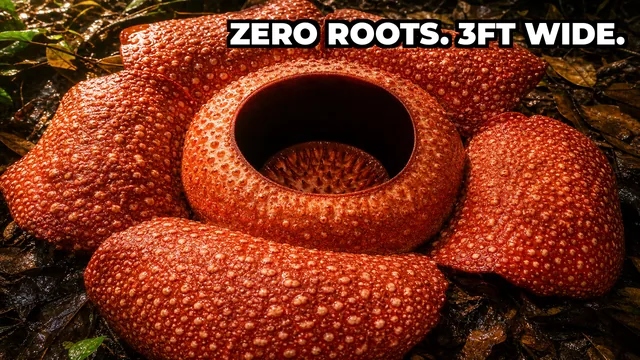 0:52
0:52A 24 lb Flower With No Roots Tricks Flies 😱
Oct 20, 2026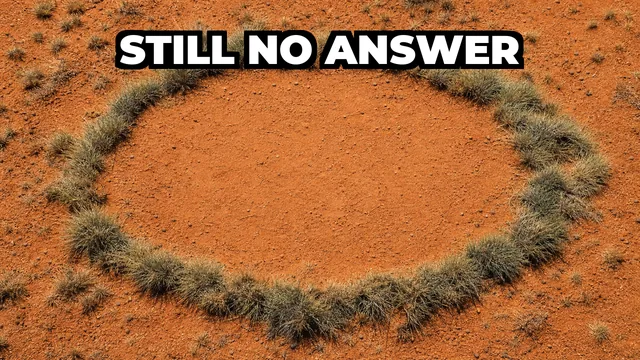 0:52
0:52Termites or Thirsty Grass? The Desert Can't Decide 🔵
Oct 19, 2026 0:38
0:38