The Shocking Results of NASA’s Spider Space Experiment
When NASA sent spiders to space in 1973, the arachnids initially built chaotic, broken webs due to the absence of gravity, but within days they adapted to create functional webs thinner than those on Earth. This groundbreaking experiment aboard Skylab demonstrated remarkable animal intelligence and adaptation capabilities that scientists never expected.
Meet Arabella and Anita: The Pioneer Space Spiders
In 1973, NASA launched two orb-weaver spiders named Arabella and Anita aboard the Skylab space station as part of a student-designed experiment. These common garden spiders were chosen specifically for their web-building abilities, which scientists wanted to study in a zero-gravity environment. The experiment aimed to understand how the absence of gravity would affect instinctive behaviors that had evolved over millions of years on Earth.
The Initial Disaster: Webs Gone Wrong
The first webs built by Arabella and Anita were nothing short of catastrophic. Without gravity to guide the placement of silk threads, the spiders produced chaotic, asymmetrical structures that barely resembled the perfect orb webs they would create on Earth. The silk threads were scattered in seemingly random directions, creating tangled messes rather than the geometric masterpieces spiders are known for.
On Earth, spiders rely on gravity as a fundamental reference point. They use the downward pull to orient themselves and create the radial threads that form the foundation of their webs. Without this gravitational compass, the spiders initially appeared completely lost.
The Remarkable Adaptation
What happened next stunned researchers and challenged everything scientists thought they knew about animal intelligence and adaptation. Within just a few days, both Arabella and Anita began producing increasingly organized webs. By the end of their space mission, they were creating nearly symmetrical, functional webs that could effectively capture prey.
Even more fascinating was the discovery that the space webs were consistently thinner than Earth webs. This suggested that the spiders somehow “understood” they needed to conserve silk in an environment where resources couldn’t be replenished. This level of resource management from creatures with brains smaller than poppy seeds revealed sophisticated problem-solving abilities.
Scientific Implications and Legacy
The spider space experiment provided crucial insights into animal behavior, adaptation, and the role of gravity in biological processes. It demonstrated that even relatively simple nervous systems could adapt to completely novel environments within remarkably short timeframes. The experiment also showed that while instinct provides the foundation for behavior, animals possess surprising flexibility when faced with unprecedented challenges.
This research has influenced subsequent studies on animal cognition and has practical applications for understanding how various life forms might adapt to space environments during long-duration missions or potential colonization efforts.
Modern Space Biology Research
The legacy of Arabella and Anita continues today as NASA and other space agencies conduct increasingly sophisticated biological experiments in microgravity. From studying protein crystal growth to observing plant development, these experiments help scientists understand fundamental biological processes and prepare for future deep space missions where Earth-based life support systems won’t be available.
FREQUENTLY ASKED
How long did it take the spiders to adapt to zero gravity? ▾
The spiders began showing improvement within days and created nearly perfect webs by the end of their space mission aboard Skylab.
Why were spider webs thinner in space than on Earth? ▾
Scientists believe the thinner webs indicated the spiders were conserving silk resources in an environment where they couldn't replenish materials.
What type of spiders did NASA send to space? ▾
NASA sent two orb-weaver spiders named Arabella and Anita, chosen specifically for their web-building abilities and predictable behavior patterns.
What year did NASA send spiders to space? ▾
NASA sent spiders to space in 1973 aboard the Skylab space station as part of a student-designed experiment.
What were the names of the spiders NASA sent to space? ▾
The two spiders NASA sent to space were named Arabella and Anita, both orb-weaver spiders chosen for their web-building abilities.
How did the first spider webs look in space? ▾
The first webs built in space were chaotic and asymmetrical disasters, with silk threads scattered in random directions creating tangled messes rather than the organized geometric webs spiders normally create on Earth.
GO DEEPER
KEEP EXPLORING
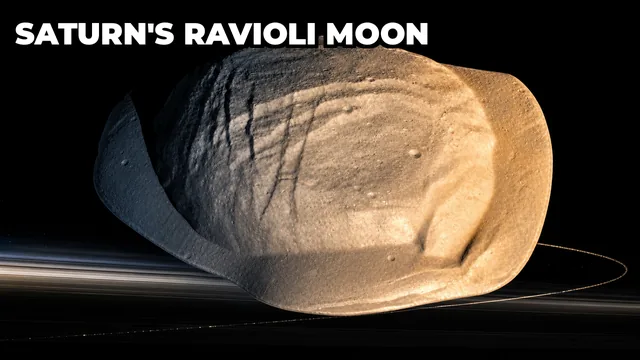 0:49
0:49Saturn Is Hiding A Moon Shaped Like Ravioli 🍝
Oct 3, 2026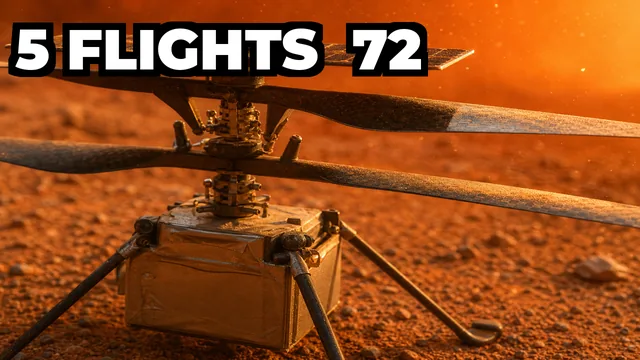 0:32
0:32NASA Built It For 5 Flights. It Flew 72 On Mars 🚁
Sep 30, 2026 0:31
0:31The Cloud That Forms 52 Miles Up From Meteor Smoke ✨
Sep 30, 2026 0:16
0:16The Only Color Photos Ever Taken On Venus 📸
Sep 27, 2026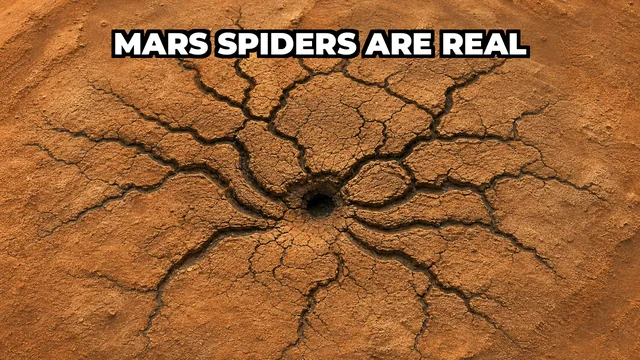 0:51
0:51Mars Grows 'Spiders' Every Spring 🕷️ Here's Why
Sep 26, 2026 0:23
0:23