The Short Answer
Around 2300 BC, the builders of the Ness of Brodgar on Orkney’s Mainland deliberately dismantled their own monumental temple complex, slaughtered hundreds of cattle, and sealed the entire site beneath rubble — most likely as a ritual closure tied to the arrival of a new culture that signalled the end of the Neolithic world.
What Was the Ness of Brodgar?
The Ness of Brodgar is a Neolithic ceremonial complex discovered on the narrow strip of land between two of Scotland’s most famous prehistoric monuments: the Stones of Stenness and the Ring of Brodgar. Excavations beginning in 2003 revealed something extraordinary — a sprawling complex of monumental stone buildings with walls up to four metres thick, a scale comparable to a medieval castle. This was not a settlement or a farming village. It was a place of ceremony, power, and collective meaning.
The site was active for roughly one thousand years — a span nearly as long as the entire Roman civilisation. During that time, its builders shaped stonework with remarkable precision and decorated interior walls with red, orange, and yellow pigments, including haematite. Neolithic people were not simply surviving. They were creating beauty inside spaces designed to matter.
The Great Closure Event
What happened around 2300 BC at the Ness of Brodgar is one of the most striking events in British prehistory. The people who used the site did not abandon it — they ended it. Structures were systematically pulled apart by human hands. The remains of at least four hundred cattle were deposited in the final layers, representing a feasting and sacrificial event of enormous scale. Then the entire complex was buried beneath rubble, sealing it from the world above.
This was not destruction by an enemy or collapse through neglect. Every sign points to an intentional, organised act of closure — a community choosing to bring something to a deliberate end.
Why Did They Do It?
Archaeologists believe the answer lies in a cultural transformation sweeping across Britain at exactly this time. Around 2300 BC, the Beaker people — named for their distinctive pottery — began arriving from continental Europe, bringing new beliefs, new technologies, and a new way of organising society. The Neolithic world, with its communal monuments, collective rituals, and shared sacred sites, was giving way to something different.
The closure of the Ness of Brodgar may have been the old order’s final act: a conscious, ceremonial farewell to a way of life that was ending. The cattle deposits, the painted walls, the careful sealing — these were not signs of defeat. They read more like a burial with full honours.
What Remains Undiscovered?
Here is the detail that makes archaeologists and enthusiasts alike hold their breath: only around ten percent of the Ness of Brodgar has ever been excavated. The site continues to be investigated each summer, and each season produces new finds that reshape understanding of Neolithic Orkney. Decorated stonework, structural complexity, and evidence of long-distance connections keep emerging from the ground.
What the remaining ninety percent contains is genuinely unknown. Given what the first tenth has already revealed, the implications are considerable.
Orkney as a Neolithic Centre
The concentration of Neolithic monuments on Orkney’s Mainland — Skara Brae, Maeshowe, the Stones of Stenness, the Ring of Brodgar, and now the Ness of Brodgar — suggests this remote northern archipelago was not a backwater of prehistoric Britain. It may have been one of its most important ceremonial centres, drawing people, resources, and ideas from across the island chain. The deliberate burial of the Ness of Brodgar was not a local footnote. It was the closing chapter of an era.
FREQUENTLY ASKED
What is the Ness of Brodgar? ▾
The Ness of Brodgar is a Neolithic ceremonial complex on Orkney's Mainland, Scotland, featuring monumental stone buildings with walls up to four metres thick, decorated with coloured pigments and shaped stonework.
How old is the Ness of Brodgar? ▾
The site was active for approximately one thousand years before its deliberate closure around 2300 BC, meaning its origins stretch back to roughly 3300 BC or earlier.
Why were hundreds of cattle buried at the Ness of Brodgar? ▾
The remains of at least four hundred cattle were deposited in the final closing layers as part of a large-scale ritual feast and sacrifice that marked the intentional end of the site.
Who built the Ness of Brodgar? ▾
The complex was built by Neolithic communities living in Orkney, likely drawing on labour and participation from across a wider region given the monument's extraordinary scale.
How much of the Ness of Brodgar has been excavated? ▾
Only around ten percent of the Ness of Brodgar has been excavated so far, with ongoing summer digs continuing to reveal new structures and artefacts each season.
What ended the Neolithic period in Orkney? ▾
The arrival of Beaker culture people from continental Europe around 2300 BC brought new beliefs and social structures that displaced the communal Neolithic world, likely triggering the ritual closure of sites like the Ness of Brodgar.
GO DEEPER
KEEP EXPLORING
 0:43
0:43This 3,500yr-Old Gem Hides Carvings Too Small To See 🔍
Sep 17, 2026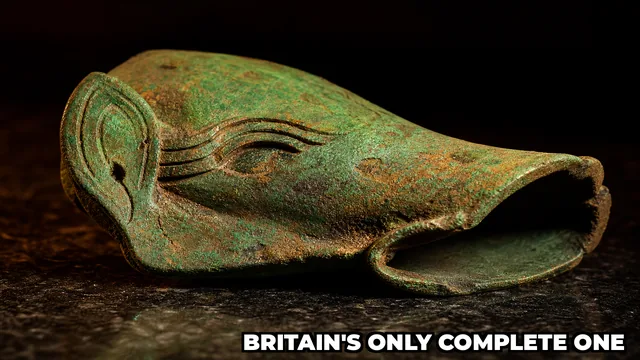 0:26
0:26Britain's Only Complete Celtic Battle Horn 🎺
Sep 17, 2026 0:42
0:42Archaeologists Found What 140 Years of Digging Missed 😱
Sep 16, 2026 0:39
0:399,000-Year-Old Figures Buried Face-Up 👁️ Why?
Sep 15, 2026 0:26
0:26How Did A Lost Civilization Polish With Diamonds? 💎
Sep 14, 2026 0:30
0:30