The newest wild cat species in the world is Leopardus tilcayo, formally described in Current Biology on September 17, 2026 — making it the first new living cat species recognized by science in more than a century, since 1923.
A Tiny Cat Hidden in the Cloud Forests of Bolivia
The tilcayo is a small, spotted wild cat measuring roughly 18 inches in body length and weighing between three and four pounds. It lives in the Yungas cloud forests of Bolivia, a rugged, biodiverse region where mist clings to the Andean slopes year-round. Despite its striking rosette-patterned coat, this cat went unrecognized as a distinct species for decades — hiding, in plain sight, inside the wrong scientific label.
Why It Took Over a Century to Find
Tiger cats have long been a taxonomic headache. Across South America, these small spotted cats look so similar to one another that scientists historically lumped them into just one or two species. Without dramatic physical differences to separate them, there was little reason to look closer.
The first clue came not from a jungle expedition but from a sanctuary. A researcher working in Bolivia noticed that one rescued tilcayo, raised in captivity, had unusually large rosettes compared to other tiger cats. That observation — easy to dismiss, easy to overlook — turned out to be the thread that unraveled a century of misclassification.
What 38 Genomes Revealed
The confirmation came through genomics. Researchers compared complete genome sequences from 38 individual cats spanning the tiger cat group and found that what had appeared to be one or two species was, in fact, five genetically distinct lineages. The tilcayo’s genome showed it had been on a separate evolutionary path for approximately 1.4 million years — a divergence that predates the entire history of modern Homo sapiens.
That depth of separation is not a minor footnote. It means the tilcayo has been evolving independently, adapting to its cloud-forest environment, accumulating its own unique biology, long before anyone was around to name it. The genome data left no room for ambiguity: this is a full species, not a subspecies or a variant.
The First New Living Cat Species Since 1923
To appreciate how rare this is, consider the timeline. The last time a living cat species was formally described was 1923 — before commercial aviation, before television, before the discovery of DNA’s structure. In the intervening century, science named new species of insects, fish, amphibians, and plants by the thousands, but cats? Not one. The tilcayo breaks that streak.
Conservation Status and What Comes Next
Because the tilcayo was named so recently, it has not yet been assessed by the IUCN and carries no official conservation status. That gap matters. Without a formal threat assessment, the species lacks the legal and institutional scaffolding that conservation efforts typically rely on. Its cloud-forest habitat faces pressure from mining interests, though the discovery has already drawn support from local and national politicians in Bolivia who are advocating for habitat protections.
The urgency is real. A species that spent 1.4 million years evolving in one specific forest ecosystem is precisely the kind of animal that cannot simply relocate if that ecosystem disappears.
What the Tilcayo Tells Us About Biodiversity
The tilcayo’s story is a reminder that biodiversity accounting is still far from complete. The assumption that large, charismatic animals are well-catalogued turns out to be wrong. If a whole new cat species — a vertebrate, a mammal, a predator with a distinctive coat — can be miscategorized for over a hundred years, the inventory of life on Earth is almost certainly less complete than scientists assume.
The cloud forests of the Andes are among the most biodiverse habitats on the planet. The tilcayo was always there. Science just hadn’t caught up yet.
FREQUENTLY ASKED
What is Leopardus tilcayo? ▾
Leopardus tilcayo, known as the tilcayo, is a small spotted wild cat native to the Yungas cloud forests of Bolivia, formally described as a new species in September 2026.
When was the last new cat species discovered before the tilcayo? ▾
The last living cat species formally described before the tilcayo was named in 1923, making the tilcayo the first new living cat species recognized in over a century.
How big is the tilcayo wild cat? ▾
The tilcayo is a very small wild cat, measuring about 18 inches in body length and weighing roughly three to four pounds, comparable in size to a large domestic cat.
How did scientists confirm the tilcayo was a new species? ▾
Researchers compared complete genome sequences from 38 cats across the tiger cat group and found the tilcayo had been on its own evolutionary path for approximately 1.4 million years.
How many tiger cat species are there? ▾
Genomic research published in 2026 revealed that the tiger cat group, previously treated as one or two species, actually consists of five distinct species.
Is the tilcayo endangered? ▾
The tilcayo has not yet been assessed by the IUCN and carries no official conservation status, though its cloud-forest habitat in Bolivia faces pressure from mining development.
GO DEEPER
KEEP EXPLORING
 0:49
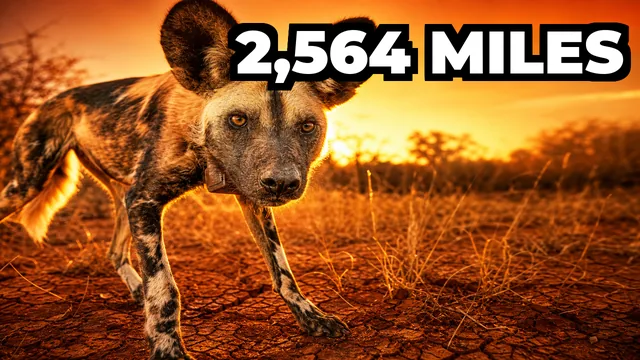
Why Did 3 Wild Dog Brothers Walk 2,564 Miles? 🐾
Nov 22, 2026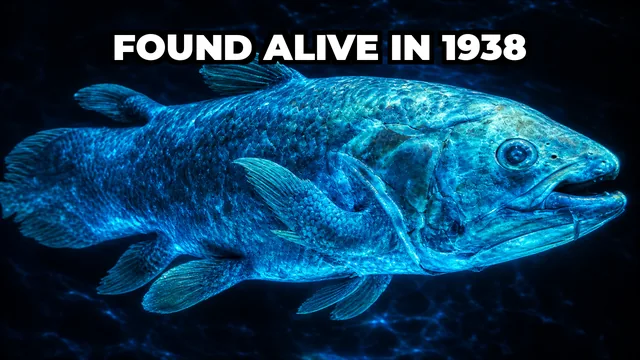 0:39
The 'Extinct' Fish That Turned Up in 1938 🐟
Nov 21, 2026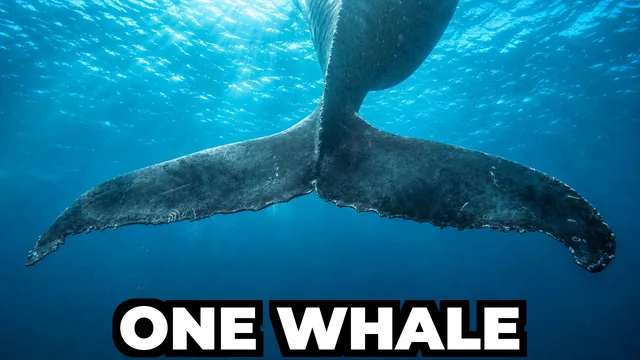 0:15
One Whale Can Feed the Deep for 100 Years. How? 🌊
Nov 18, 2026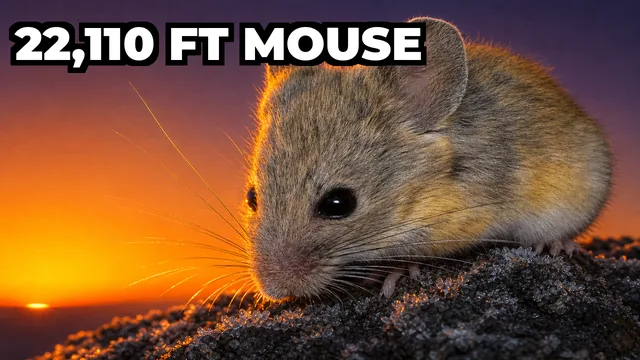 0:43
How Does a Mouse Survive at 22,110 ft? 🐭
Nov 17, 2026 0:09
This Beaver Dam Is Twice as Long as Hoover Dam 🦫
Nov 15, 2026 0:23