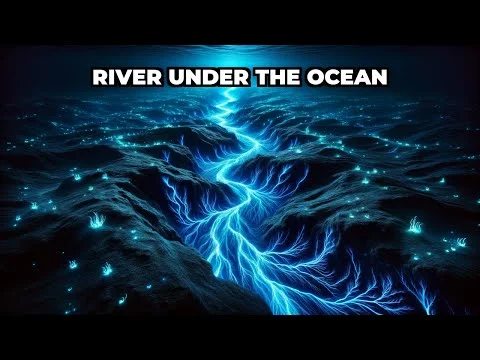
Why Did Scientists Miss Ocean Floor Movement for 100 Years?
April 2, 2026
Scientists missed ocean floor movement for over 100 years because they believed the ocean floor was static and dead, lacking the technology and theoretical framework to detect the slow but constant motion of tectonic plates beneath the seas. The movement occurs at incredibly slow speeds—about the rate fingernails grow—making it virtually impossible to observe without sophisticated instruments and decades of data collection.
The Great Scientific Oversight
For most of the 19th and early 20th centuries, the scientific community held firm beliefs about Earth’s ocean floors. Geologists were convinced that the seafloor represented a geological graveyard—flat, unchanging, and essentially dead. This wasn’t mere stubbornness; it was based on the limited observational tools and theoretical understanding available at the time.
The ocean floor’s movements are so gradual that they occur at the same pace as fingernail growth, making direct observation nearly impossible without modern technology. Scientists lacked the seismic monitoring equipment, deep-sea exploration capabilities, and global positioning systems that we rely on today to track these movements.
The Hidden Drama Beneath the Waves
What researchers eventually discovered was nothing short of revolutionary. The entire ocean floor consists of massive tectonic plates that are constantly in motion—sliding past each other, colliding with tremendous force, and diving beneath one another in a process called subduction.
The Atlantic Ocean is actually expanding every year, slowly pushing Europe and America further apart. Meanwhile, the Pacific Ocean is shrinking as its floor gets consumed by subduction zones, where oceanic plates dive beneath continental plates. This process is so violent that it triggers some of the most devastating earthquakes and volcanic eruptions on Earth.
The Breakthrough That Changed Everything
The paradigm shift came in the 1960s with the development of plate tectonic theory and improved seafloor mapping techniques. Scientists like Harry Hess proposed the concept of seafloor spreading, suggesting that new oceanic crust was being created at mid-ocean ridges while older crust was being destroyed at deep ocean trenches.
Advances in sonar technology, magnetic field measurements, and deep-sea drilling finally provided the evidence needed to support these theories. Researchers discovered that the ocean floor contained a record of Earth’s magnetic field reversals, creating stripes of alternating magnetic polarity that served as a geological timeline.
Modern Understanding of Ocean Floor Dynamics
Today, we know that the ocean floor is one of the most dynamic environments on Earth. Mid-ocean ridges act as underwater mountain ranges where new crust is continuously formed through volcanic activity. At the same time, subduction zones around the Pacific Ring of Fire consume oceanic plates, recycling them back into Earth’s mantle.
This constant recycling means that the oldest oceanic crust is only about 200 million years old—remarkably young compared to continental rocks that can be billions of years old. The ocean floor essentially renews itself completely every few hundred million years, making it a constantly changing landscape hidden beneath the waves.
The implications of this discovery extend far beyond geology, affecting our understanding of climate patterns, marine ecosystems, and even the distribution of natural resources on our planet.
FREQUENTLY ASKED
How fast does the ocean floor move? ▾
The ocean floor moves at approximately 2-5 centimeters per year, roughly the same rate that human fingernails grow.
Is the Pacific Ocean really shrinking? ▾
Yes, the Pacific Ocean is gradually shrinking as its seafloor is being consumed by subduction zones around its edges, particularly along the Ring of Fire.
When did scientists first discover seafloor spreading? ▾
Seafloor spreading was proposed by Harry Hess in the early 1960s, with supporting evidence confirmed throughout that decade using improved deep-sea exploration technology.