The oldest living organism on Earth is Pando, a single clonal colony of quaking aspen trees in Utah that has been alive for approximately 80,000 years. This massive superorganism covers 106 acres and consists of 47,000 individual tree trunks all connected by one shared root system.
The Ancient Giant Hidden in Plain Sight
Pando, whose name means “I spread” in Latin, represents one of nature’s most remarkable achievements in longevity and survival. Located in Utah’s Fishlake National Forest, this ancient organism has witnessed the rise and fall of entire civilizations while maintaining its silent presence in what appears to be an ordinary aspen grove.
What makes Pando extraordinary isn’t just its age, but its unique biological structure. Every single trunk in the colony shares identical DNA, making them genetically identical clones sprouting from the same massive underground root network. This root system acts like a single organism’s circulatory system, distributing nutrients, water, and chemical signals throughout the entire colony.
A Living Record of Earth’s History
Weighing an estimated six million kilograms, Pando holds the title of the heaviest known living organism on our planet. Its root system has survived multiple ice ages, climate shifts, and natural disasters that would have destroyed individual trees countless times over. The organism’s longevity comes from its ability to continuously regenerate new trunks while the underground root system remains intact.
One of Pando’s most striking characteristics is its synchronized behavior. All 47,000 trunks change color and shed their leaves simultaneously each fall, creating a spectacular golden display that reveals the colony’s true nature as a single living entity. This coordinated response demonstrates the sophisticated communication network operating beneath the forest floor.
The Crisis Facing an Ancient Survivor
Despite surviving for millennia, Pando now faces its greatest threat in recorded history. The colony is experiencing a critical decline due to several human-related factors. Overgrazing by deer and elk, whose natural predators have been largely eliminated from the ecosystem, prevents new shoots from growing beyond sapling stage. These animals consume every new growth before it can mature into full-sized trees.
Climate change and human encroachment have further stressed this ancient organism. Scientists estimate that without immediate intervention, Pando could become functionally extinct within decades. The term “functionally extinct” means that while the root system might survive, the colony would lose its ability to regenerate new trunks and maintain its above-ground presence.
Conservation Efforts and Hope
Researchers and conservationists are working to protect Pando through various strategies, including fencing areas to prevent overgrazing and studying the colony’s genetics to better understand its resilience mechanisms. The Utah State University has been monitoring Pando’s health and implementing protective measures to ensure this living piece of Earth’s history continues to thrive.
Pando’s story serves as both an inspiration and a warning. It demonstrates life’s incredible ability to persist and adapt over vast timescales while highlighting how quickly human activities can threaten even the most resilient organisms on our planet.
FREQUENTLY ASKED
How old is the oldest tree in the world? ▾
Pando, the oldest living organism, is approximately 80,000 years old, though individual tree trunks within the colony are much younger.
Where can you visit Pando? ▾
Pando is located in Utah's Fishlake National Forest and is accessible to the public, though visitors may not realize they're seeing a single organism.
Why is Pando considered one organism instead of many trees? ▾
All 47,000 trunks share the same root system and identical DNA, making them clones of a single organism rather than separate individuals.
What is threatening Pando's survival? ▾
Pando faces its greatest threat from overgrazing by deer and elk, whose natural predators have been eliminated, preventing new shoots from growing beyond sapling stage. Climate change and human encroachment have also stressed this ancient organism.
How much does Pando weigh? ▾
Pando weighs an estimated six million kilograms, making it the heaviest known living organism on Earth.
How many tree trunks make up Pando? ▾
Pando consists of 47,000 individual tree trunks all connected by one shared underground root system across 106 acres.
GO DEEPER
KEEP EXPLORING
 0:52
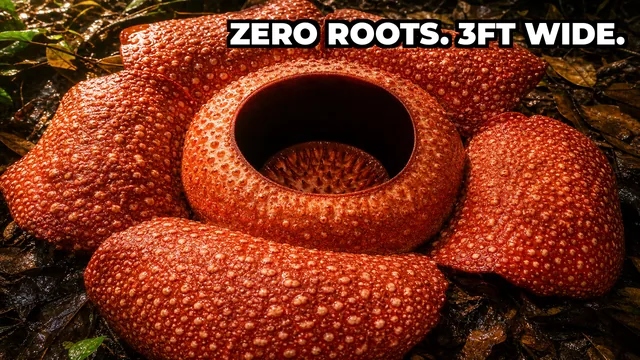
0:52A 24 lb Flower With No Roots Tricks Flies 😱
Oct 20, 2026 0:52
0:52Termites or Thirsty Grass? The Desert Can't Decide 🔵
Oct 19, 2026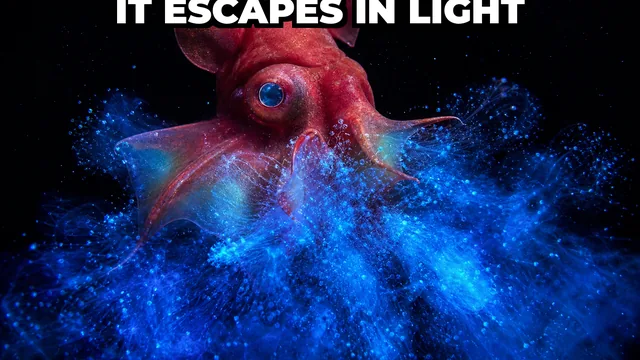 0:38
0:38The Vampire Squid Escapes in a Cloud of Light 🦑
Oct 19, 2026 0:38
0:38200 Million Termite Mounds, Some 3,800 Years Old 🐜
Oct 17, 2026 0:36
0:36Why This Frog Packs Its Cells With Sugar 🐸🔬
Oct 16, 2026 0:58
0:58