The Pangolin: Nature’s Armored Anomaly
The pangolin is the only mammal on Earth covered in scales, making it unique among all 6,400+ known mammalian species. These keratin scales form such effective armor that even lions abandon their attacks when a pangolin rolls into its defensive ball.
Evolutionary Marvel: Scales Instead of Fur
While every other mammal species relies on fur, hair, or bare skin for protection, pangolins evolved an entirely different strategy. Their scales are composed of pure keratin—the same protein found in human fingernails and rhinoceros horns. These overlapping plates account for approximately 20% of the pangolin’s total body weight, essentially creating a suit of biological armor that grows continuously throughout their lives.
The scales’ overlapping design creates razor-sharp edges that cut predators’ mouths and paws when they attempt to pry open a rolled-up pangolin. This defense mechanism is so effective that apex predators like lions consistently give up their attacks, unable to penetrate the armored shell.
Bizarre Anatomy and Feeding Adaptations
Pangolins possess several extraordinary anatomical features that set them apart from other mammals. They are completely toothless, instead relying on a unique digestive system where they swallow stones that help their muscular stomachs grind up consumed insects.
Perhaps most remarkably, a pangolin’s tongue is anchored deep within its chest cavity rather than its mouth. This extraordinary adaptation allows the tongue to extend up to 16 inches, functioning like a biological vacuum cleaner. A single pangolin can consume up to 70 million insects annually, primarily ants and termites.
Critical Ecological Role
Pangolins serve as crucial ecosystem regulators across Africa and Asia. By consuming millions of insects yearly, they control termite populations that could otherwise reach over one million individuals per colony. Without pangolins, these unchecked termite populations could cause cascading environmental destruction across forest ecosystems, fundamentally altering habitat structures and plant communities.
Conservation Crisis
Despite surviving millions of years and successfully defending against nature’s most formidable predators, pangolins face their greatest threat from humans. They hold the unfortunate distinction of being the world’s most trafficked wild mammal, with all eight species currently threatened with extinction.
The illegal wildlife trade targets pangolins primarily for their scales, which are incorrectly believed to have medicinal properties in traditional medicine practices. Their meat is also considered a delicacy in some regions. This human-driven pressure has proven far more devastating than any natural predator the species has encountered throughout its evolutionary history.
FREQUENTLY ASKED
How many pangolin species exist in the world? ▾
There are eight pangolin species total, with four found in Africa and four in Asia, all of which are currently threatened with extinction.
What do pangolin scales feel like? ▾
Pangolin scales are hard, sharp-edged, and overlapping, similar to fingernails but much thicker and tougher, with razor-like edges that can cut predators.
How long can a pangolin's tongue extend? ▾
A pangolin's tongue can extend up to 16 inches and is anchored in its chest cavity rather than its mouth for maximum reach.
Why are pangolins the most trafficked mammal? ▾
Pangolins are heavily trafficked for their scales, which are incorrectly believed to have medicinal properties, and their meat, considered a delicacy in some cultures.
Do pangolins have any natural predators? ▾
While young pangolins may fall prey to some predators, adult pangolins effectively defend against all natural predators, including lions, by rolling into their armored ball.
Where do pangolins live in the wild? ▾
Pangolins are found across Africa and Asia, inhabiting various environments from grasslands and forests to sandy areas, depending on the species.
GO DEEPER
KEEP EXPLORING
 0:33
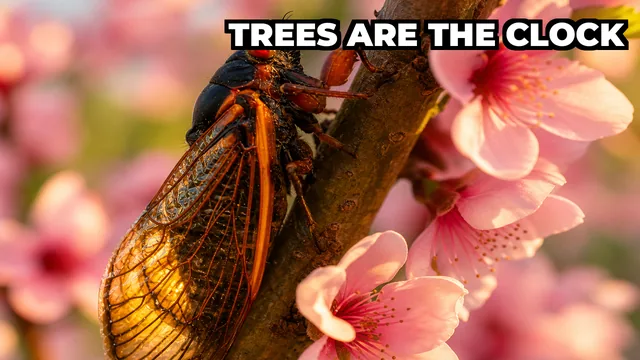
0:33Cicadas Don't Count Years — They Count Trees 🌳
Sep 16, 2026 0:15
0:15This Plant Counts To 5 Before It Eats 🪤
Sep 15, 2026 0:25
0:25This Cell Borrowed A Compass — And It Works 🧭
Sep 13, 2026 0:46
0:46Trees Grew Tall for the Wrong Reason 🌳😱
Sep 12, 2026 0:26
0:26This Fish Recognized Itself In A Mirror 🐟🪞
Sep 10, 2026 0:24
0:24