The Life-or-Death Performance
Male peacock spiders perform elaborate rainbow-colored courtship dances to attract mates, with failure literally meaning death as unimpressed females will attack and eat them. These tiny arachnids, belonging to the genus Maratus, have evolved one of nature’s most spectacular—and high-stakes—mating rituals.
A Miniature Marvel of Evolution
Peacock spiders are remarkably small, measuring just 4-5 millimeters in length—smaller than a human fingernail. Despite their diminutive size, these Australian natives pack an incredible visual punch. The genus Maratus contains over 90 described species, each displaying unique and jaw-dropping color patterns that rival any Broadway costume designer’s wildest dreams.
The most famous of these species is Maratus jactatus, affectionately nicknamed “Sparklemuffin” by researchers. This particular species was only discovered in 2015 by a University of California Berkeley student, highlighting how much we still have to learn about these remarkable creatures.
The Courtship Ritual Breakdown
The male’s courtship performance is a masterclass in multitasking. During the ritual, he simultaneously raises his colorful abdominal flap like a fan, waves his third pair of legs rhythmically in the air, and vibrates his entire abdomen. This vibration isn’t just for show—it sends tremors through the ground that the female can actually feel beneath her feet, adding a tactile dimension to the visual spectacle.
The colors displayed during these dances are created by specialized scales and hairs that reflect light in different ways, producing iridescent blues, greens, reds, and yellows that shift and shimmer as the spider moves.
Ultimate Consequences
What makes peacock spider courtship truly extraordinary is the ultimate stakes involved. If a female is not impressed by a male’s performance, she doesn’t simply walk away—she attacks him with the intention of making him her next meal. This creates intense selective pressure that has driven the evolution of increasingly elaborate displays over millions of years.
This cannibalistic tendency means that only males with the most impressive dances, brightest colors, and perfect timing survive to pass on their genes. Every single performance is literally a matter of life and death, making peacock spiders some of nature’s most dedicated performers.
Ongoing Discoveries
Scientists continue to discover new peacock spider species regularly, with several new species described each year. Their incredible diversity and the fact that many species are endemic to very small geographic areas make them particularly interesting subjects for evolutionary biology research. Each new species brings its own unique color palette and dance moves, adding to our understanding of how sexual selection can drive rapid diversification in nature.
FREQUENTLY ASKED
How big are peacock spiders? ▾
Peacock spiders are tiny, measuring only 4-5 millimeters in length, making them smaller than a human fingernail.
How many species of peacock spiders exist? ▾
There are over 90 described species in the genus Maratus, with new species still being discovered regularly by scientists.
What happens if a female peacock spider rejects a male? ▾
If unimpressed by the male's courtship dance, the female will attack and attempt to eat him.
Where do peacock spiders live? ▾
Peacock spiders are native to Australia and are found in various habitats across the continent.
What is Sparklemuffin the spider? ▾
Sparklemuffin is the nickname for Maratus jactatus, a peacock spider species discovered in 2015 by a UC Berkeley student.
How do peacock spiders create their colors? ▾
Their vibrant colors come from specialized scales and hairs that reflect light in different ways, creating iridescent displays that shift as they move.
GO DEEPER
KEEP EXPLORING
 0:36
0:36The 3,488-Mile Fence That Changed Australia 🐕
Oct 26, 2026 0:46
0:46The 380ft Tree You Can Go To Jail For Visiting 🌲
Oct 26, 2026 0:56
0:56Life Found 1.7 Miles Down — Powered by Radiation ⛏️
Oct 24, 2026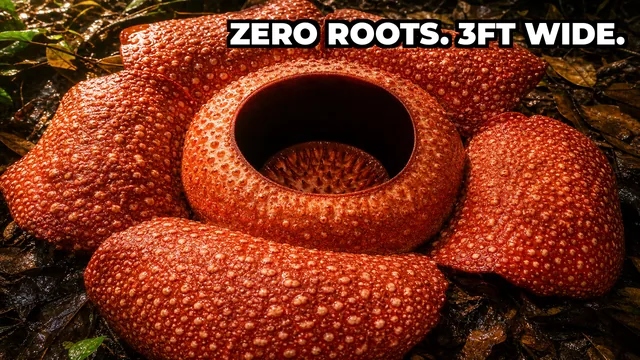 0:52
0:52A 24 lb Flower With No Roots Tricks Flies 😱
Oct 20, 2026 0:52
0:52Termites or Thirsty Grass? The Desert Can't Decide 🔵
Oct 19, 2026 0:38
0:38