Pseudacteon phorid flies turn fire ants into zombies by injecting eggs directly into their bodies, which hatch into larvae that consume the ant’s brain tissue and eventually cause the head to detach after six weeks. This creates a grotesque pupal case from which a fully formed adult fly emerges.
The Precision Attack Strategy
These microscopic assassins demonstrate remarkable precision in their hunting strategy. Pseudacteon phorid flies ignore larger worker ants entirely, focusing exclusively on the smallest workers within an extremely narrow size range. This selective targeting suggests an evolutionary arms race that has fine-tuned the flies’ hunting instincts over millions of years.
When a phorid fly identifies its target, it performs a lightning-fast aerial maneuver to land on the fire ant and inject a single egg into the ant’s thorax. The entire process takes mere seconds, but the consequences unfold over the following six weeks in a horrifying biological transformation.
The Internal Transformation Process
Once injected, the phorid fly larva begins its development inside the ant’s thorax before migrating to the head capsule. The larva systematically consumes the ant’s brain and muscle tissue, effectively hijacking the ant’s nervous system. This process doesn’t immediately kill the ant but transforms it into a living incubator.
After approximately six weeks of internal development, the larva releases specific enzymes that trigger the complete detachment of the ant’s head. The severed head then serves as a protective pupal case where the larva completes its metamorphosis into an adult fly over the next two weeks.
Psychological Warfare Against Colonies
Perhaps most remarkably, phorid flies don’t need to successfully attack to devastate fire ant populations. Their mere presence in the vicinity of a fire ant colony triggers profound behavioral changes in the ants. Colonies under threat from phorid flies reduce their food collection activities by up to 50%, effectively starving themselves out of fear.
This psychological control represents one of nature’s most effective biological pest control mechanisms. Fire ant colonies, typically aggressive and expansive, become reclusive and retreat underground when phorid flies are detected in their territory.
Connection to Forensic Entomology
Phorid flies belong to the same family as coffin flies (Conicera tibialis), species that complete their entire lifecycle inside buried human remains. This connection highlights the family’s remarkable ability to exploit decomposing organic matter and explains their precision in targeting specific host organisms.
The forensic applications of phorid fly research extend beyond pest control, as understanding their lifecycle patterns helps forensic investigators determine time of death in criminal investigations.
Implications for Biological Pest Control
Scientists have extensively studied Pseudacteon phorid flies as a biological control agent for invasive fire ant populations, particularly in the southern United States where fire ants cause billions of dollars in agricultural damage annually. Unlike chemical pesticides, these flies offer a sustainable, species-specific solution that doesn’t harm beneficial insects or contaminate ecosystems.
The success of phorid fly programs demonstrates how understanding complex predator-prey relationships can lead to innovative pest management strategies that work with natural ecosystems rather than against them.
FREQUENTLY ASKED
How long does it take for a phorid fly to kill a fire ant? ▾
The entire process takes approximately six weeks from egg injection to head detachment, followed by another two weeks for the adult fly to emerge.
Do phorid flies attack humans or other insects? ▾
Phorid flies are highly specialized parasites that target only specific fire ant species and pose no threat to humans or other insects.
Can phorid flies completely eliminate fire ant colonies? ▾
While phorid flies significantly reduce fire ant activity and reproduction, they typically control rather than completely eliminate colonies, creating a natural balance.
Where do phorid flies inject their eggs into fire ants? ▾
Phorid flies inject a single egg directly into the fire ant's thorax during a lightning-fast aerial attack that takes only seconds to complete.
What happens to fire ant colonies when phorid flies are present? ▾
Fire ant colonies reduce their food collection activities by up to 50% and become reclusive, retreating underground due to the psychological threat of phorid fly attacks.
What size fire ants do phorid flies target? ▾
Phorid flies ignore larger worker ants and focus exclusively on the smallest workers within an extremely narrow size range, demonstrating remarkable precision in their hunting strategy.
GO DEEPER
KEEP EXPLORING
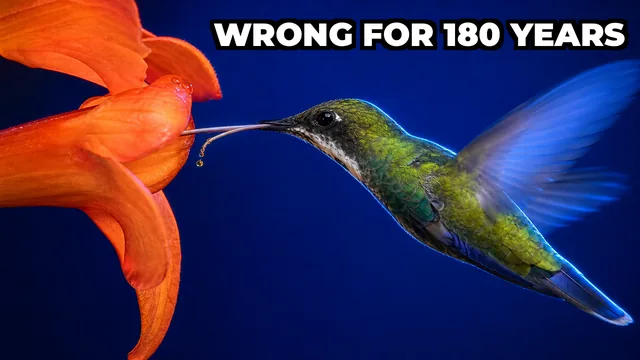 0:30
0:30Why Hummingbirds Pump Nectar 🔬 Not Sip It
Oct 6, 2026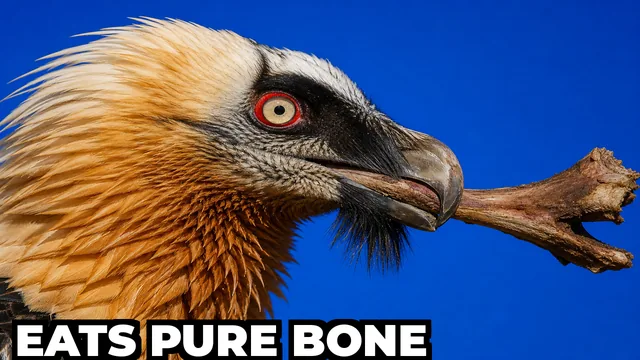 0:26
0:26The Bird That Eats Bones And Dyes Itself Red 🦴
Oct 4, 2026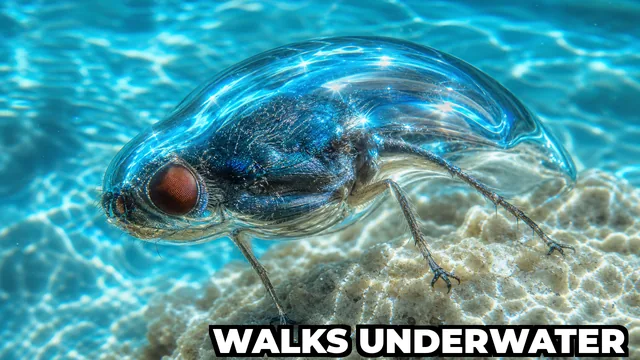 0:37
0:37This Fly Scuba Dives In A Lake 3x Saltier Than The Sea 🫧
Oct 2, 2026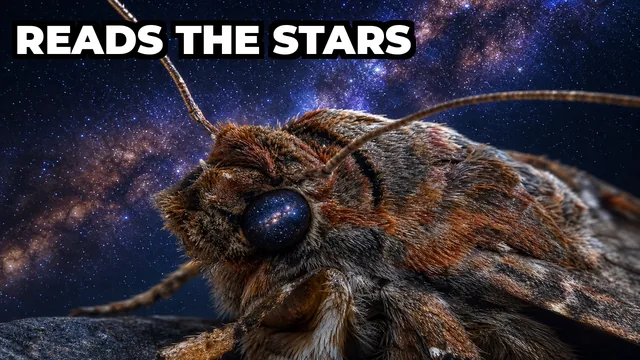 0:47
0:47Billions Of Moths Navigate 600 Miles By Starlight 🌌
Oct 1, 2026 0:32
0:32A Navy Anchor Snagged A 1,500 lb Unknown Shark 🦈
Oct 1, 2026 0:55
0:55