The Glass Rain Planet: HD 189733b
HD 189733b is an exoplanet located 63 light-years from Earth where molten silicate glass rains sideways at winds reaching 5,400 miles per hour. This Jupiter-sized world appears deceptively Earth-like with its brilliant blue color, but represents one of the most hostile environments ever discovered.
Discovery and Appearance
In 2013, the Hubble Space Telescope made history by directly measuring HD 189733b’s color in visible light—the first time scientists had observed an exoplanet’s true appearance. The stunning cobalt blue hue initially suggested similarities to Earth, leading researchers to investigate further. However, this beautiful blue glow has nothing to do with oceans or a hospitable atmosphere.
The Science Behind the Blue Color
The planet’s distinctive blue appearance results from tiny silicate particles suspended in its superheated atmosphere. These microscopic glass fragments scatter blue light in a process similar to Rayleigh scattering in Earth’s atmosphere, but with a deadly twist. Instead of harmless water vapor, HD 189733b’s atmosphere contains vaporized rock and metal that condenses into glass droplets at extreme temperatures.
Extreme Weather Conditions
HD 189733b belongs to a class of planets called “Hot Jupiters”—gas giants that orbit extremely close to their host stars. The planet is tidally locked, meaning one hemisphere faces permanent scorching daylight while the other experiences eternal darkness. This dramatic temperature difference, with the day side reaching over 1,800°F (980°C), creates the violent atmospheric conditions responsible for the glass rain phenomenon.
The extreme temperature gradient drives atmospheric winds that dwarf any weather system on Earth. These supersonic winds carry the silicate particles horizontally across the planet’s surface at speeds that would instantly vaporize any spacecraft attempting to land.
Implications for Exoplanet Research
HD 189733b’s discovery revolutionized our understanding of exoplanet atmospheres and weather systems. The planet serves as a natural laboratory for studying extreme atmospheric physics and helps scientists refine models for detecting and analyzing other distant worlds. Its proximity to Earth (in astronomical terms) makes it an ideal target for continued observation and study.
The contrast between HD 189733b’s Earth-like appearance and hellish conditions highlights the importance of detailed atmospheric analysis in the search for habitable exoplanets. This discovery reminds us that a planet’s color alone cannot determine its potential for supporting life, and that the universe contains worlds far more extreme than anything in our solar system.
FREQUENTLY ASKED
How fast are the winds on HD 189733b? ▾
The winds on HD 189733b reach speeds of 5,400 miles per hour, carrying molten glass particles horizontally across the planet's surface.
Why does HD 189733b look blue like Earth? ▾
The blue color comes from tiny silicate glass particles in the atmosphere that scatter blue light, not from oceans like on Earth.
How far is HD 189733b from Earth? ▾
HD 189733b is located approximately 63 light-years away from Earth in the constellation Vulpecula.
What type of planet is HD 189733b? ▾
HD 189733b is classified as a "Hot Jupiter"—a gas giant planet that orbits very close to its host star.
When was HD 189733b's color first observed? ▾
The Hubble Space Telescope first directly measured HD 189733b's blue color in visible light in 2013.
What causes the glass rain on HD 189733b? ▾
The extreme heat vaporizes silicate rocks, which then condense into glass particles that are blown horizontally by supersonic winds.
GO DEEPER
KEEP EXPLORING
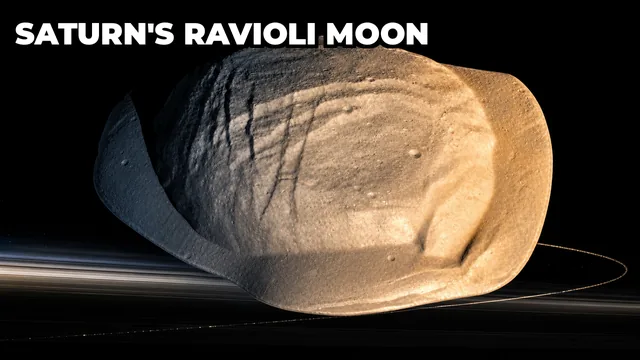 0:49
0:49Saturn Is Hiding A Moon Shaped Like Ravioli 🍝
Oct 3, 2026 0:32
0:32NASA Built It For 5 Flights. It Flew 72 On Mars 🚁
Sep 30, 2026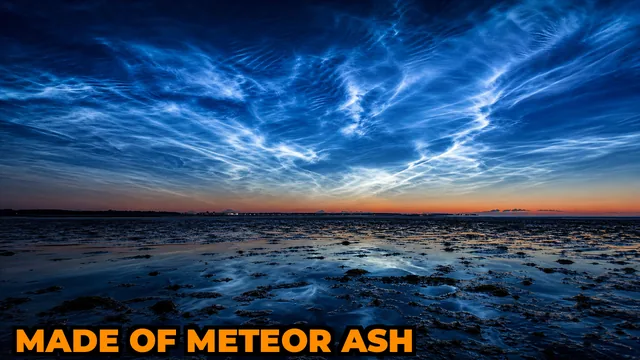 0:31
0:31The Cloud That Forms 52 Miles Up From Meteor Smoke ✨
Sep 30, 2026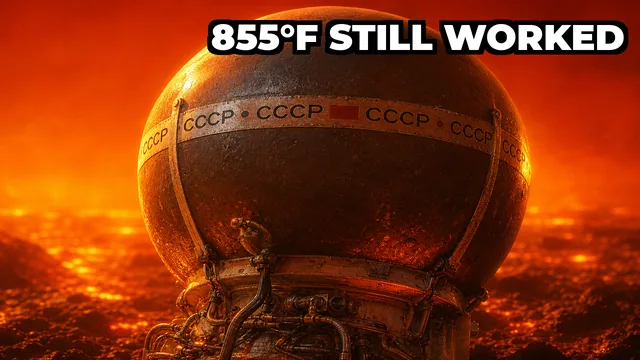 0:16
0:16The Only Color Photos Ever Taken On Venus 📸
Sep 27, 2026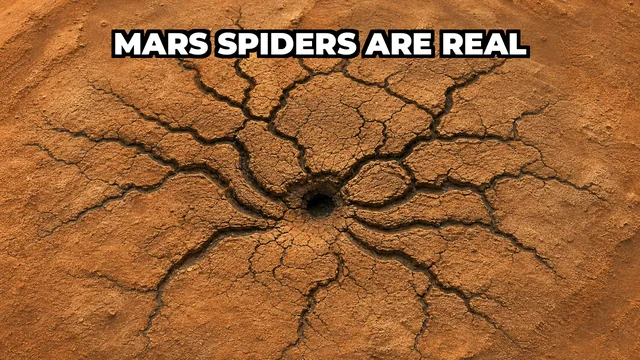 0:51
0:51Mars Grows 'Spiders' Every Spring 🕷️ Here's Why
Sep 26, 2026 0:23
0:23