In zero gravity, plants completely lose their directional orientation and grow in chaotic, spiraling patterns in all directions, while simultaneously activating dormant genes that have been inactive for millions of years.
This remarkable phenomenon occurs because plants rely on gravitropism—their biological compass that uses Earth’s gravitational pull to determine which direction roots should grow (down) and shoots should grow (up). When this fundamental force is removed, plants don’t simply die; they adapt in ways that have surprised scientists and revealed hidden aspects of plant biology.
How Gravity Normally Controls Plant Growth
On Earth, gravitropism is one of the most fundamental processes governing plant development. Specialized cells called statocytes contain dense particles called statoliths that settle at the bottom of cells due to gravity. This settling triggers a cascade of cellular signals that direct root growth downward toward water and nutrients, while shoots grow upward toward light.
This system has evolved over hundreds of millions of years, making gravity as essential to plant orientation as a compass is to navigation. Plants have never had to question which way is up—until they reach space.
NASA’s Space Plant Experiments Reveal Chaos
When NASA scientists sent seeds to the International Space Station (ISS) and observed their growth in real-time, the results were both fascinating and unsettling. Without gravitational cues, plant roots grew in every conceivable direction: sideways, backwards, in spirals and loops that defied all earthly plant behavior.
The visual effect was so dramatic that researchers described it as resembling something from a science fiction horror film. Roots that should have grown straight down instead created tangled masses extending in all directions, while shoots struggled to find their proper orientation.
Plants Adapt by Finding New Navigation Systems
Despite this initial chaos, plants demonstrate remarkable adaptability. When gravity fails as a directional guide, they begin relying more heavily on phototropism—growth directed by light sources. This backup navigation system allows them to eventually establish some semblance of organized growth patterns.
This adaptation showcases the incredible resilience built into plant biology. Rather than simply failing when their primary guidance system disappears, plants can rewire their growth responses to survive in completely alien environments.
Ancient Genes Awaken in Space
Perhaps the most groundbreaking discovery from these experiments was the activation of dormant genetic sequences. Space conditions triggered genes that had remained inactive on Earth for millions of years, suggesting that plants possess hidden survival mechanisms developed during their evolutionary history.
These ancient genetic codes may represent evolutionary responses to environmental stresses that plants haven’t encountered on Earth for geological ages. The activation of this dormant DNA indicates that plants may be far more adaptable to extreme environments than previously understood.
Implications for Space Agriculture and Evolution
These findings have profound implications for future space exploration and agriculture. Understanding how plants adapt to zero gravity is crucial for developing sustainable food production systems for long-term space missions and potential colonization efforts.
Moreover, these experiments are revealing that life itself may be more flexible and resilient than we ever imagined, with organisms carrying genetic blueprints for surviving conditions they may never have encountered in their recent evolutionary history.
FREQUENTLY ASKED
Do plants die in zero gravity? ▾
No, plants don't die in zero gravity, but they grow in chaotic, disoriented patterns until they adapt by using light instead of gravity for navigation.
How do plants know which way to grow on Earth? ▾
Plants use gravitropism, a biological process where specialized cells detect gravity's pull to direct roots downward and shoots upward.
Can we grow food in space? ▾
Yes, plants can grow in space, and astronauts have successfully grown various crops on the ISS, though they require special growing systems to manage their chaotic growth patterns.
What are statoliths and how do they work in plant cells? ▾
Statoliths are dense particles inside specialized plant cells called statocytes that settle at the bottom of cells due to gravity. This settling triggers cellular signals that direct roots to grow downward and shoots to grow upward.
What happens to plant roots when they grow in space? ▾
In space, plant roots grow chaotically in all directions - sideways, backwards, and in spirals and loops - creating tangled masses instead of growing straight down like they do on Earth.
Do plants activate different genes when grown in zero gravity? ▾
Yes, space conditions trigger dormant genes that have been inactive for millions of years, revealing hidden survival mechanisms that plants developed during their evolutionary history.
GO DEEPER
KEEP EXPLORING
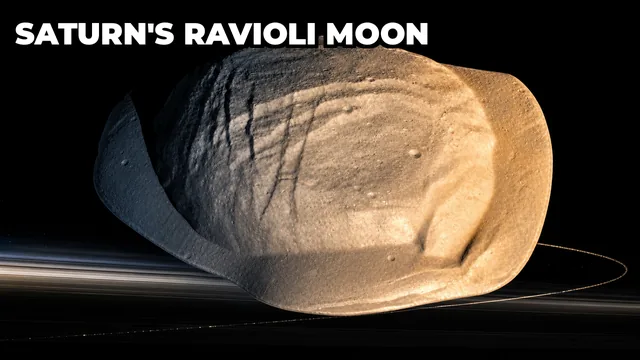 0:49
0:49Saturn Is Hiding A Moon Shaped Like Ravioli 🍝
Oct 3, 2026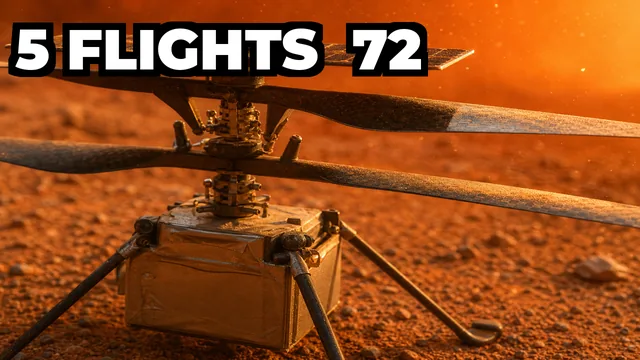 0:32
0:32NASA Built It For 5 Flights. It Flew 72 On Mars 🚁
Sep 30, 2026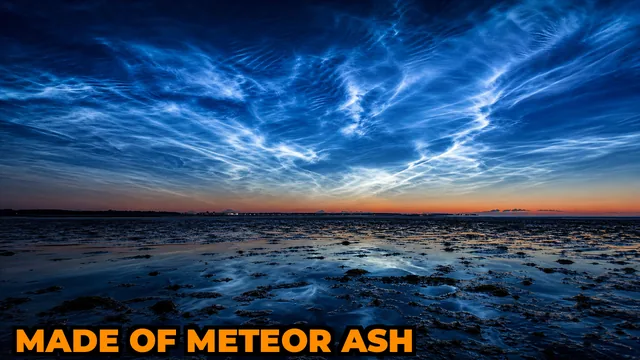 0:31
0:31The Cloud That Forms 52 Miles Up From Meteor Smoke ✨
Sep 30, 2026 0:16
0:16The Only Color Photos Ever Taken On Venus 📸
Sep 27, 2026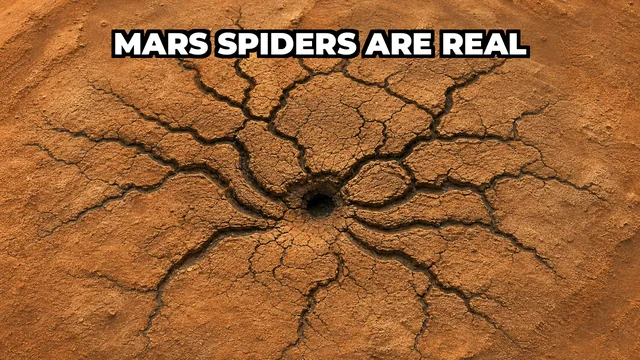 0:51
0:51Mars Grows 'Spiders' Every Spring 🕷️ Here's Why
Sep 26, 2026 0:23
0:23