The Short Answer
The Plitvice Lakes in Croatia are sixteen terraced turquoise lakes that grow their own natural travertine dams at roughly one centimetre per year, driven entirely by dissolved minerals and living microorganisms — no human engineering involved.
What Are the Plitvice Lakes?
Nestled in the mountains of central Croatia, Plitvice Lakes National Park is one of the most visually striking places on Earth. Sixteen lakes cascade into one another in a series of terraced steps, connected by waterfalls and framed by dense forest. But what makes Plitvice genuinely extraordinary is not just its appearance — it is the geological process happening in slow motion beneath the surface every single day.
How Do the Travertine Dams Form?
The lakes are fed by rivers rich in dissolved calcium carbonate. As that mineral-laden water flows over rocks and interacts with air, the calcium carbonate precipitates out of solution and gradually hardens into a rock-like material called travertine. This process builds the natural dams that separate each lake from the one below it — growing approximately one centimetre per year.
Critically, this is not a purely chemical process. Cyanobacteria, algae, and other microorganisms play an essential structural role — binding the travertine deposits together and accelerating mineral accumulation. The dams are, in a very real sense, alive. Without those microorganisms, the entire system would destabilise. Any pollution event or significant temperature shift that wipes out microbial communities could halt dam growth and compromise every lake above it in the chain.
Why Are the Lakes That Colour?
The iconic turquoise and blue-green hues of Plitvice are not simply the sky reflecting in the water. The colour results from a living chemical interaction: minerals suspended in the water, combined with algae, microorganisms, and the way sunlight scatters through it all. The precise shade shifts with the seasons as microbial populations and mineral concentrations change — meaning the lakes you see in spring may look subtly different from the lakes in summer or autumn.
Veliki Slap: Croatia’s Tallest Waterfall
At the lower end of the lake system stands Veliki Slap, a single dramatic waterfall that plunges 78 metres — making it the tallest waterfall in Croatia. It is one of the park’s most photographed features, and its scale offers a striking contrast to the quieter, mossy cascades threading through the upper lakes.
UNESCO Status and the Croatian War of Independence
Plitvice Lakes was declared a UNESCO World Heritage Site in 1979, recognised for its outstanding natural beauty and unique ongoing geological processes. But in 1991, the park became the site of the first armed conflict of the Croatian War of Independence, when a confrontation at the park entrance marked a violent turning point in the region’s history. UNESCO placed Plitvice on its List of World Heritage in Danger in 1992. Following the end of hostilities and restoration of Croatian control, the park was removed from the danger list in 1997 and has since recovered as a major tourist destination.
A Landscape Still in Progress
What makes Plitvice unlike almost any other natural landmark is that it is unfinished. The dams are still growing. The lakes are still reshaping their own boundaries. The microbes are still at work. Visiting Plitvice is not just seeing a completed natural wonder — it is witnessing an active geological and biological construction project that has been running for thousands of years and shows no sign of stopping.
FREQUENTLY ASKED
How many lakes are in Plitvice Lakes National Park? ▾
There are sixteen terraced lakes in Plitvice Lakes National Park, divided into the Upper and Lower Lakes, each connected by waterfalls and natural travertine dams.
What is travertine and why does it form at Plitvice? ▾
Travertine is a form of limestone deposited by mineral-rich water; at Plitvice, dissolved calcium carbonate precipitates out of the river water and slowly hardens into the dams that separate the lakes.
Why are the Plitvice Lakes turquoise? ▾
The turquoise colour comes from a combination of suspended minerals, algae, and microorganisms interacting with sunlight — it is an active chemical and biological process, not simple sky reflection.
What is the tallest waterfall in Croatia? ▾
Veliki Slap, located within Plitvice Lakes National Park, is the tallest waterfall in Croatia at 78 metres.
Why was Plitvice Lakes placed on the UNESCO danger list? ▾
UNESCO added Plitvice to its World Heritage in Danger list in 1992 because the first armed conflict of the Croatian War of Independence broke out inside the park in 1991; it was removed from the danger list in 1997.
Can the Plitvice Lakes be damaged by climate change or pollution? ▾
Yes — the cyanobacteria and algae that hold the travertine dams together are sensitive to pollution and temperature shifts, meaning environmental stress could halt dam growth and destabilise the entire lake system.
GO DEEPER
KEEP EXPLORING
 0:30
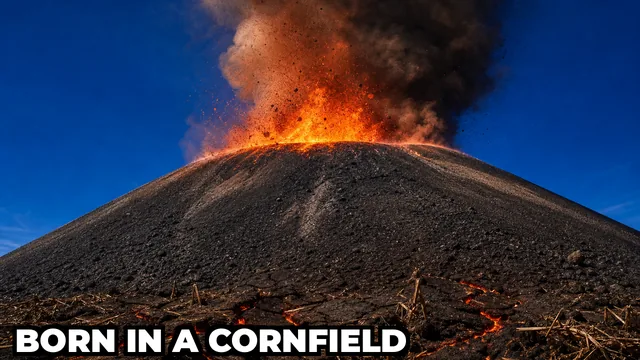
0:30A Volcano Grew 1,391ft Out Of A Cornfield 🌋
Oct 5, 2026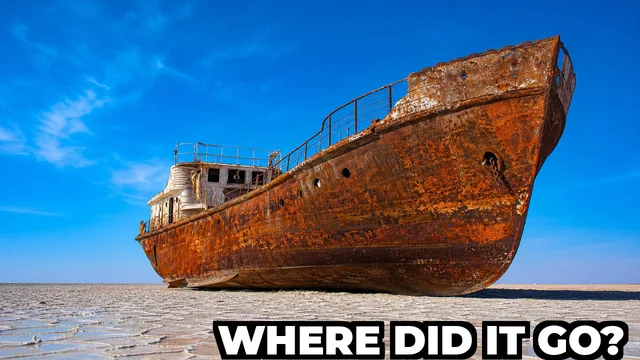 0:43
0:43Earth's 4th-Largest Lake Is Now A Salt Desert 🏜️
Oct 4, 2026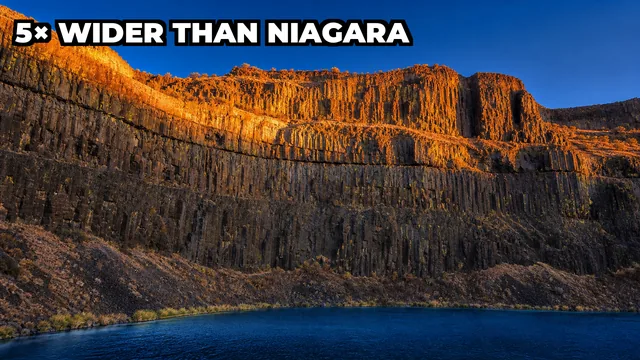 0:31
0:31A Waterfall 5x Wider Than Niagara Ran Dry 🌊
Oct 2, 2026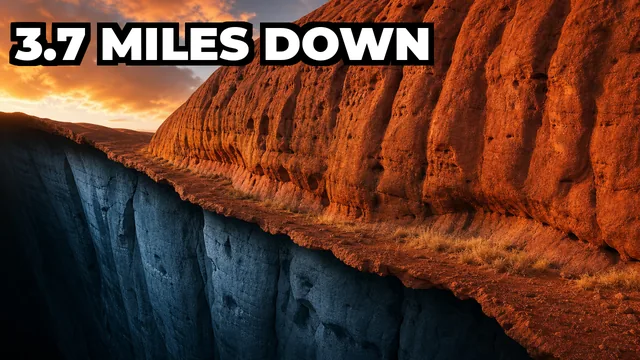 0:17
0:17Uluru Hides 3.7 Miles Beneath The Desert 🪨
Sep 29, 2026 0:06
0:06The Sand That Stays Cool At 100°F 🏜️
Sep 28, 2026 0:12
0:12