The rarest fish on Earth is the Devil’s Hole pupfish (Cyprinodon diabolis), with their entire wild population confined to a single cave pool the size of a parking space in Nevada’s Death Valley. At their lowest recorded count in 2013, only 35 individuals remained alive in the wild.
The World’s Most Precarious Habitat
Devil’s Hole represents one of the most extreme and isolated habitats on the planet. This limestone cavern contains a pool that maintains a constant temperature of 33°C (91°F) year-round, creating conditions so oxygen-depleted that they should theoretically be uninhabitable for most aquatic life. Scientists still cannot fully explain how these remarkable fish have adapted to survive in such harsh conditions.
The cavern itself remains largely unexplored, plunging at least 130 meters below the surface pool. Despite numerous attempts, researchers have never reached the bottom, making Devil’s Hole one of the deepest known water-filled caves in the world.
A Species on the Brink
The Devil’s Hole pupfish population has experienced dramatic fluctuations throughout recorded history. The 2013 count of just 35 individuals represents one of the lowest population numbers ever documented for any vertebrate species on Earth. These fish exist in a delicate balance, with no backup populations in the wild and no ability to migrate to alternative habitats.
The breeding habitat consists of a single shallow shelf within the pool, making reproduction entirely dependent on this tiny area. Without this shelf, the species would have no place to lay eggs and would face immediate extinction.
Global Threats to a Local Species
Remarkably, the Devil’s Hole pupfish faces threats from thousands of miles away. Seismic activity from major earthquakes, including those occurring in Chile, sends shockwaves that travel through the Earth and cause the Devil’s Hole pool to slosh violently. These distant tremors can wash pupfish eggs off their only breeding shelf, potentially wiping out an entire generation with a single seismic event.
This phenomenon demonstrates how interconnected our planet’s geological systems are, and how even the most isolated ecosystems can be affected by events occurring on the opposite side of the world.
Conservation Efforts
Recognizing the extreme vulnerability of this species, scientists and the U.S. government have invested heavily in conservation efforts. A $4.5 million backup facility was constructed to maintain a captive population as insurance against extinction. This facility attempts to replicate the unique conditions of Devil’s Hole, though maintaining these fish in captivity presents significant challenges.
The Devil’s Hole pupfish is protected under the Endangered Species Act, and access to Devil’s Hole itself is strictly controlled. Ongoing research continues to focus on understanding the fish’s unique adaptations and monitoring population trends.
An Evolutionary Marvel
These pupfish represent an extraordinary example of evolutionary adaptation and isolation. Cut off from other fish populations for thousands of years, they have developed unique characteristics that allow them to thrive in conditions that would kill most other fish species. Their survival in this extreme environment provides valuable insights into the limits of life on Earth and the remarkable adaptability of living organisms.
FREQUENTLY ASKED
How many Devil's Hole pupfish are left? ▾
The population fluctuates, but reached a critically low point of just 35 individuals in 2013, making it one of the rarest vertebrates on Earth.
Where do Devil's Hole pupfish live? ▾
They live exclusively in a single cave pool called Devil's Hole in Nevada's Death Valley, which is about the size of a parking space.
Why can't Devil's Hole pupfish survive anywhere else? ▾
They have evolved specifically for the unique conditions in Devil's Hole, including the constant 33°C temperature and oxygen-depleted water that would be fatal to most fish.
What makes Devil's Hole such an extreme habitat for fish? ▾
Devil's Hole maintains a constant temperature of 33°C (91°F) year-round and has oxygen-depleted conditions that should theoretically be uninhabitable for most aquatic life. The limestone cavern pool is also extremely deep, plunging at least 130 meters below the surface with no known bottom.
How can earthquakes in other countries affect the Devil's Hole pupfish? ▾
Seismic activity from major earthquakes, including those in Chile, sends shockwaves through the Earth that cause the Devil's Hole pool to slosh violently. These distant tremors can wash pupfish eggs off their only breeding shelf, potentially wiping out an entire generation.
How much did it cost to build the backup facility for Devil's Hole pupfish? ▾
Scientists and the U.S. government invested $4.5 million to construct a backup facility that maintains a captive population as insurance against extinction. The facility attempts to replicate the unique conditions of Devil's Hole, though maintaining these fish in captivity presents significant challenges.
GO DEEPER
KEEP EXPLORING
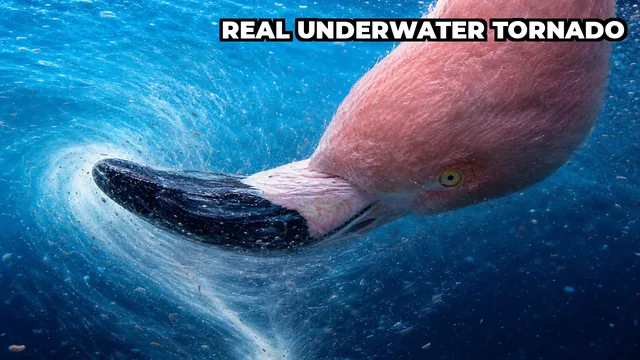 0:30
0:30Flamingos Spin Real Underwater Tornadoes 🌪️🦩
Sep 18, 2026 0:33
0:33Cicadas Don't Count Years — They Count Trees 🌳
Sep 16, 2026 0:15
0:15This Plant Counts To 5 Before It Eats 🪤
Sep 15, 2026 0:25
0:25This Cell Borrowed A Compass — And It Works 🧭
Sep 13, 2026 0:46
0:46Trees Grew Tall for the Wrong Reason 🌳😱
Sep 12, 2026 0:26
0:26