Lake Manicouagan: Earth’s Most Perfect Ring
Lake Manicouagan in Quebec is a perfectly ring-shaped lake formed by an asteroid impact 214 million years ago, creating one of Earth’s most distinctive geological features visible from the International Space Station. This ancient crater, stretching roughly 100 kilometers across, represents one of the largest confirmed impact sites on our planet.
The Catastrophic Impact That Created a Natural Wonder
During the Late Triassic period, before dinosaurs dominated Earth, a massive asteroid approximately five kilometers wide struck what is now northern Quebec. Moving at incredible velocity, this space rock delivered a blow so violent that it carved out one of the most spectacular impact craters on Earth. The resulting structure has remained remarkably preserved for over 200 million years, earning it recognition as one of our planet’s most important geological landmarks.
A Mountain Born From Destruction
The asteroid impact created more than just a crater—it literally built a mountain. The tremendous shockwave from the collision rebounded off Earth’s crust, pushing rock upward to form René-Levasseur Island. This remarkable landmass rises 952 meters above sea level and covers approximately 2,000 square kilometers, making it the second-largest lake island on the entire planet. The island exists solely because of that single catastrophic moment millions of years ago.
Visible From the Heavens
The Manicouagan crater’s enormous size makes it easily identifiable from orbit. Astronauts aboard the International Space Station regularly observe this geological marvel, often describing it as resembling a giant eye staring back from Earth’s surface. NASA and the European Space Agency have captured numerous photographs of the structure, documenting this enduring “wound” on our planet’s surface that refuses to disappear despite millions of years of erosion and geological change.
Evidence of Multiple Simultaneous Impacts
Some researchers propose an even more dramatic scenario for the Manicouagan impact. Scientific evidence suggests this crater may be part of a chain of five simultaneous strikes across Earth, potentially caused by a single large asteroid or comet that fragmented before impact. If confirmed, this theory would represent one of the most significant bombardment events in Earth’s history, fundamentally altering our understanding of Late Triassic mass extinction events.
Preserving Ancient History
Today, Lake Manicouagan serves as both a natural wonder and a scientific treasure trove. The structure provides researchers with invaluable insights into impact processes, crater formation, and the long-term geological effects of extraterrestrial collisions. Its exceptional preservation allows scientists to study impact mechanics that would be impossible to observe in more degraded crater sites, making it a crucial location for understanding how such events have shaped our planet’s history.
FREQUENTLY ASKED
How big is Lake Manicouagan compared to other impact craters? ▾
Lake Manicouagan stretches roughly 100 kilometers across, making it one of the largest confirmed impact craters on Earth.
When did the asteroid hit that created Lake Manicouagan? ▾
The asteroid impact occurred approximately 214 million years ago during the Late Triassic period, before dinosaurs ruled the planet.
Can you really see Lake Manicouagan from space? ▾
Yes, astronauts on the International Space Station can easily spot the ring-shaped lake, and NASA has photographed it repeatedly from orbit.
What is René-Levasseur Island and how was it formed? ▾
René-Levasseur Island is a 2,000 square kilometer landmass in the center of Lake Manicouagan, created when the impact shockwave rebounded and pushed rock upward.
How fast was the asteroid that created Lake Manicouagan traveling? ▾
The five-kilometer-wide asteroid was moving at tremendous velocity, though exact speeds are difficult to determine for impacts from 214 million years ago.
Could Lake Manicouagan be part of multiple simultaneous impacts? ▾
Some researchers propose it may be one of five simultaneous strikes from a single fragmented asteroid or comet, though this theory remains under investigation.
GO DEEPER
KEEP EXPLORING
 0:19
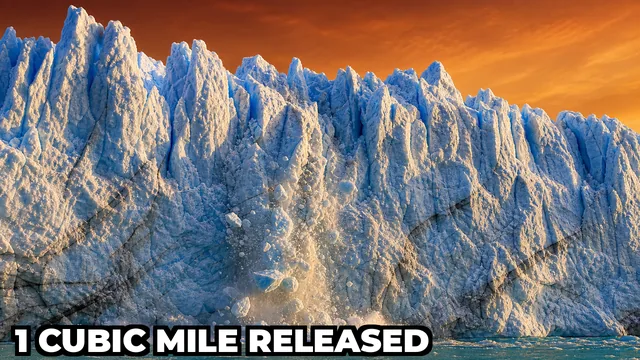
0:19This Glacier Dams A Lake — Then Lets It All Go 🧊
Oct 9, 2026 0:04
0:04How Groundwater Pressure Builds a 161ft Arctic Hill ❄️
Oct 8, 2026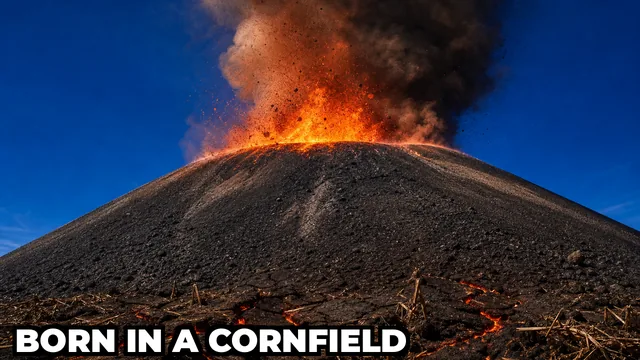 0:30
0:30A Volcano Grew 1,391ft Out Of A Cornfield 🌋
Oct 5, 2026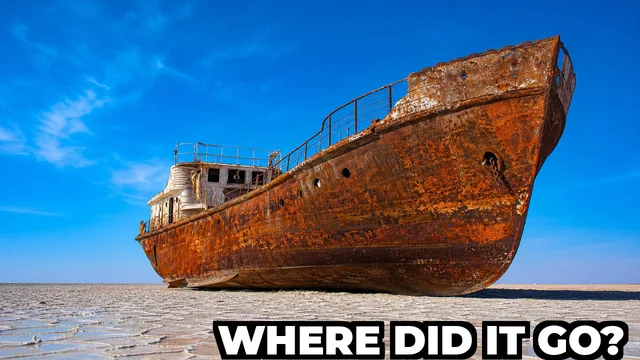 0:43
0:43Earth's 4th-Largest Lake Is Now A Salt Desert 🏜️
Oct 4, 2026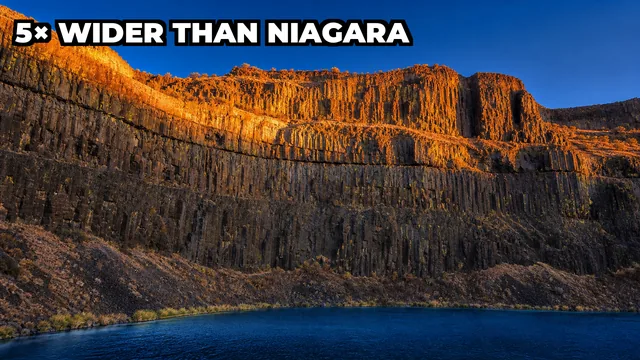 0:31
0:31A Waterfall 5x Wider Than Niagara Ran Dry 🌊
Oct 2, 2026 0:17
0:17