The Short Answer
Saturn has a massive, persistent hexagonal jet stream at its north pole — a six-sided storm system roughly twice the size of Earth that has maintained its geometric shape for over 40 years, making it the only known naturally occurring hexagon weather pattern in the solar system.
What Exactly Is Saturn’s Hexagon?
Saturn’s north polar hexagon is a massive atmospheric phenomenon — a jet stream of gas that flows in a near-perfect six-sided pattern around the planet’s north pole. Each side of the hexagon stretches approximately 13,800 kilometres, and the entire structure spans about 29,000 kilometres across. Winds inside the system reach speeds of around 320 kilometres per hour, far exceeding the strength of any hurricane ever recorded on Earth. First observed by the Voyager spacecraft in the early 1980s, it has been continuously monitored since — and it has not wavered from its hexagonal shape once.
Nothing like it has ever been found anywhere else in the solar system. Jupiter has storm systems, including the famous Great Red Spot, but nothing hexagonal. Saturn’s south pole has a vortex too — but it is a plain circular one. Only the north pole has the hexagon, and no one has yet provided a complete explanation for why.
How Does a Hexagon Form in an Atmosphere?
Laboratory experiments offer a partial explanation. When fluids rotate at different speeds — a fast inner current surrounded by a slower outer one — the boundary between them can buckle into geometric shapes. The number of sides depends on the ratio of speeds involved. In Saturn’s case, the atmospheric dynamics appear to produce six sides naturally and then lock that shape in place with no landmasses, no friction from terrain, and almost no disruption from outside forces. The geometry is self-sustaining in a way that Earth’s weather systems, constantly disrupted by mountains and oceans, simply cannot be.
Saturn’s Hexagon Changed Colour
Between 2012 and 2016, scientists observing Saturn through the Cassini spacecraft noticed something striking: the hexagon changed colour, shifting from a deep blue to a golden yellow. The leading explanation is that Saturn’s northern hemisphere was transitioning into summer, meaning more sunlight was reaching the pole. That increased sunlight drove photochemical reactions in the upper atmosphere, producing haze particles that tinted the region gold. Saturn has seasons, just like Earth — but each one lasts around seven Earth years due to the planet’s long orbit around the Sun.
A Second Hexagon Was Discovered Above the First
In 2018, scientists announced that Cassini data had revealed a second hexagonal structure sitting approximately 300 kilometres above the first, in Saturn’s stratosphere. The two hexagons are stacked vertically, each enormous, each spinning, and each apparently independent of the other. The upper hexagon appeared to be driven by seasonal warming and behaves differently from the lower one. The discovery doubled the strangeness of an already extraordinary feature and raised new questions about how deep the hexagonal dynamics extend into Saturn’s atmosphere.
Why Saturn’s South Pole Has No Hexagon
Saturn’s south pole hosts a powerful circular vortex — but no hexagon. Scientists believe the difference may relate to asymmetries in Saturn’s atmosphere between the northern and southern hemispheres, potentially tied to seasonal exposure, the tilt of the planet, or subtle differences in atmospheric layering. The honest answer, though, is that this asymmetry remains one of the most unresolved puzzles in planetary science.
What This Tells Us About Planetary Weather
Saturn’s hexagon is more than a curiosity. It challenges assumptions about how weather systems form and persist, and it shows that planetary atmospheres can organise themselves into stable geometric structures without any of the surface features Earth relies on to shape its own weather. Understanding it better could transform how scientists model atmospheres on gas giants — and on distant exoplanets where direct observation is impossible.
FREQUENTLY ASKED
How big is Saturn's hexagon storm? ▾
Saturn's hexagonal storm spans approximately 29,000 kilometres across, making it roughly twice the diameter of Earth. Each individual side of the hexagon measures around 13,800 kilometres.
How long has Saturn's hexagon been there? ▾
Saturn's hexagon was first observed by NASA's Voyager spacecraft in the early 1980s and has maintained its shape ever since — that's over 40 years of continuous observation with no sign of dissipating.
Why did Saturn's hexagon change from blue to gold? ▾
Scientists believe the colour change between 2012 and 2016 was caused by Saturn's northern hemisphere entering summer, with increased sunlight triggering photochemical reactions that produced golden atmospheric haze.
Is there a second hexagon on Saturn? ▾
Yes — in 2018, scientists announced the discovery of a second hexagonal pattern in Saturn's stratosphere, sitting roughly 300 kilometres above the original and appearing to be driven by seasonal warming.
How fast are the winds inside Saturn's hexagon? ▾
Winds within Saturn's hexagonal jet stream reach approximately 320 kilometres per hour, which is significantly faster than any hurricane wind speed ever recorded on Earth.
Does any other planet have a hexagon storm? ▾
No — Saturn's hexagon is the only naturally occurring hexagonal weather system ever discovered in the solar system. Jupiter and all other known planets only produce circular or oval storm structures.
GO DEEPER
KEEP EXPLORING
 0:49
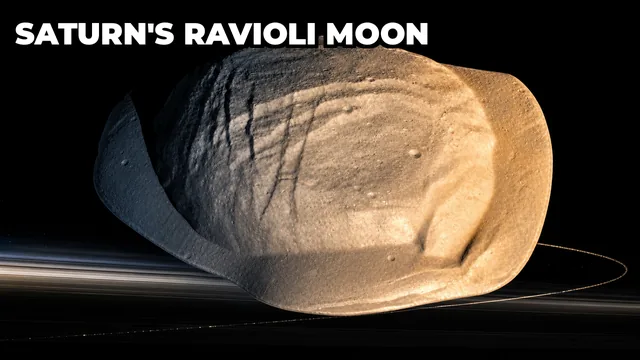
0:49Saturn Is Hiding A Moon Shaped Like Ravioli 🍝
Oct 3, 2026 0:32
0:32NASA Built It For 5 Flights. It Flew 72 On Mars 🚁
Sep 30, 2026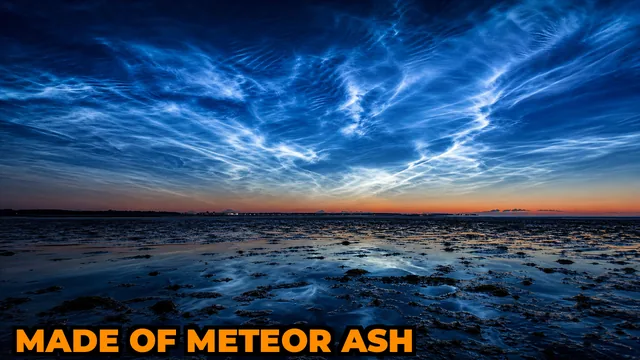 0:31
0:31The Cloud That Forms 52 Miles Up From Meteor Smoke ✨
Sep 30, 2026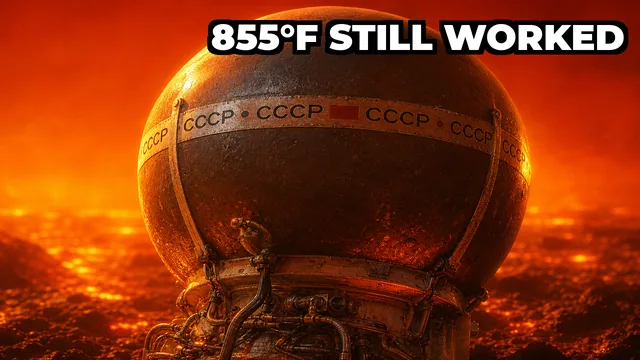 0:16
0:16The Only Color Photos Ever Taken On Venus 📸
Sep 27, 2026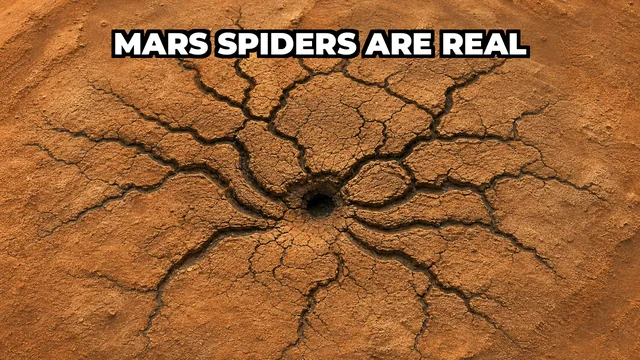 0:51
0:51Mars Grows 'Spiders' Every Spring 🕷️ Here's Why
Sep 26, 2026 0:23
0:23