The Short Answer
Yes — in 2005, paleontologist Mary Schweitzer dissolved the mineralized outer layer of a 68-million-year-old T-Rex femur and recovered what appeared to be flexible, transparent blood vessels, cell-like structures, and red blood cell remnants that had survived across geological time.
A Discovery That Shocked Paleontology
The scientific community had long assumed that soft biological tissue could not survive more than a few hundred thousand years at most. Proteins degrade, cells collapse, and organic chemistry unravels over geological timescales — or so the consensus held. When Mary Schweitzer and her team at North Carolina State University published their findings in the journal Science, the reaction ranged from astonishment to outright disbelief. The structures they pulled from the T-Rex bone were stretchy, translucent, and bore a striking resemblance to modern soft tissue under the microscope.
How Could Tissue Survive 68 Million Years?
The leading explanation centers on iron. The T-Rex’s own hemoglobin — the iron-rich protein that carries oxygen in blood — may have acted as a natural preservative after death. Iron ions can cross-link proteins, essentially locking their molecular structure in place and creating a chemical shield against the bacterial and enzymatic decay that would otherwise destroy soft tissue. Think of it as the dinosaur’s blood chemistry accidentally embalming itself from the inside. This iron-mediated preservation hypothesis, developed and defended by Schweitzer’s lab over subsequent years, offers the most chemically plausible mechanism scientists have proposed to date.
The Bird Connection
Perhaps the most startling detail buried in the data was what the recovered collagen proteins revealed about evolutionary relationships. When researchers sequenced fragments of the T-Rex collagen, the closest molecular match was not a crocodile or a lizard — it was a chicken. This molecular evidence added significant weight to the already well-supported theory that modern birds are direct descendants of theropod dinosaurs, the group to which T-Rex belongs. A 68-million-year-old apex predator sharing protein signatures with backyard poultry is the kind of finding that reframes how we think about deep evolutionary history.
The Biofilm Controversy
Not every scientist accepts that what Schweitzer found is original dinosaur tissue. A prominent alternative interpretation argues that the structures are biofilms — thin colonies of iron-metabolizing microbes that infiltrated the bone during millions of years of burial and left behind organic traces that mimic the appearance of soft tissue. Critics of the original-tissue interpretation point out that distinguishing ancient biological remnants from microbial contamination at the molecular level is extraordinarily difficult. The debate remains genuinely unresolved, with peer-reviewed arguments appearing on both sides of the question as recently as the past decade.
Why It Matters
If Schweitzer’s interpretation is correct and original dinosaur proteins can be reliably sequenced, the implications are profound. Scientists could conduct direct molecular comparisons between specific ancient species and their living relatives, tracking evolutionary change at the biochemical level across tens of millions of years. It would transform paleontology from a discipline largely dependent on bone morphology into one capable of reading the biological instruction manual of extinct animals. Even the skeptical position is scientifically valuable — it has pushed researchers to develop far more rigorous contamination controls and analytical techniques for studying ancient organic material in fossils.
FREQUENTLY ASKED
Who discovered soft tissue in a T-Rex bone? ▾
Paleontologist Mary Schweitzer at North Carolina State University led the research team that published the discovery in 2005 in the journal Science.
How old was the T-Rex bone that contained soft tissue? ▾
The femur belonged to a Tyrannosaurus rex specimen estimated to be approximately 68 million years old, excavated from the Hell Creek Formation in Montana.
What preserved the soft tissue inside the dinosaur bone for so long? ▾
The leading hypothesis is that iron from the dinosaur's own hemoglobin cross-linked the proteins after death, chemically stabilizing the tissue and protecting it from microbial decay over geological timescales.
Are T-Rex proteins more similar to birds or reptiles? ▾
Collagen fragments sequenced from the T-Rex specimen matched modern birds — particularly chickens — more closely than any living reptile, supporting the evolutionary link between theropod dinosaurs and birds.
What is the biofilm argument against dinosaur soft tissue? ▾
Some scientists argue the structures are not original dinosaur tissue but biofilms left by ancient iron-metabolizing microbes that colonized the bone after burial, mimicking the appearance of soft tissue under a microscope.
Can dinosaur DNA be extracted from preserved soft tissue? ▾
No confirmed dinosaur DNA has been successfully sequenced; DNA degrades far faster than proteins, and while collagen fragments have been recovered, intact genetic material from non-avian dinosaurs has not been authenticated.
GO DEEPER
KEEP EXPLORING
 0:24
0:24The Sahara Desert Is Feeding the Amazon 🌍
Oct 23, 2026 0:10
0:10Heard 3,000 Miles Away — Krakatoa's 1883 Blast 🌋
Oct 22, 2026 0:52
0:52The Quake That Sent the Mississippi Upstream 🌊
Oct 21, 2026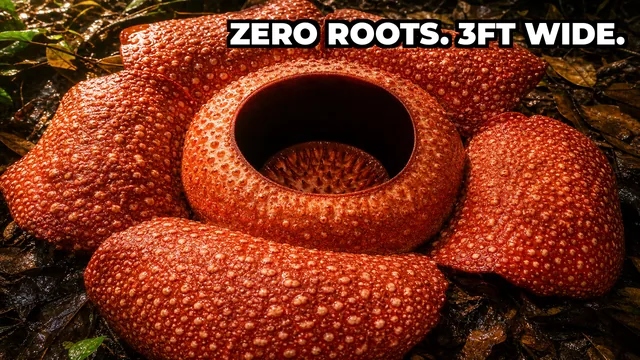 0:52
0:52A 24 lb Flower With No Roots Tricks Flies 😱
Oct 20, 2026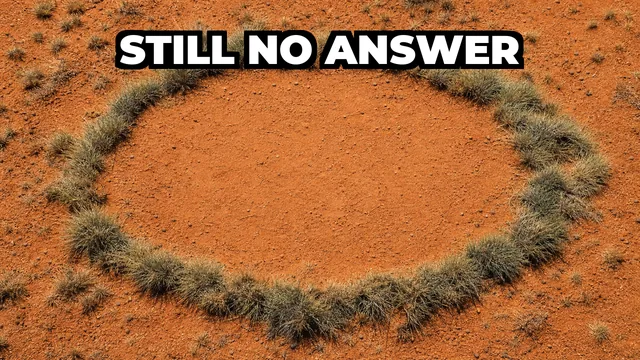 0:52
0:52Termites or Thirsty Grass? The Desert Can't Decide 🔵
Oct 19, 2026 0:48
0:48