What Is the Solenodon?
The solenodon is a small, venomous mammal with a lineage stretching back 76 million years — making it one of the few creatures alive today that predates the mass extinction event that wiped out the dinosaurs.
A Living Ghost from the Age of Dinosaurs
Scientists often describe the solenodon as a “living ghost” — a creature so ancient and so unchanged that encountering one feels like stepping into deep prehistory. While countless species were obliterated by the Cretaceous-Paleogene extinction event 66 million years ago, the solenodon’s lineage quietly endured. It is not a descendant of something that survived; it is essentially the survivor itself, carrying traits that have persisted with little modification for tens of millions of years.
Only two species exist today: the Hispaniolan solenodon (Solenodon paradoxus), found on the island of Hispaniola, and the Cuban solenodon (Atopogale cubana), sheltering in Cuba’s remaining forests. Both are nocturnal, both are critically endangered, and both offer scientists an extraordinary window into ancient mammalian biology.
Venom Through Grooved Teeth — Just Like a Snake
One of the solenodon’s most startling features is its venom delivery system. It injects venom through grooved lower teeth connected to a venom gland — a mechanism so structurally similar to a snake’s fangs that researchers were genuinely surprised it evolved independently in a mammal. Venomous mammals are extraordinarily rare; the solenodon belongs to an exclusive group that includes only a handful of species on the planet.
This convergent evolution — two entirely unrelated lineages arriving at the same biological solution — is exactly the kind of discovery that forces scientists to rethink assumptions about how and why certain adaptations emerge.
A Nose Unlike Any Other Mammal on Earth
The solenodon’s anatomical strangeness does not stop at venom. Its elongated, flexible snout connects to its skull via a ball-and-socket joint — a feature found in no other living mammal. This gives the snout an unusual degree of independent movement, functioning almost like a joystick. Scientists believe this adaptation helps the solenodon probe soil, leaf litter, and crevices for insects and other prey with remarkable precision.
This combination of venom and a uniquely articulated snout makes the solenodon one of the most anatomically distinctive mammals alive.
Nearly Destroyed by Introduced Species
Despite surviving every catastrophe Earth threw at it for 76 million years, the solenodon came terrifyingly close to extinction after European colonization of the Caribbean. Colonists introduced rats, domestic cats, and mongooses — predators the solenodon had never encountered and had no evolutionary defenses against. Populations collapsed rapidly. A creature that outlasted asteroid impacts, volcanic winters, and mass die-offs was nearly undone by a house cat.
Conservation efforts are ongoing, but both species remain endangered, their survival depending on habitat protection and the management of invasive predators.
Why Scientists Study the Solenodon
Because the solenodon survived the Cretaceous-Paleogene extinction — the same event that ended the non-avian dinosaurs — it serves as a living model for understanding how certain species endure mass extinction. Its physiology, behavior, and evolutionary history offer clues that no recently evolved animal can provide. Researchers studying extinction resilience, venom evolution, and mammalian diversification all have reasons to pay close attention to this small, ancient creature.
The solenodon is not a curiosity. It is a biological archive, and scientists are still learning to read it.
FREQUENTLY ASKED
Is the solenodon really venomous? ▾
Yes — the solenodon delivers venom through grooved lower teeth connected to a dedicated venom gland, making it one of only a handful of venomous mammals in the world.
How did the solenodon survive the dinosaur extinction? ▾
Scientists believe the solenodon's nocturnal, burrowing lifestyle and generalist diet helped its lineage endure the Cretaceous-Paleogene extinction event 66 million years ago.
Where does the solenodon live today? ▾
Two species survive: the Hispaniolan solenodon on the island of Hispaniola and the Cuban solenodon in Cuba, both living in forested, humid environments.
Why is the solenodon endangered? ▾
The solenodon's populations collapsed after European colonization introduced cats, rats, and mongooses — predators the solenodon had no evolutionary experience with and could not defend against.
What makes the solenodon's nose unusual? ▾
The solenodon's snout connects to its skull through a ball-and-socket joint, giving it independent mobility found in no other living mammal, which helps it root through soil and debris for food.
How old is the solenodon's evolutionary lineage? ▾
The solenodon lineage dates back approximately 76 million years, meaning it predates the mass extinction that killed the non-avian dinosaurs by about 10 million years.
GO DEEPER
KEEP EXPLORING
 0:03
0:03This Bird Flies for 10 Months Straight 🐦
Oct 11, 2026 0:44
0:44The Bird That Gives Her Eggs a Secret Code 🐣
Oct 8, 2026 0:20
0:20The First Complex Cell Loved Oxygen From Day One 🧬
Oct 7, 2026 0:30
0:30Why Hummingbirds Pump Nectar 🔬 Not Sip It
Oct 6, 2026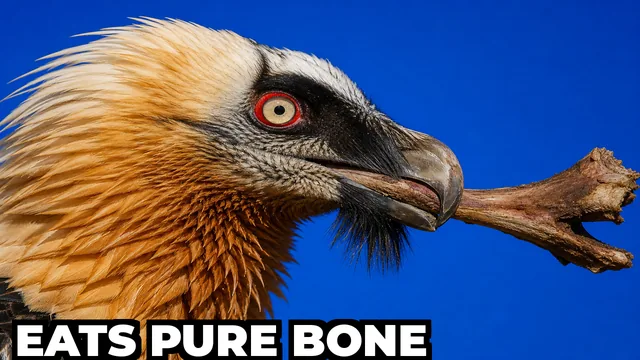 0:26
0:26The Bird That Eats Bones And Dyes Itself Red 🦴
Oct 4, 2026 0:37
0:37