What Are the Most Terrifying Secrets Hidden in Earth's Unexplored Ocean?
March 25, 2026 · 5 min read
What Are the Most Terrifying Secrets Hidden in Earth’s Unexplored Ocean?
The most terrifying secrets in Earth’s unexplored ocean include toxic underwater lakes that kill on contact, extremophile organisms surviving in impossible conditions, and massive creatures in the deepest trenches that we’ve barely documented. With 80% of our ocean remaining unexplored, these mysteries represent just the tip of the iceberg of what lies beneath.
The ocean covers 71% of our planet’s surface, yet we know less about its depths than we do about the surface of Mars. This vast underwater frontier holds secrets that challenge our understanding of life, death, and the very limits of biological possibility. From deadly brine pools to invisible underwater storms, the ocean’s hidden mysteries are both fascinating and genuinely terrifying.
The Deadly Lakes Within the Ocean
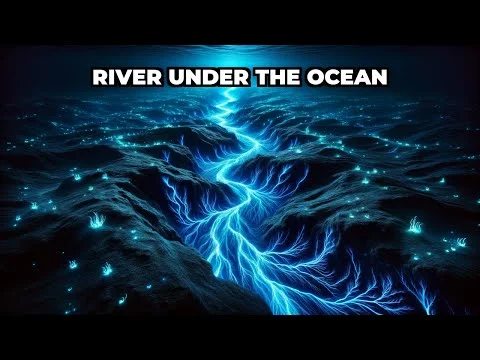
One of the most shocking discoveries in recent oceanography is the existence of brine pools—literally lakes sitting on the ocean floor. These underwater death traps contain water so toxic and dense that it remains completely separate from the surrounding ocean water, complete with distinct shorelines and waves.
Fish that venture too close to these brine pools immediately lose consciousness and die. The water contains lethal concentrations of salt and toxic chemicals, creating an environment that should theoretically support no life whatsoever. Yet incredibly, scientists have discovered extremophile bacteria and certain types of worms thriving inside these deadly pools, surviving conditions that defy every known law of biology.
The Abyss That Swallows Mountains
The Challenger Deep in the Mariana Trench represents the ultimate frontier of our planet’s unexplored regions. At nearly 36,000 feet below sea level, this underwater canyon is so deep that if Mount Everest were dropped into it, the peak would still be more than a mile underwater.
The pressure at this depth is roughly 1,000 times greater than at sea level—enough to instantly crush any conventional submarine. Yet life persists even here. In 2020, researchers pulled up creatures from the Challenger Deep that had absorbed synthetic microplastics into their bodies, proving that human pollution has reached even the most remote corners of our planet.
The Ocean’s Hidden Mountain Range
Buried beneath the waves lies the longest mountain range on Earth—the Mid-Ocean Ridge. This underwater mountain system stretches over 40,000 miles across the ocean floor, winding around the entire planet like the seam of a baseball. It dwarfs the Himalayas, yet most people have never heard of it.
This underwater mountain range is geologically active, constantly reshaping the ocean floor through volcanic activity and tectonic movement. Along its length, hydrothermal vents spew superheated, mineral-rich water that creates unique ecosystems and deposits precious metals, including gold, onto the surrounding rock.
The Mystery of Unexplained Sounds
The ocean produces sounds that scientists still cannot fully explain. In 1997, NOAA hydrophones detected an ultra-low-frequency sound so powerful it was recorded by sensors over 5,000 kilometers apart. They called it “The Bloop.”
While scientists have offered explanations—primarily attributing it to ice movement—not everyone in the scientific community is convinced. The ocean’s sound channel, called the SOFAR channel, can carry these mysterious sounds thousands of miles without losing energy, meaning unknown creatures or phenomena could be communicating across entire ocean basins.
Invisible Ocean Storms
Beneath the surface, the ocean generates massive rotating storms called mesoscale eddies that are completely invisible from above. Some of these underwater hurricanes are wider than entire countries and can persist for months or even years. These hidden storms move vast amounts of heat, salt, and nutrients across the deep ocean, essentially controlling global climate patterns without most people ever knowing they exist.
The Ocean’s Living Clock
Deep-sea sediment layers function as one of the most precise historical records on Earth. Every major event in our planet’s history—ice ages, mass extinctions, volcanic eruptions—is recorded in these underwater deposits. By drilling into the ocean floor and extracting core samples, scientists can read the diary of our planet going back hundreds of millions of years.
Real Sea Monsters in the Depths
The ocean genuinely hides creatures the size of school buses that we’ve barely documented. Giant squid, which can reach lengths of over 40 feet, were not photographed alive in their natural habitat until 2004. Before that, we only knew they existed from scars found on sperm whales and occasional bodies that washed ashore.
Colossal squid, even larger than their giant cousins, remain almost completely mysterious. These creatures possess rotating hooks on their tentacles and eyes the size of dinner plates, yet we’ve never observed one alive in the wild. The fact that such massive creatures remained hidden from science until so recently raises the question: what other monsters are still down there?
The Ocean’s Role in Our Survival
Perhaps the most critical secret the ocean holds is its role in sustaining life on Earth. The ocean produces over 50% of the oxygen we breathe—not through large marine plants, but through microscopic organisms called phytoplankton. These invisible creatures are literally the lungs of our world, and they’re disappearing due to climate change and pollution.
The ocean also contains an estimated 20 million tons of dissolved gold—enough to give every person on Earth about nine pounds each. However, the technology to extract this treasure doesn’t exist yet, making it the most accessible hidden fortune that remains completely out of reach.
FREQUENTLY ASKED
How much of the ocean is still unexplored? ▾
Approximately 80% of the ocean remains completely unexplored and unmapped by humans. We have better maps of the surface of Mars than we do of our own ocean floor.
What are brine pools and why are they deadly? ▾
Brine pools are toxic underwater lakes that sit on the ocean floor with water so dense and poisonous that fish die immediately upon contact. Despite their lethal nature, some extremophile organisms have been found thriving inside them.
How deep is the deepest part of the ocean? ▾
The Challenger Deep in the Mariana Trench reaches nearly 36,000 feet below sea level. If Mount Everest were placed in it, the peak would still be more than a mile underwater.